


Ozempic, a brand name for the drug semaglutide, was originally developed to manage type 2 diabetes by improving blood sugar control. As a GLP-1 receptor agonist, it mimics a hormone that regulates glucose metabolism and appetite. Beyond its success in diabetes treatment, Ozempic has garnered significant attention for its weight loss effects, becoming a popular off-label prescription for obesity management. This newfound fame has sparked a broader interest in weight loss medications, highlighting the potential of advanced treatments, including antibody drugs, in combating obesity.
This month, several pharmaceutical companies have announced news on the development of antibody drugs to treat obesity, including:
May 3: Amgen announced positive early results from a study of MariTide (maridebart cafraglutide), an antibody-peptide conjugate obesity drug. The drug is made up of a fully human monoclonal anti-human GIPR antagonist antibody conjugated to two GLP-1 analogue agonist peptides using amino acid linkers.

May 16: Roche's Phase 1 success for the GLP-1/GIP agonist CT-388, which is expected to be combined with GYM329 (RO7204239), a humanized anti-myostatin antibody. RO7204239 is being researched for its potential to strengthen the muscles of spinal muscular atrophy patients. By combining RO7204239 with CT-388, weight loss may be achieved without muscle loss.

May 22: AstraZeneca has committed $80M to SixPeaks Bio for buyout option, if their bispecific antibody proves successful. The drug targets activin type IIA and IIB receptors, which are responsible for regulating muscle mass. Similar to Roche’s potential combination therapy, this bsAb is expected to overcome the common side effect of muscle loss that results from GLP-1 agonists.

Meanwhile, a recent review by Melson et al. described bimagrumab, a human monoclonal antibody that stimulates skeletal muscle growth by blocking the activin type II receptor (ActRII). Currently undergoing Phase 2 trials, bimagrumab was originally developed by Novartis, but the drug has switched hands to Versanis, which was subsequently acquired by Eli Lilly. It has the potential of becoming an attractive treatment option for sarcopenic obesity.

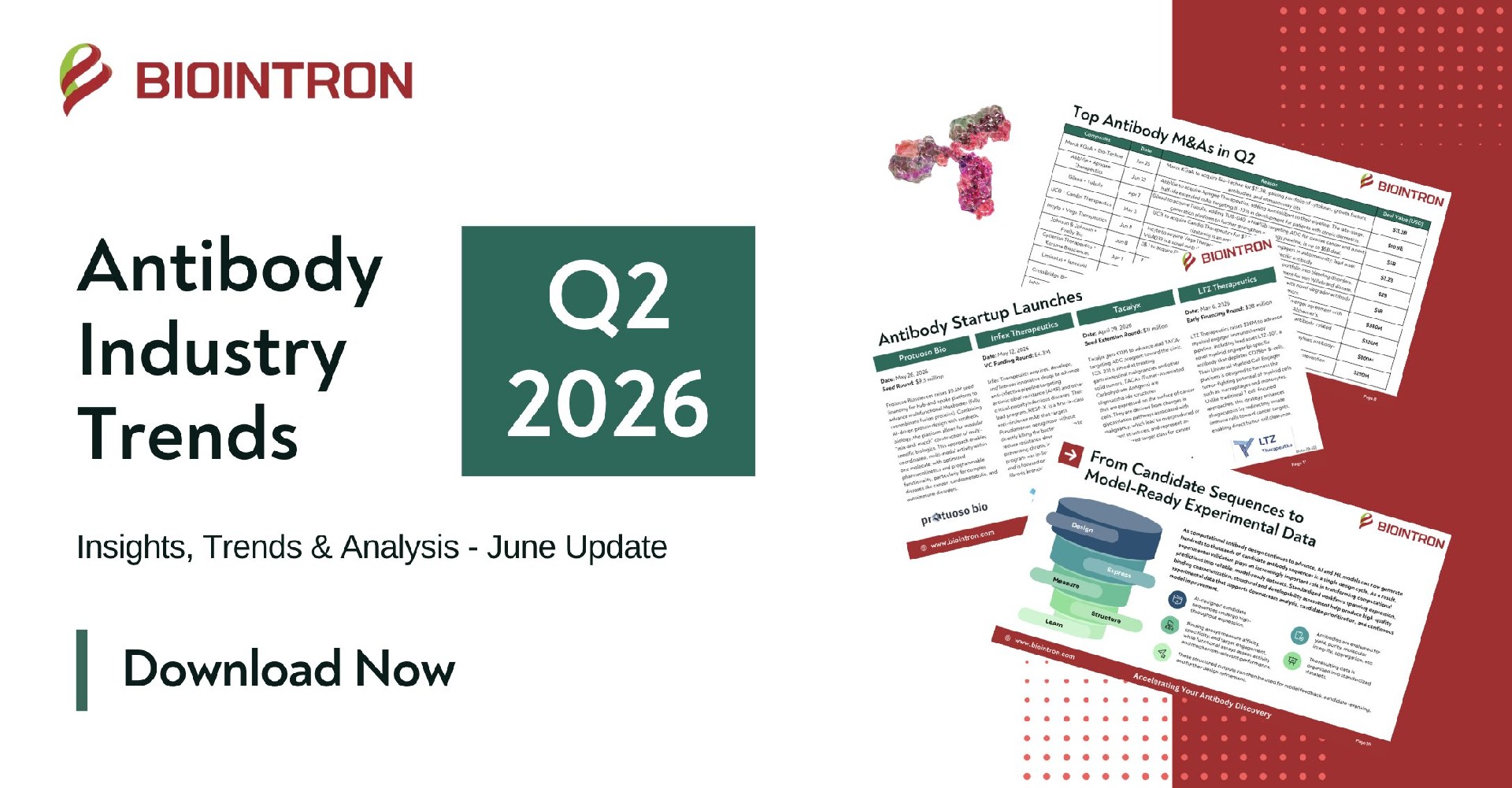
Biointron’s Q2 2026 Antibody Industry Trends report aims to explore the events a……
Artificial intelligence (AI) can be used throughout the drug development process……
Peptides and antibodies have different strengths as therapeutic molecules. Pepti……
Therapeutic antibodies are often used to block receptors or neutralize soluble m……