

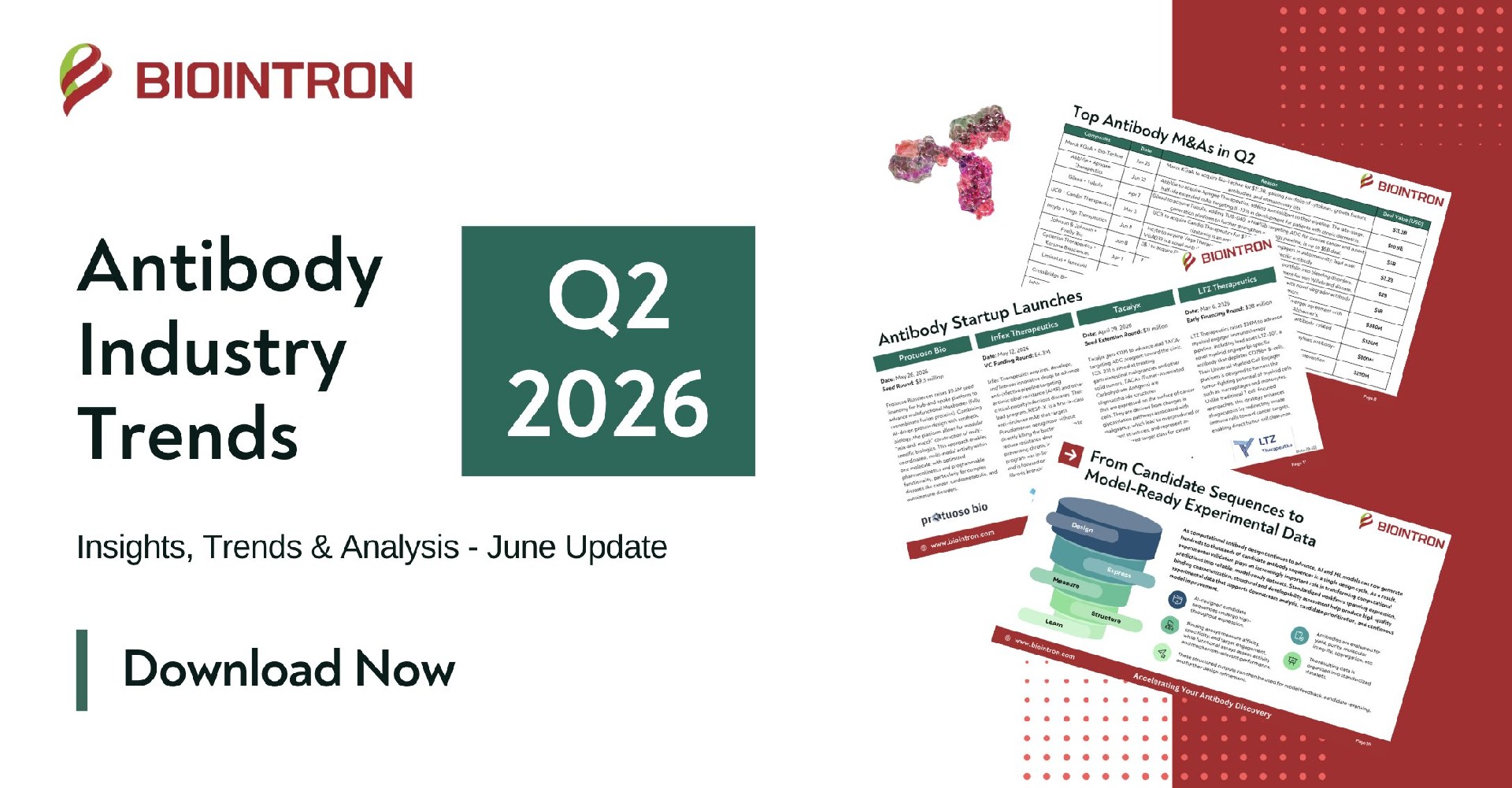






Biointron’s Q2 2026 Antibody Industry Trends report aims to explore the events and trends of the biopharmaceutical industry in April, May, and June. This quarter, six novel monoclonal antibody drugs have received first approval.
Artificial intelligence (AI) can be used throughout the drug development process, including in early-stage screening, computer-aided optimization, nonclinical simulation, and clinical trial implementation. However, challenges in data reliability and AI prediction verification have limited its adoption in antibody drug discovery.
Peptides and antibodies have different strengths as therapeutic molecules. Peptides are short chains of amino acids that can bind compact or structurally difficult targets, while monoclonal antibodies offer high specificity, long circulation times and, depending on their format, immune effector functions.
Time: February 26, 2024
Location: San Diego, CA
Time: May 13-17, 2024
Location: Boston, MA
Booth: #613
Time: March 13 - 15, 2024
Location: London, UK
Booth: #31

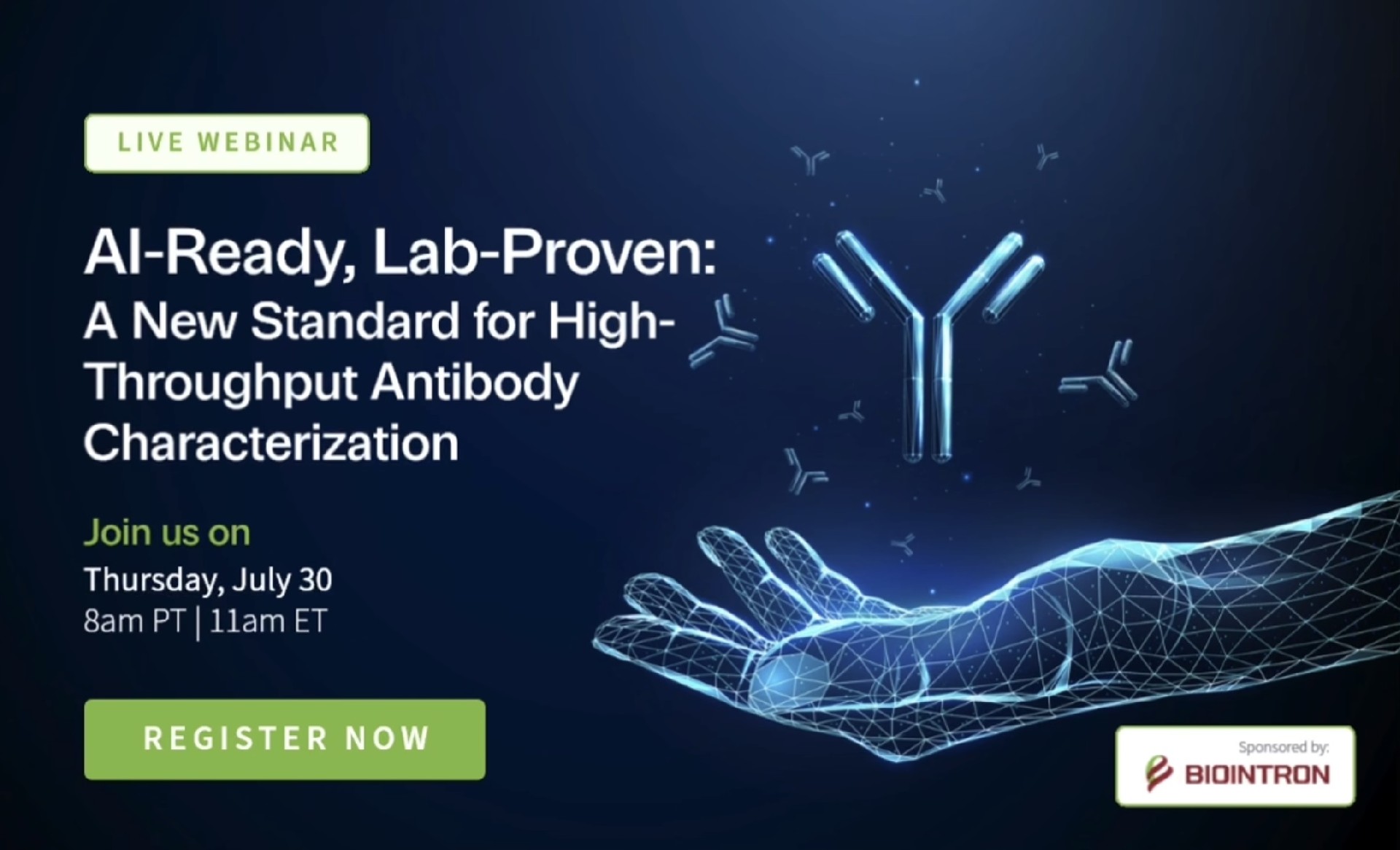
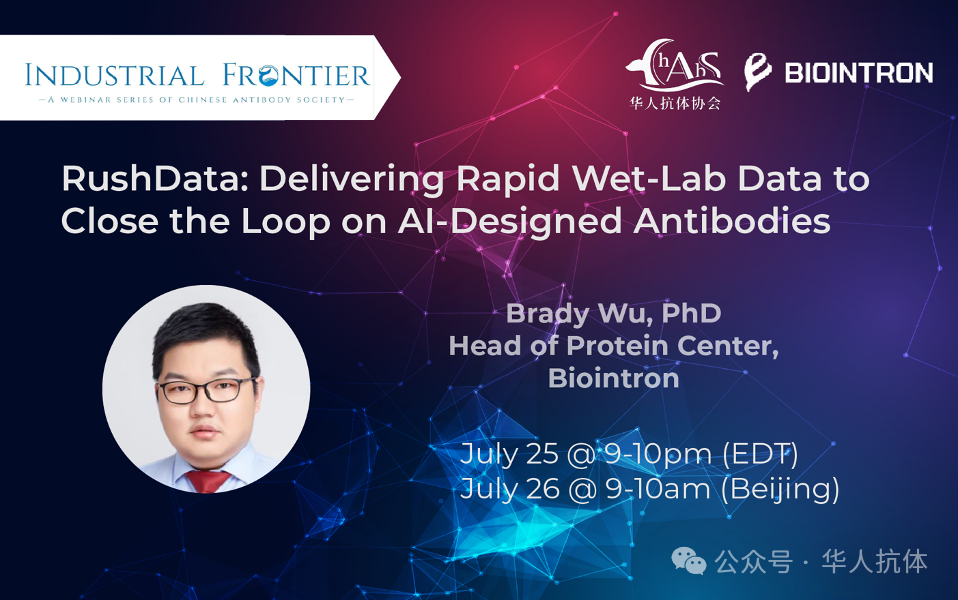
AI is transforming antibody discovery, but better models only come from better data. When you are generating and screening sequences at scale, you need characterization results that are fast, comprehensive, and ready to use without hours of cleanup and reformatting.
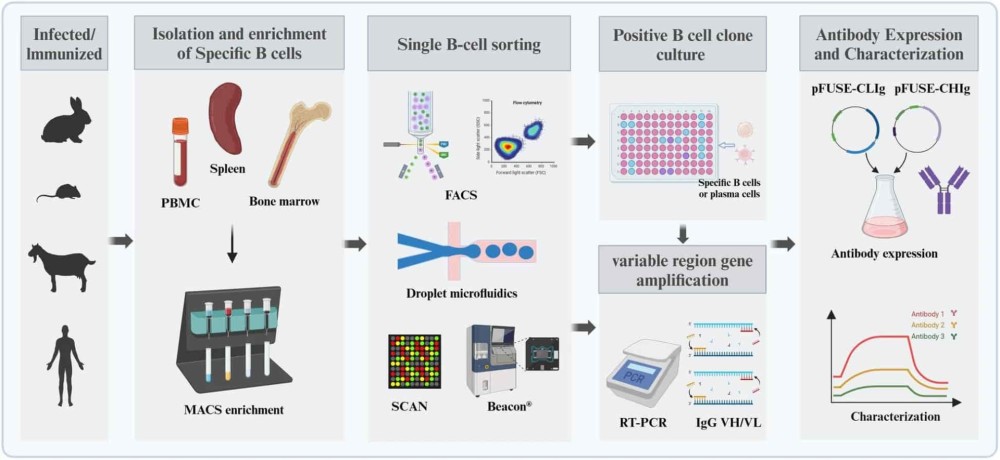
The antibody therapeutics sector is rapidly evolving, transitioning from traditional hybridoma methods to single B and AI-driven de novo design approaches, significantly compressing discovery timelines and creating novel binding moieties.
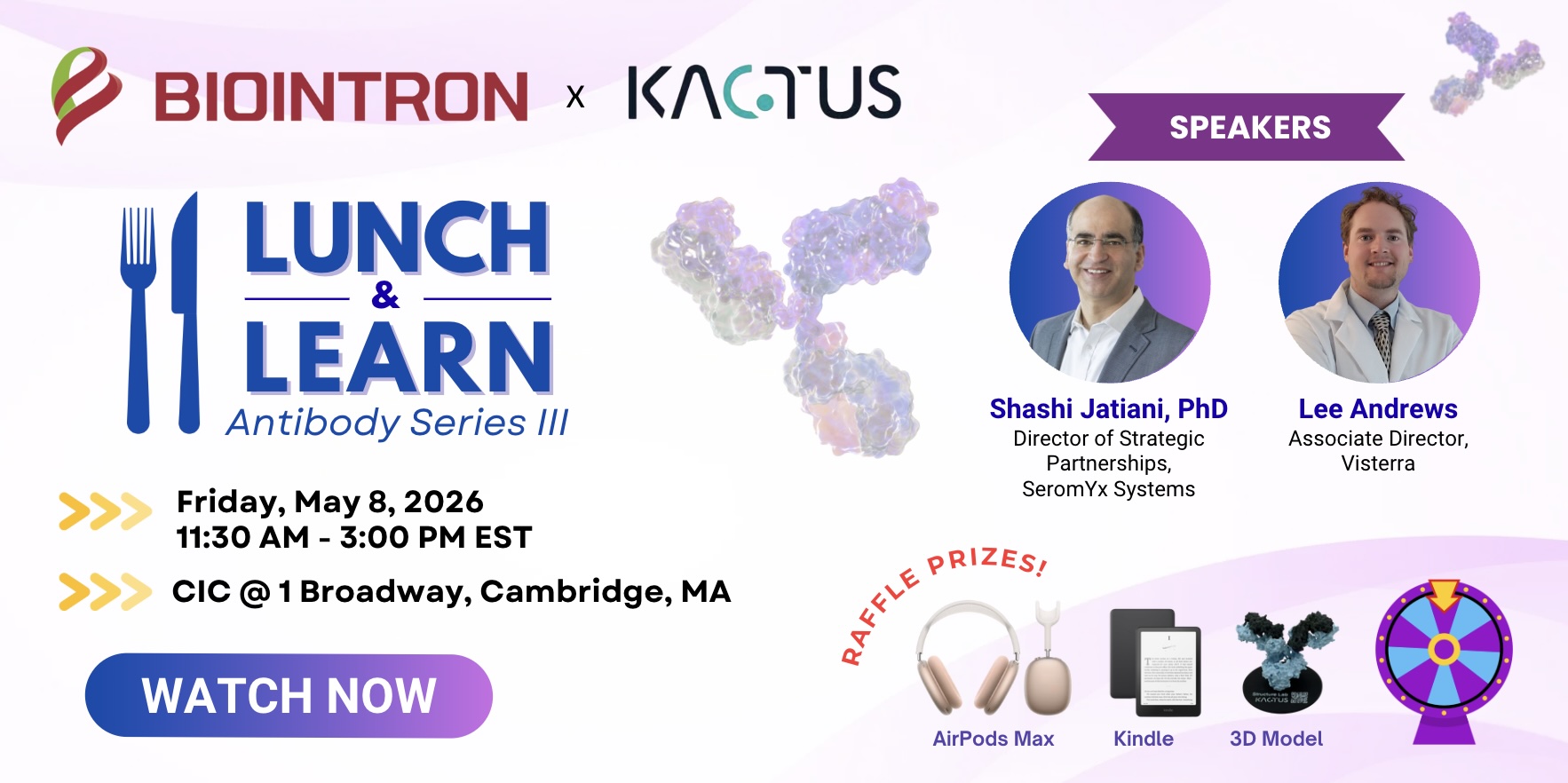
Biointron’s 2026 Lunch & Learn, held at CIC Cambridge on May 8, 2026, featured expert presentations from SeromYx Systems and Visterra on two critical areas of antibody and biologic development: Fc-effector function profiling and cell-based neutralizing antibody (NAB) assay design.
When you’re a small biotech with big ambitions, every week counts. For Macomics Limited, that meant finding a way to get high-quality antibodies quick···
The demand for fully human therapeutic antibodies continues to grow, driving the need for more efficient discovery platforms.
Case 1: Tag-Free Vaccine Protein. During the generation of stable cell lines, cells are selected and screened to identify clones that stably express t···

Get 50% off or a free plate with Biointron's RushData launch offer. 1-day CHO expression, high-throughput antibody characterization. Offer ends 12/31/26.
Apply for Biointron's Quarterly Travel Grant. Receive $800 to support early-career antibody researchers in attending scientific conferences, symposia, and workshops.
Submit a quick Biointron testimonial and we’ll send you a $25 Amazon gift card. Simple, fast, and appreciated!
Spotlight on Antibodies is a podcast from Biointron, where we bring you the latest antibody industry trends. This month in August, we'll talk about engineering peptides into antibodies, the ADC therapeutic window, and targeting autoimmune memory.
Spotlight on Antibodies is a podcast from Biointron, where we bring you the latest antibody industry trends. This month from July, we'll highlight antibodies for IVD applications, the druggable proteome, and degrader-antibody conjugates.
Spotlight on Antibodies is a podcast from Biointron, where we bring you the latest antibody industry trends. This month in June, we'll highlight the era of AI-driven antibody discovery.
Biointron announces limited-time RushData launch pricing for high-throughput antibody production, binding characterization, and experimental data generation for AI-driven antibody discovery.
August 2026 brought another mix of acquisitions, licensing agreements, strategic collaborations, and private financings across the antibody biotech sector. Antibody-drug conjugate technologies, such as bispecific ADCs and new payload technologies, were mentioned, while autoimmune and inflammatory di
Antibody discovery often begins with a highly diverse population of B cells, only a fraction of which may produce antibodies with the desired specificity or functional properties. Single-cell screening provides a way to examine these cells individually while maintaining a connection between an antibody phenotype and the cell that produced it.