


Artificial intelligence (AI) can be used throughout the drug development process, including in early-stage screening, computer-aided optimization, nonclinical simulation, and clinical trial implementation. However, challenges in data reliability and AI prediction verification have limited its adoption in antibody drug discovery. Generative and predictive models can help researchers:
Propose antibody sequences
Rank candidates
Predict properties such as binding or developability
Select which molecules should move into experimental testing
At the same time, the resulting wet-lab measurements can become data for subsequent model training, evaluation and optimization. So, what kinds of wet-lab data are useful for AI-driven antibody discovery, and how are researchers generating them?

An AI model may output an amino-acid sequence, but the sequence must be expressed into a protein in a lab for antibody characterization. The process involves obtaining DNA, cloning antibody sequences into expression vectors and expressing them in cells before downstream characterization. Typically, CHO and HEK293 cells are used as mammalian expression systems, although protein-engineering predictions can behave differently between the two.
To measure whether an antibody can be efficiently produced, we can assess:
Expression yield or titer
Protein concentration
Purity
Aggregation
In addition, binding experiments are used to analyze whether the antibody recognizes the intended target and how it interacts with it:
Binding response
Affinity
Kinetics
Specificity
Epitope information
Quantitative antibody characterization confirms target binding, affinity and kinetics, specificity, and epitope diversity. Techniques such as SPR and BLI can provide kinetic measurements. Developability data describes properties that influence whether an antibody can be manufactured, formulated, and handled as a drug candidate. Experimental measurements can analyze properties such as:
Aggregation
Thermal stability
Hydrophobicity
Charge
Polyspecificity
Stability under different conditions

A dataset containing many measurements is useful only if we can understand what those measurements represent and compare them appropriately. Shao et al. (2026) describe reliable AI applications depending on factors including:
Clearly defined experimental endpoints
Traceable data provenance
Consistent preprocessing
Management of missing data
Control of batch effects
Accurate labels
Data representative of the intended application
However, a large but narrow dataset can still perform poorly when applied in a new context. For example, an affinity value is more informative to a model when the dataset also records: antibody sequence + antigen + assay format + experimental conditions + measured result.
For machine learning, the measurement and its experimental context are both part of the data. So what makes antibody data useful for modeling? It should be consistent, quantitative, traceable, and multiparametric.
We need large, standardized biological datasets for biological foundation models and for adapting models to specific drug-discovery applications. For antibody discovery specifically, AI-designed candidate lists may contain many more sequences than researchers eventually choose to produce. To filter and optimize these large sets, the design-build-test-learn (DBTL) cycle can help as an iterative workflow.
Design: AI proposes or prioritizes antibody sequences.
Build: Selected sequences are synthesized and expressed.
Test: Experiments measure binding, function, expression, and developability.
Learn: Experimental results are analyzed and can inform the next round of model predictions.
Optimization is a repeated loop in which antibodies are redesigned based on binding, functional. and developability measurements, then re-expressed and experimentally confirmed. Importantly, wet-lab data can have two roles:
Validation data: Does the model's prediction hold experimentally?
Learning data: Can the experimental result help improve future predictions or candidate selection?

Several aspects of experimental antibody workflows are particularly relevant to AI-enabled discovery:
Larger candidate panels may make parallelized expression and assay workflows useful
Binding measurements are becoming increasingly quantitative and high-throughput
Multiple antibody properties can be collected earlier rather than relying on affinity alone
Consistent experimental conditions and accompanying metadata matter when measurements are intended for computational reuse
Data can be returned into repeated DTBL cycles
In conclusion, AI-guided antibody discovery still relies on wet-lab validation to determine how selected antibodies actually express, bind, and function. Connecting computational design with experimental testing allows wet-lab results to act both as validation of model predictions and as data that can inform subsequent rounds of antibody design.
Future research may further integrate generative AI, digital twins, and multimodal foundation models to support more predictive and personalized approaches to drug development. Across these applications, reliable data and appropriate experimental validation, with tools such as Biointron's RushData, will remain important for generating credible predictions and informing development decisions.

RushData combines 1-day CHO expression, rapid affinity characterization, and developability profiling to generate high-quality datasets for AI-driven antibody discovery. Evaluate thousands of candidates in parallel and make better decisions, faster.
To celebrate the launch of RushData, we’re giving new customers more opportunities to generate the antibody data they need for their next discovery cycle! With our RushData Assay Discount Bundle, you can save while evaluating more antibody candidates:
🧪 Order 1 × 96-well plate → Get 50% OFF
🧪 Order 2+ × 96-well plates → Get your 1st plate FREE
📅 Offer valid September 1 - December 31, 2026 for new customers
Biointron's Q3 2026 Antibody Industry Trends report aims to explore the events a……
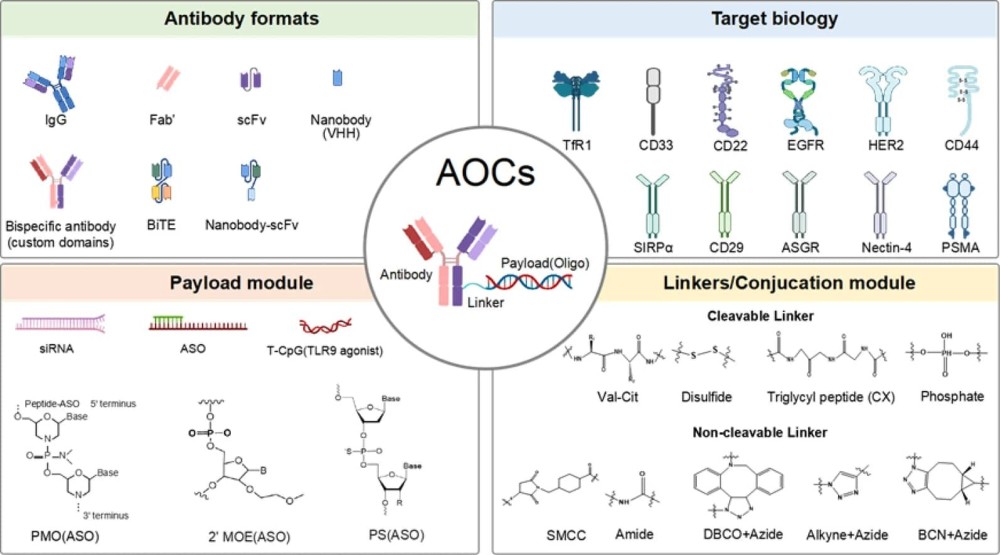
Antibody-oligonucleotide conjugates, or AOCs, are an emerging therapeutic format……
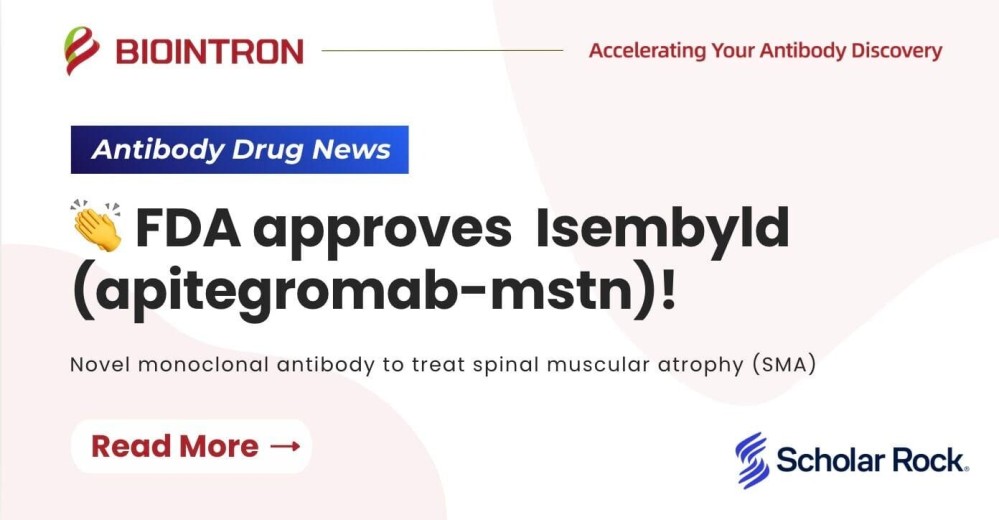
On September 18, 2026, the FDA approved Isembyld (apitegromab-mstn) from Scholar……
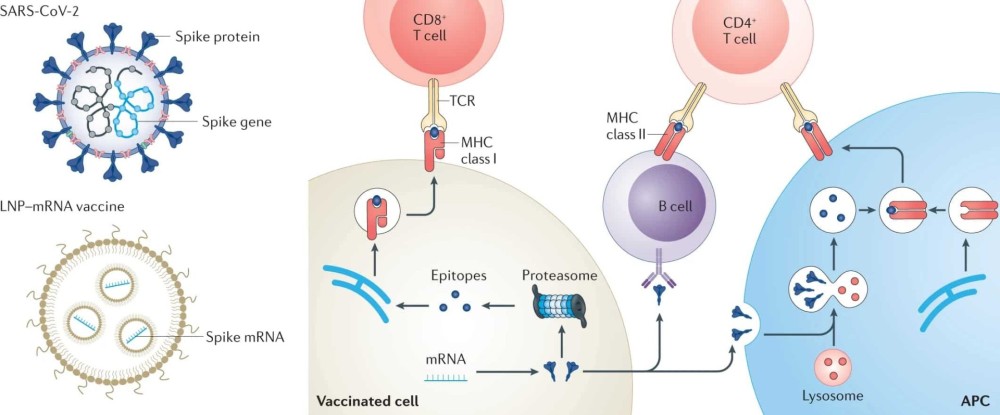
mRNA-encoded antibodies are an approach in which synthetic messenger RNA carries……