


Intravenous immunoglobulins (IVIGs) offer a versatile treatment modality for a variety of immune-mediated disorders. Originally used for antibody replacement therapy, their unexpected anti-inflammatory and immunomodulatory effects have allowed them to extend their use to other conditions. Derived from the pooled plasma of thousands of healthy donors, IVIGs contain a broad spectrum of antibodies, which contribute to their effectiveness in modulating immune responses, such as helping to neutralize autoantibodies, suppress inflammatory pathways, and restore immune homeostasis. The many mechanisms of IVIGs, including Fc receptor blockade, modulation of B cell function, and the enhancement of regulatory T cell activity, improve their therapeutic potential across a broad spectrum of clinical scenarios.
This Monday, the FDA gave approval of Biotest’s Yimmugo, an innovative therapeutic to treat primary immunodeficiencies (PID). Yimmugo is a polyvalent IVIG approved in the US for substitution therapy in primary antibody deficiency syndromes. PIDs are a group of over 450 rare, chronic conditions where a part of the body's immune system is absent or malfunctioning. Although each PID is unique, they all affect the immune system's ability to function properly.
Last week, a case study about a patient with autoimmune cerebellar ataxia (ACA) showed significant improvement in health after nine plasmapheresis sessions and six doses of IVIG, despite negative cancer screenings. Ongoing management included biannual rituximab treatments. This news gives hope to the potential of using plasmapheresis and IVIG for treatment of non-tumor anti-Tr/DNER antibody-associated ataxia.
Another recent paper describes a trial for the use of IVIG for COVID-19 patients. The results found an improvement in the National Early Warning Score 2 at the end of treatment in the IVIG arm and a statistically significant reduction in mortality. Therefore, IVIG was deemed to be a safe and effective adjunctive therapy to standard-of-care treatment in moderate-to-severe COVID-19 patients needing ventilatory support.
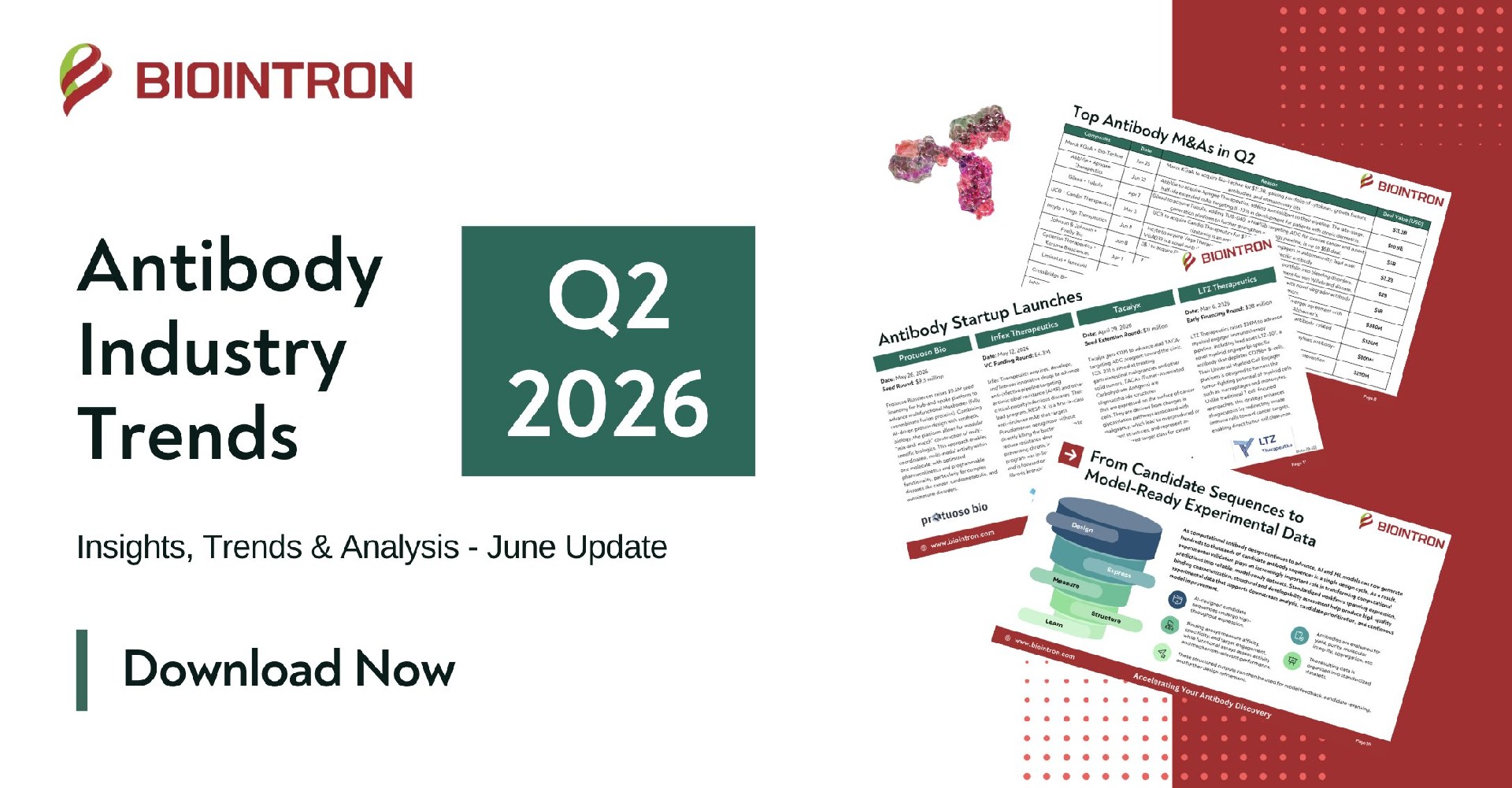
Biointron’s Q2 2026 Antibody Industry Trends report aims to explore the events a……
Artificial intelligence (AI) can be used throughout the drug development process……
Peptides and antibodies have different strengths as therapeutic molecules. Pepti……
Therapeutic antibodies are often used to block receptors or neutralize soluble m……