


G protein-coupled receptors (GPCRs) and ion channels are protein families linked to a broad spectrum of diseases, known as GPCR- and ion channel-driven diseases, which arise from dysfunction in cell signaling and ion transport. GPCR-driven diseases include conditions such as cancer, metabolic disorders, and neurological diseases like migraine, while ion channel dysfunction is implicated in epilepsy, chronic pain, and cardiovascular diseases. While small molecules have traditionally dominated this space, advancements in antibody discovery have paved the way for more selective and durable treatments. With breakthroughs in antigen preparation, structural biology, and screening technologies, monoclonal antibodies (mAbs) against GPCRs and ion channels are progressing through clinical pipelines, promising new solutions for these challenging disease areas.

Just this week, Maxion Therapeutics, a UK-based biotechnology company, raised USD$16 million in pre-Series A financing, with the aim of developing antibody drugs targeting ion channels and GPCRs using their KnotBody platform. The platform fuses knottins (naturally occurring cysteine-rich miniproteins) onto antibodies to enhance drug properties. Ion channels and GPCRs are critical cell surface proteins involved in a wide range of previously untreatable or poorly-treated diseases, including autoimmune conditions and chronic pain. While small molecule drugs exist for ion channels, no approved antibody drugs currently target them.
Meanwhile, a recent review describes the discovery of therapeutic antibodies targeting GCPRs and ion channels as complex multi-spanning membrane proteins which are embedded in the cell surface lipid bilayer by multiple transmembrane spanning polypeptides. Antibodies that bind to the selected targets may directly modulate protein function or be re-configured into formats such as ADCs or bispecifics, which enable alternative modes of therapeutic intervention. However, these targets present challenges due to difficulties in high-level expression, extraction, and stable antigen generation, requiring diverse discovery strategies, including hybridoma, B cell platforms, and display technologies. Emerging approaches involve novel antigen formats, alternative hosts, and microfluidic platforms. Despite progress, no clear consensus exists on discovery methods, making antigen generation a bottleneck. Advances in structural biology, computational modeling, and machine learning are accelerating antibody discovery, with the potential for fully in silico-designed antibodies, paving the way for new therapeutic approvals.

Allosteric antibodies are emerging as powerful tools for targeting traditionally undruggable membrane proteins, such as GPCRs and ligand-gated ion channels (LGICs), by stabilizing specific conformations to modulate activity. Despite GPCRs being major drug targets, antibody-based therapies remain scarce due to their small extracellular domains and complex structures. Recent breakthroughs, including VHH-based modulators for mGlu receptors and calcium-sensing receptors, demonstrate their potential in neurological and metabolic disorders. Similarly, allosteric antibodies targeting LGICs, like α7-nAChR and NMDA receptors, have shown promise in enhancing or inhibiting receptor function. Advances in AI-driven design and cryo-EM are accelerating allosteric antibody discovery, offering new avenues for therapeutic and drug discovery applications.

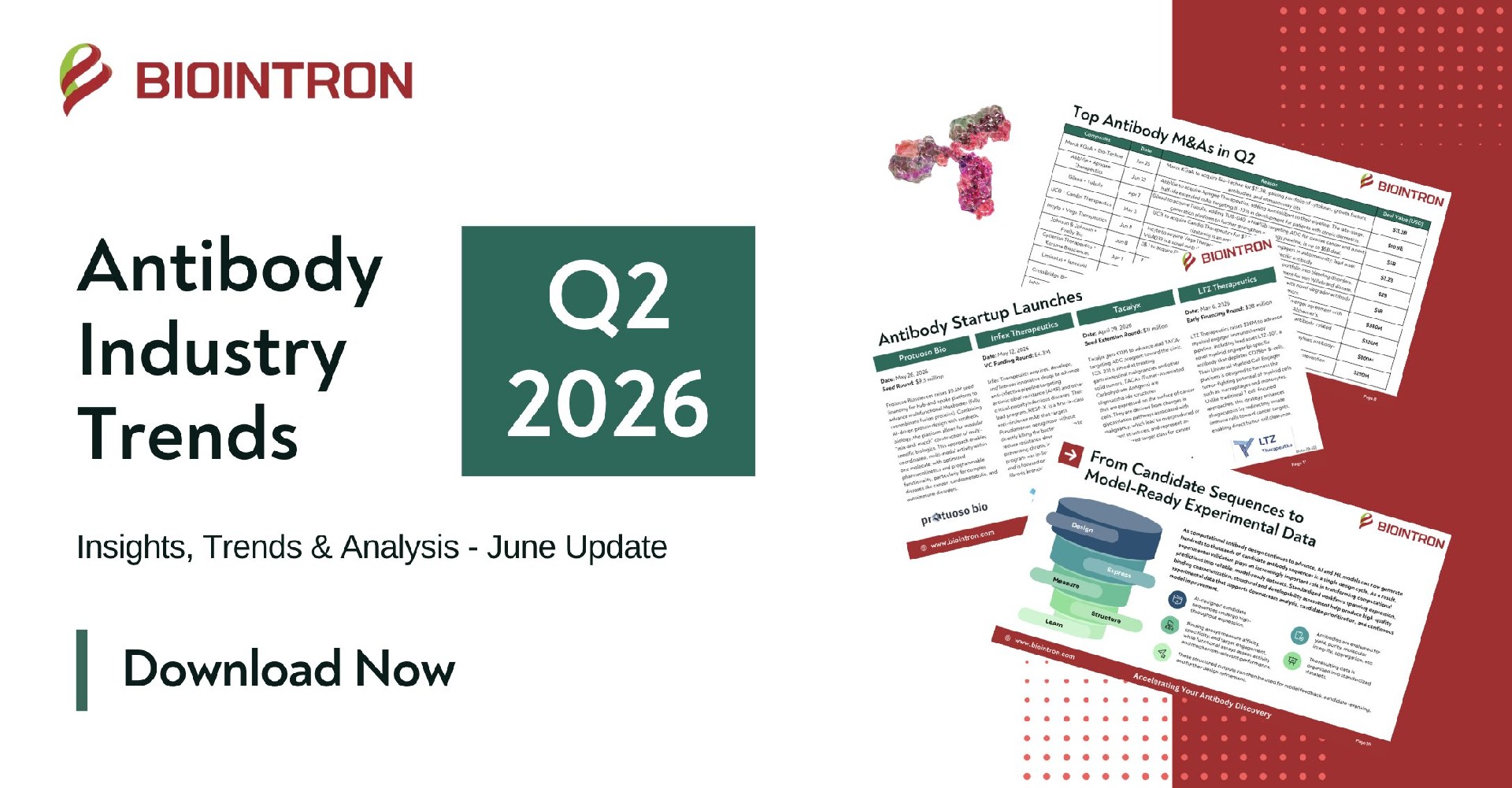
Biointron’s Q2 2026 Antibody Industry Trends report aims to explore the events a……
Artificial intelligence (AI) can be used throughout the drug development process……
Peptides and antibodies have different strengths as therapeutic molecules. Pepti……
Therapeutic antibodies are often used to block receptors or neutralize soluble m……