


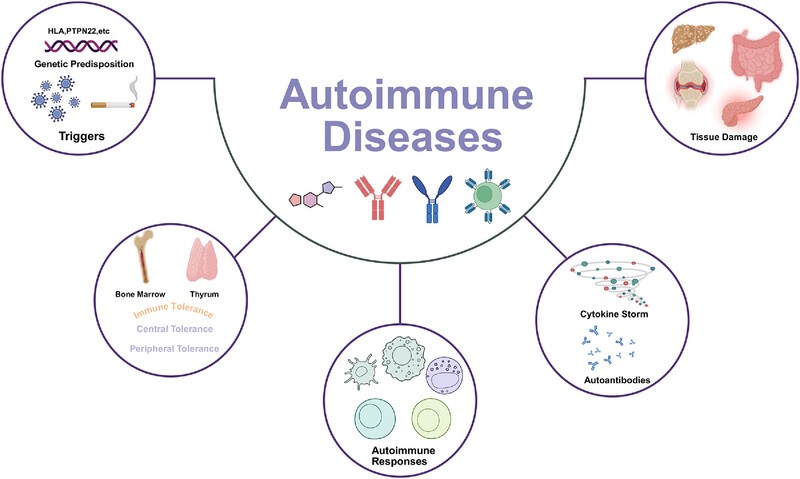
Autoimmune diseases are a group of disorders in which the immune system targets the body’s own tissues, resulting in chronic inflammation, tissue injury, and, in some cases, systemic dysfunction. Affecting an estimated 10% of the global population, they represent a substantial health and socioeconomic burden. Their pathogenesis is multifactorial, arising from interactions among genetic susceptibility, including human leukocyte antigen (HLA) variants, environmental triggers such as infections, and dysregulated immune responses. In some conditions, long-lived immune cells remain capable of restarting the same pathogenic response.
This has brought increasing attention to the role of immune memory in autoimmunity. For example, in late July 2026, argenx announced a potential $2.2B deal to acquire Forte Biosciences, Inc. in order to add an anti-CD122 antibody, FB102, to their pipeline. FB102 has clinical proof-of-concept in vitiligo and celiac disease and potential to address multiple autoimmune disease.
Memory T and B cells normally provide durable protection against previously encountered pathogens. When these responses are directed toward self-antigens, however, the same persistence that makes immune memory valuable can contribute to chronic disease.
Therefore, we ask: can antibodies interfere with the cells and signals that allow an autoimmune response to persist, rather than only suppressing the inflammation it produces?
Memory cells are a normal part of adaptive immunity. After an immune response, subsets of T and B cells persist and can respond rapidly if they encounter the same antigen again.
In autoimmune disease, long-lived memory populations can also preserve harmful immune responses. A recent review of memory cells in infection and autoimmunity describes several ways in which memory T and B cells may contribute to persistent autoimmune activity.
For example, memory T cells can be broadly divided into circulating and resident memory populations, and tissue-resident memory T cells (TRM cells) remain within tissues such as the skin, intestine, lung, and other organs. Unlike circulating memory T cells, TRM cells are localized in non-lymphoid tissues to provide rapid local defense when a pathogen returns.
These properties can become problematic when TRM cells recognize self-associated targets. Pathogenic TRM populations can remain within affected tissues and contribute to renewed inflammation when they are reactivated.
Vitiligo is a disease that involves immune-mediated destruction of melanocytes, the pigment-producing cells of the skin. Autoreactive CD8+ T cells are important to this process, and studies have identified populations of CD8+ TRM cells that persist in affected skin.
These cells are thought to contribute to disease maintenance and recurrence. Even after visible inflammation has subsided, resident T cells can remain within the tissue and retain the capacity to restart a local immune response.
Research in vitiligo has also identified a pathway that may help sustain these cells: signaling through interleukin-15 (IL-15) and CD122.
CD122 is the beta chain shared by the receptors for IL-2 and IL-15. IL-15 is particularly important for the survival and function of memory CD8+ T cells and natural killer cells. Vitiligo-associated TRM cells have been shown to express CD122, providing a link between IL-15 signaling and the persistence of disease-associated resident T cells.
In mouse models of established vitiligo, blocking CD122 reduced TRM activity. Longer treatment also reduced resident T-cell populations within affected skin and was associated with repigmentation. These experiments helped establish the rationale for investigating CD122 as a therapeutic target.
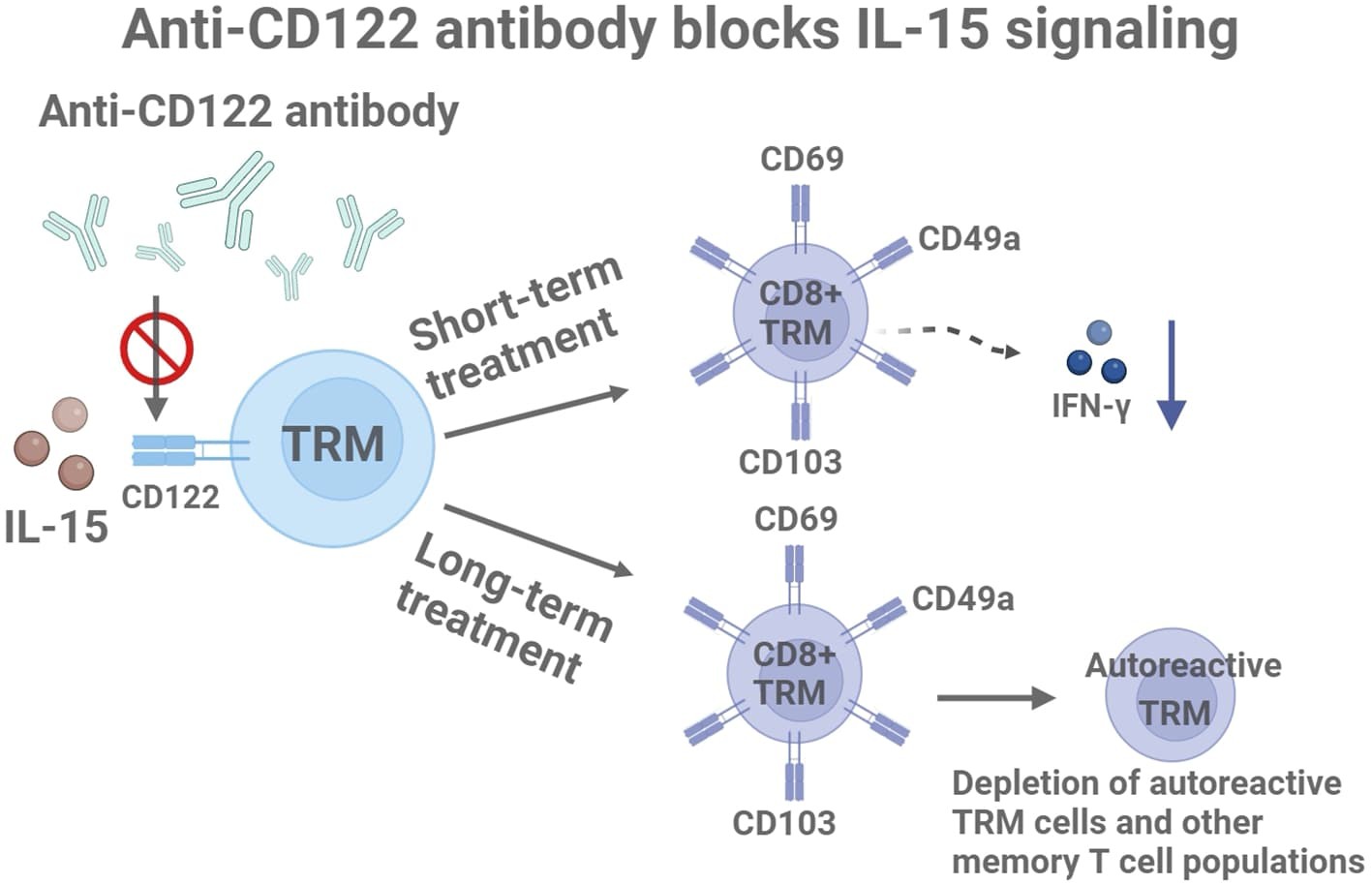
FB102 is a monoclonal antibody directed against CD122 and is being developed to block the proliferation and activation of pathogenic NK cells and specific T cell subsets induced by IL-2 and IL-15, without affecting the proliferation of regulatory T cells.
Its development in vitiligo is closely connected to the TRM biology described above. Early clinical data have shown activity after a limited treatment period, making FB102 a potential candidate for meaningful disease control.
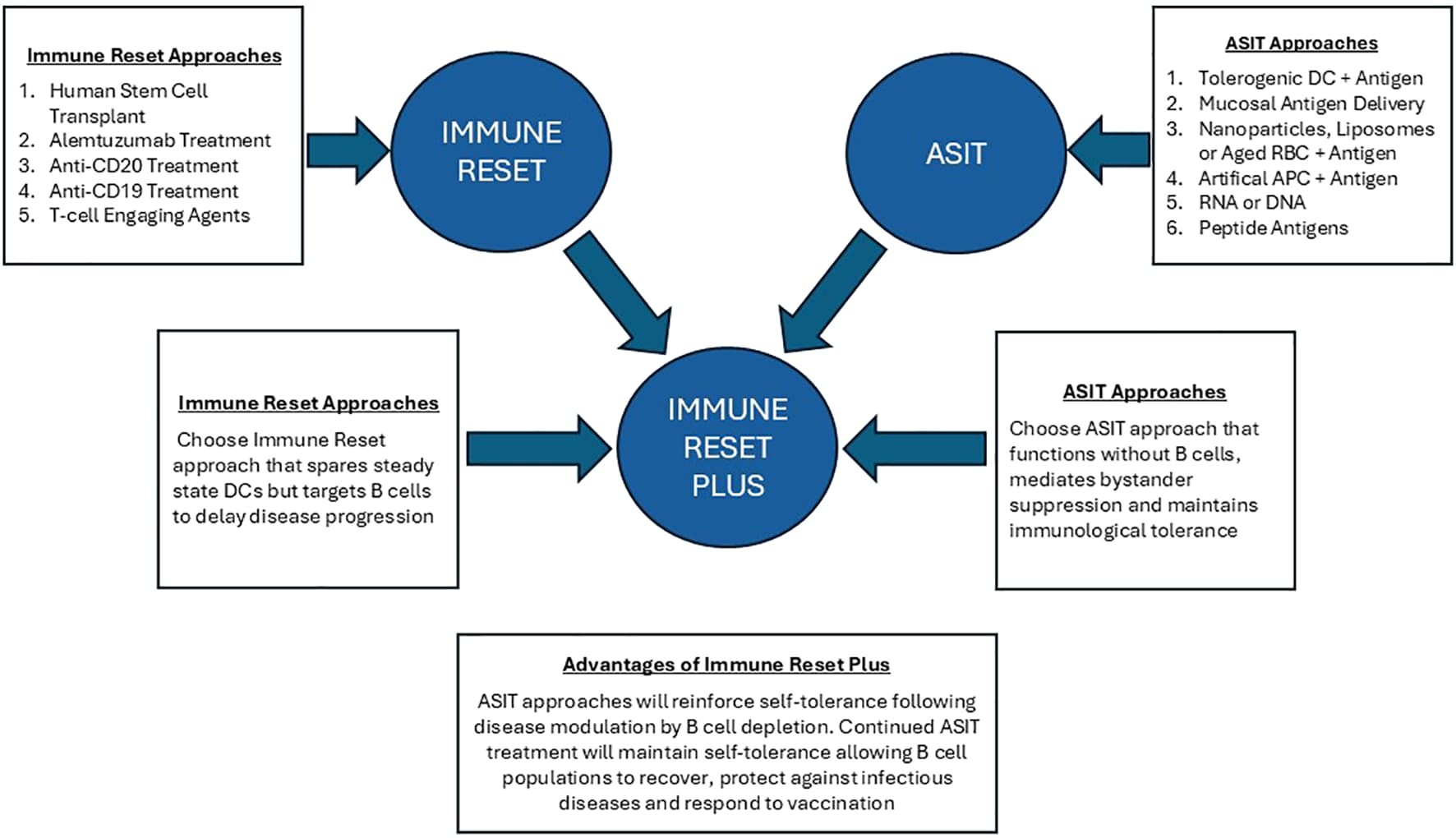
Beyond CD122, some newer autoimmune therapies are being developed around the idea of an immune reset: reducing or removing autoreactive lymphocyte populations enough to restore a more stable immune state. According to Gaspal et al. (2025), immune reset can be achieved by drastic disruption of the immune system. Clinical approaches such as autologous hematopoietic stem-cell transplantation and lymphocyte-depleting antibodies show that immune intervention can produce durable responses in some diseases. However, experience with alemtuzumab, an anti-CD52 antibody used in multiple sclerosis, also highlights some risks, such as immune reconstitution being accompanied by secondary autoimmune disorders.
These findings illustrate how protective memory T and B cells, tissue-resident memory T cells, and regulatory T cells all have important physiological roles. This paper argues the case for the combined use of B cell depletion plus antigen-specific immunotherapy to maintain self-tolerance in autoimmune diseases.
So far, evidence from several autoimmune diseases suggests that long-lived immune populations can contribute to persistent or recurrent disease. In some settings, including vitiligo, tissue-resident memory T cells have emerged as one potential therapeutic target.
Antibodies can intervene at different levels of autoimmune pathology, from depleting immune-cell populations to blocking cytokines and their receptors. Emerging approaches such as CD122 blockade raise the possibility of interfering with pathways that support disease-associated memory cells, although whether this can produce durable disease modification in patients remains unclear.
A next step would be to determine whether pathogenic immune populations can be modulated with sufficient selectivity while preserving the protective immune memory needed for normal host defense.
Biointron’s Q2 2026 Antibody Industry Trends report aims to explore the events a……
Artificial intelligence (AI) can be used throughout the drug development process……
Peptides and antibodies have different strengths as therapeutic molecules. Pepti……
Therapeutic antibodies are often used to block receptors or neutralize soluble m……