


Inhaled antibody therapies represent a promising advancement in therapeutics, particularly for treating respiratory infections. By delivering antibodies directly to the lungs via inhalation, these therapies target pathogens at the primary site of infection, potentially improving efficacy and reducing systemic side effects. This localized approach ensures higher concentrations of the therapeutic agent in the respiratory tract, which is particularly beneficial for diseases like respiratory syncytial virus (RSV), a leading cause of lower respiratory tract infections in children and the elderly. Traditional administration methods involve intravenous or oral delivery.
On Monday, Inhalon Biopharma announced plans for its inhaled antibody therapy, IN-002, to enter human clinical trials in 2026 for RSV. This therapy is designed for at-home use with a handheld nebulizer, allowing patients to self-administer the treatment, which could reduce hospitalizations and ease the burden on healthcare systems. Preclinical studies have demonstrated that inhaled delivery of antibodies can achieve significantly higher concentrations in the respiratory tract compared to intravenous administration, even with lower overall doses. This suggests that inhaled therapies like IN-002 could offer a more effective and patient-friendly option for treating RSV and potentially other respiratory infections.
Their antibody platform uses "muco-trapping" antibodies to treat acute respiratory infections (ARIs). These antibodies work by binding to pathogens in the airway mucus, immobilizing them, and facilitating their rapid removal through the body's natural mucus clearance mechanisms, such as ciliary movement and coughing. This approach not only prevents the spread of infection within the lungs but also allows for efficient elimination of viruses, bacteria, and fungi.

Meanwhile, AstraZeneca and Amgen’s novel inhaled anti-TSLP therapy, AZD8630/AMG 104, is a fragment antibody against thymic stromal lymphopoietin. It has demonstrated safety and efficacy in reducing airway inflammation in moderate to severe asthma, according to phase 1 study results. The study found a statistically significant 23% reduction in fractional exhaled nitric oxide (FeNO), an indicator of airway inflammation, with no serious adverse events reported. Most adverse effects were mild, and the development of anti-drug antibodies was low, occurring in 1.3% of patients in Part A and 3.9% in Part B. Researchers highlighted the potential of inhaled biologics to provide broader access to biologic therapy for asthma patients who are ineligible for systemic treatments, marking a significant advancement in asthma care.
In the research space, scientists have developed a "LOOP" platform, a four-step workflow designed to develop inhaled lipid nanoparticles (LNPs) specifically for pulmonary mRNA-mediated antibody therapy. This platform addresses challenges such as resistance to shear force damage, mucus penetration, cellular internalization, rapid lysosomal escape, and target protein expression. This formulation demonstrates stability and enhanced mRNA expression in the lungs. By incorporating mRNA encoding IL-11 single chain fragment variable (scFv), scFv@iLNP-HP08 LOOP effectively delivers and secretes IL-11 scFv to the lungs of male mice, significantly inhibiting fibrosis.

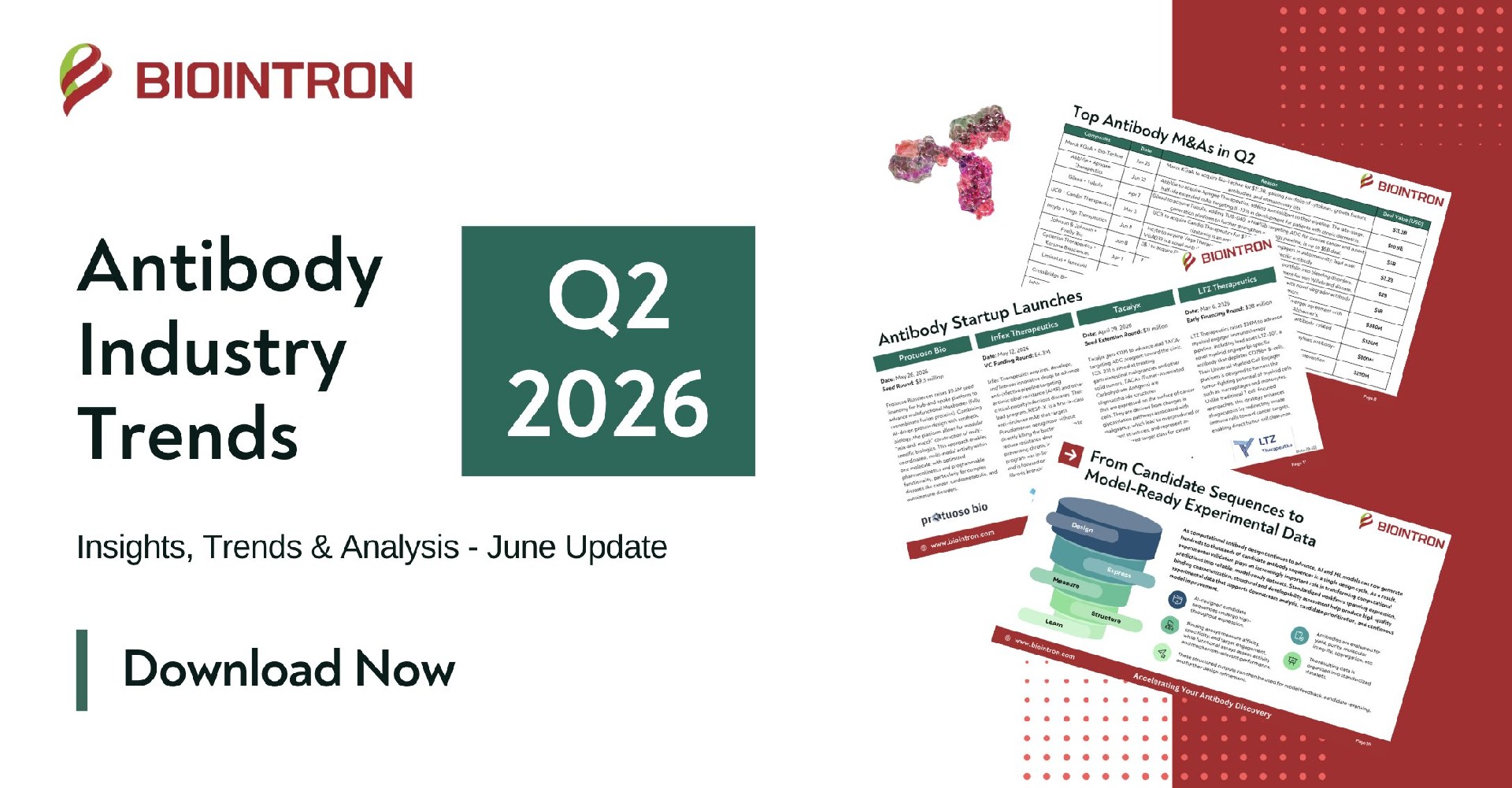
Biointron’s Q2 2026 Antibody Industry Trends report aims to explore the events a……
Artificial intelligence (AI) can be used throughout the drug development process……
Peptides and antibodies have different strengths as therapeutic molecules. Pepti……
Therapeutic antibodies are often used to block receptors or neutralize soluble m……