


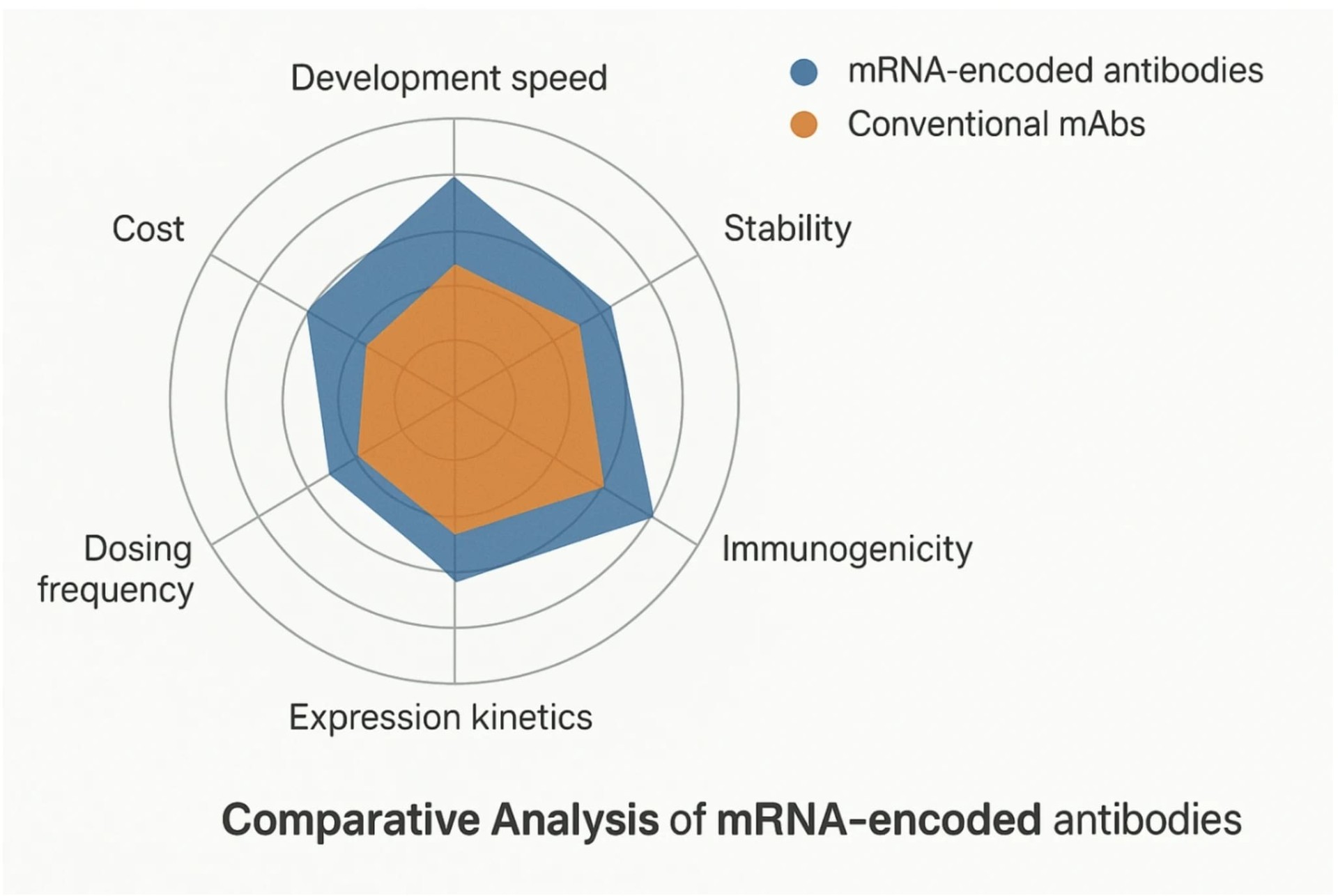
mRNA-encoded antibodies are an approach in which synthetic messenger RNA carries the sequence of a therapeutic antibody into cells, allowing the body's cellular machinery to transiently produce and secrete the antibody. This differs from conventional monoclonal antibody therapy, where antibodies are manufactured as recombinant proteins outside the body and then administered to patients.
Most current approaches package the mRNA in lipid nanoparticles (LNPs), small lipid-based particles that protect RNA from degradation and help it enter cells. For full-length immunoglobulin G (IgG) antibodies, the mRNA must encode the antibody heavy and light chains so that they can be translated, assembled and secreted correctly. The same general principle can also be applied to engineered formats such as bispecific antibodies.
Recent studies are examining how effectively this approach can generate functional antibodies in vivo, how long those antibodies persist, and whether mRNA delivery can support antibody formats and therapeutic functions beyond conventional IgG.
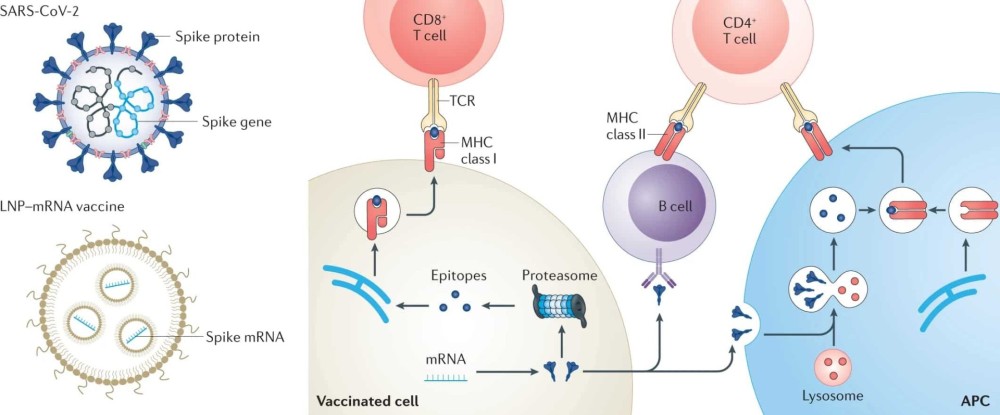
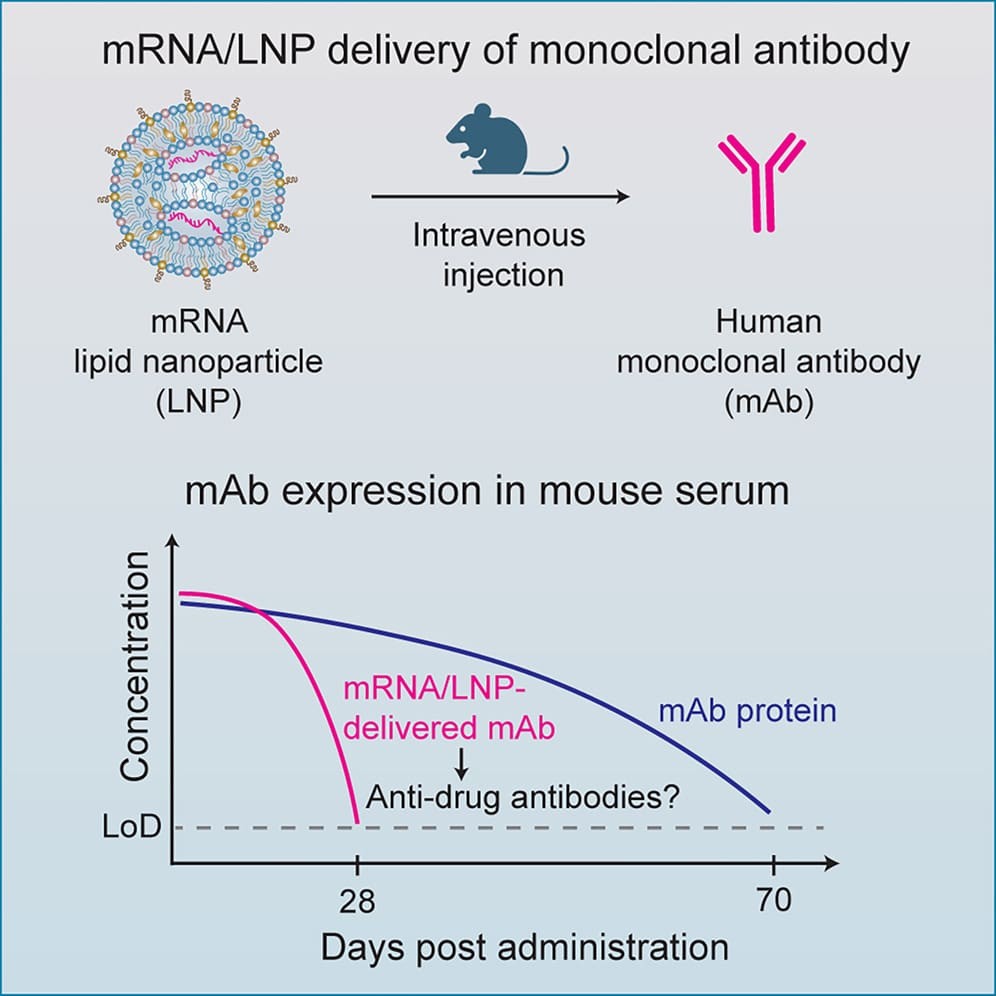
A recent paper by Vu et al. (2026) describes encoding conventional full-length monoclonal antibodies against SARS-CoV-2 and influenza. The researchers delivered mRNA encoding both antibody heavy and light chains in LNPs and compared the resulting antibodies with administration of recombinant antibody protein.
Intravenous and intramuscular mRNA-LNP delivery produced high antibody concentrations in mouse serum and lungs, whereas intranasal delivery was considerably less effective. Peak serum levels were comparable to recombinant antibody administration, demonstrating that cells could produce functional neutralizing antibodies from the delivered mRNA. The biological outcome depended on the virus and timing of challenge: the SARS-CoV-2 antibody reduced viral burden but provided less protection than recombinant protein when animals were challenged later, whereas an influenza antibody produced from mRNA provided strong protection when animals were challenged one day after dosing.
One complication was the development of anti-drug antibodies (ADAs), which are immune responses against the therapeutic antibody. ADAs accelerated antibody clearance in the mice. The authors note that this was likely influenced by expressing human antibodies in mice, making it difficult to directly extrapolate the persistence data to humans. The results therefore demonstrate functional antiviral antibody production while also showing how LNP formulation, administration route, immunogenicity, and expression duration can influence efficacy.
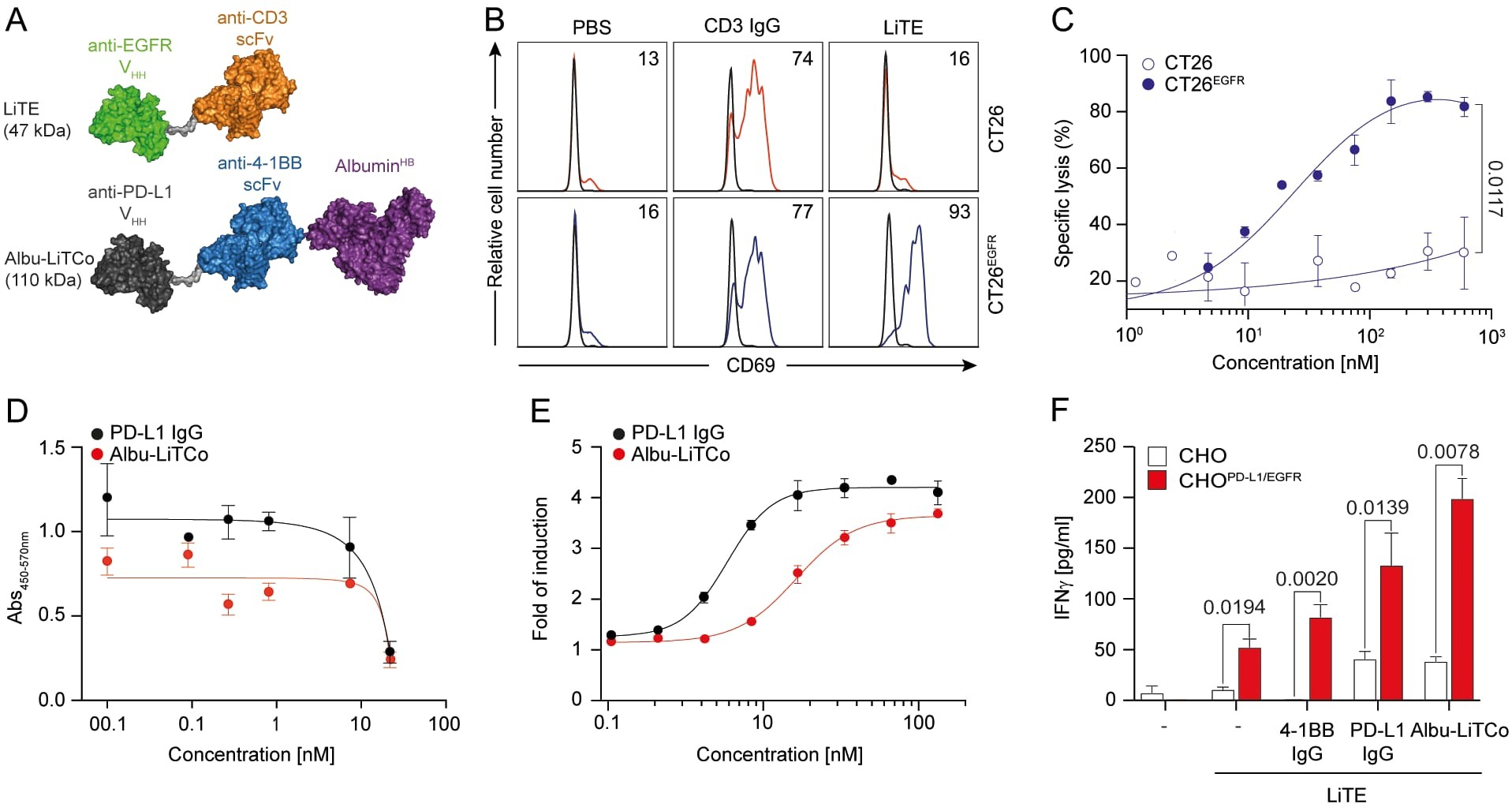
Moving from conventional IgG to a more engineered antibody format, another recent paper by Hangiu et al. (2025) investigated two bispecific antibodies delivered as mRNA. Bispecifics are engineered proteins that recognize two different molecular targets. One was an EGFR×CD3 T-cell engager (TCE), designed to link EGFR-positive cancer cells with CD3 on T cells and promote tumor-cell killing. The second targeted PD-L1 and the T-cell costimulatory receptor 4-1BB, providing PD-L1-dependent 4-1BB stimulation while also interfering with the PD-1/PD-L1 immune-checkpoint pathway. After intravenous delivery using a polymer/lipid nanoparticle formulation, both mRNAs produced circulating, biologically active bispecific antibodies.
Importantly, mRNA delivery extended circulating exposure relative to administration of the corresponding purified antibody fragments; the researchers also engineered the PD-L1×4-1BB molecule with an albumin-binding component to further extend its half-life. In an EGFR-positive colorectal tumor mouse model, either mRNA alone produced only a non-significant delay in tumor growth, whereas their combination significantly reduced tumor growth and produced one complete regression among five treated animals. Increased CD8+ T-cell infiltration was also detected in tumors receiving the T-cell engager or the combination, without splenomegaly or hepatomegaly during the study. The study shows how mRNA delivery can be used for engineered antibody fragments with different mechanisms and exposure profiles.
A recent review of mRNA-encoded antibodies highlights how the approach is being explored across several infectious diseases, with the antibody produced in vivo after delivery of its mRNA sequence. For example, in preclinical SARS-CoV-2 studies, mRNA-1940 generated neutralizing antibody levels within 24-48 hours, while a two-antibody construct, mRNA-1230, was designed to target non-overlapping spike epitopes and broaden activity against viral variants. Other examples include mRNA-encoded antibodies against Zika virus that protected pregnant mice and macaques from infection and vertical transmission, an mRNA-encoded SYN023-like antibody that provided post-exposure protection against rabies in hamsters, and broadly neutralizing influenza antibodies targeting conserved hemagglutinin stem regions that protected ferrets against multiple strains.
A recurring challenge across these studies is how long therapeutically useful antibody concentrations can be maintained. According to Singh, expression from conventional mRNA generally peaks within about 24-72 hours and declines over the following one to two weeks, a profile that may be better suited to acute infection or post-exposure prophylaxis than to conditions requiring prolonged antibody exposure. The clinical experience with Moderna's Chikungunya-targeting mRNA-1944 illustrates this limitation: antibody was detectable in humans, but expression declined relatively quickly, while higher doses were associated with systemic reactogenicity that limited further dose escalation. Delivery also remains an important variable as LNPs tend to accumulate in the liver and spleen, making efficient delivery to other tissues more difficult, and repeated treatment may raise concerns about immune responses to the RNA or carrier. Approaches currently being researched include self-amplifying RNA to extend expression, alternative administration routes, lower-dose formulations and tissue-targeted delivery systems.
Biointron's Q3 2026 Antibody Industry Trends report aims to explore the events a……
Artificial intelligence (AI) can be used throughout the drug development process……
Peptides and antibodies have different strengths as therapeutic molecules. Pepti……