



For decades, many disease-driving proteins were described as “undruggable” because they lacked suitable binding pockets for small-molecule drugs or were inaccessible to conventional biologics. Antibodies face an especially clear limitation: they generally bind proteins located on the cell surface or secreted into the extracellular environment, while many major cancer drivers, including KRAS, p53, and transcription factors, operate inside cells.
New antibody formats, conjugation strategies, immune-cell-engaging technologies, and computational design methods are beginning to challenge this boundary. These approaches create alternative ways to recognize, deliver therapies to, or functionally act on targets that conventional antibodies cannot reach.
One emerging strategy takes advantage of the way cells process intracellular proteins. Proteins inside the cell are continuously broken into short peptide fragments. Some of these fragments are transported to the cell surface and displayed by human leukocyte antigen, or HLA, molecules, where they can be inspected by T cells.
TCR-like antibodies, also called TCR-mimic antibodies, are engineered to recognize these peptide-HLA complexes. In effect, they allow an antibody to detect molecular evidence of an intracellular protein without requiring the antibody itself to enter the cell.
Researchers at the Korea Advanced Institute of Science and Technology recently applied this strategy to KRAS(G12D), a common cancer-driving mutation found in pancreatic, colorectal, and lung cancers. By combining computational antibody design with cell-based screening, the team developed a TCR-like antibody that recognized a KRAS(G12D)-derived peptide displayed on cancer cells while showing little reactivity toward normal cells or unrelated proteins.
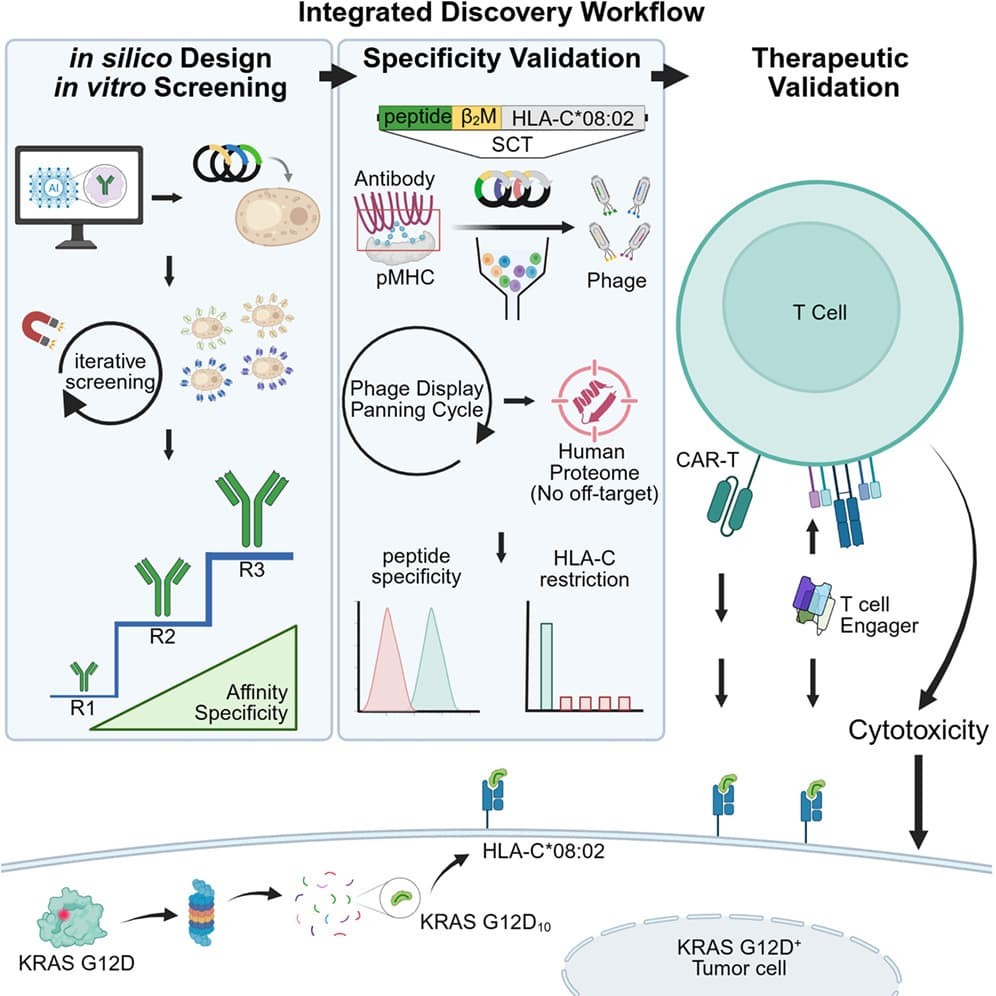
Similar strategies have been explored for mutant p53. These studies suggest that intracellular cancer mutations may become antibody targets when their peptide fragments are presented on the cell surface.
Peptide-HLA complexes are often displayed at relatively low levels, which can make them difficult to target effectively. Bispecific antibodies may help overcome this limitation.
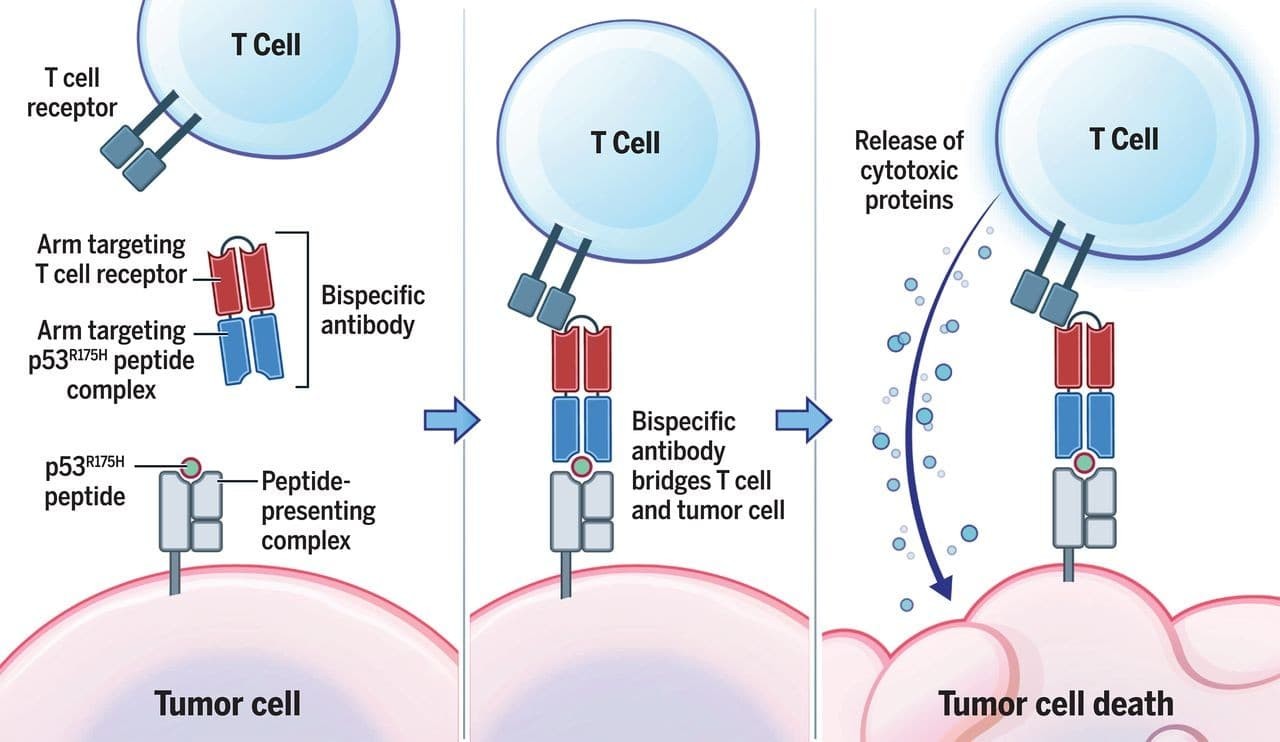
One arm of a bispecific antibody can recognize a mutation-derived peptide-HLA complex, while the other binds CD3 on T cells. This brings immune cells into close proximity with the tumor and redirects them toward cells displaying the target peptide.
A bispecific antibody targeting a peptide derived from the p53(R175H) mutation has demonstrated this principle in preclinical research. By coupling recognition of the mutant peptide-HLA complex with T-cell recruitment, the molecule produced selective activity against cancer cells carrying the mutation.
However, this approach introduces additional challenges. Activity may depend on a patient’s HLA type, the efficiency of antigen processing, the amount of peptide displayed, and the ability of tumor cells to maintain HLA expression. Careful assessment of cross-reactivity is also essential because unintended recognition of similar peptide-HLA complexes could damage healthy tissues.
Another strategy does not require the antibody to bind the intracellular target directly. Instead, the antibody acts as a targeted delivery vehicle for a payload that can enter the cell and affect intracellular biology.
Antibody-drug conjugates already use this principle to deliver cytotoxic molecules to cancer cells. Emerging conjugate designs could extend the concept beyond traditional chemotherapy payloads to include molecular glues, targeted protein degraders, oligonucleotides, enzymes, and immune-modulating agents.
Molecular glues and degraders are particularly relevant to undruggable proteins because they can alter protein stability or recruit cellular machinery to eliminate a disease-driving protein. Delivering these compounds selectively through an antibody could improve their therapeutic index by concentrating their activity in target cells.
Antibody-oligonucleotide conjugates may similarly enable targeted delivery of nucleic acids that suppress, replace, or modify disease-related gene activity. The success of these approaches will depend not only on antibody specificity, but also on internalization, intracellular trafficking, linker stability, and efficient payload release.
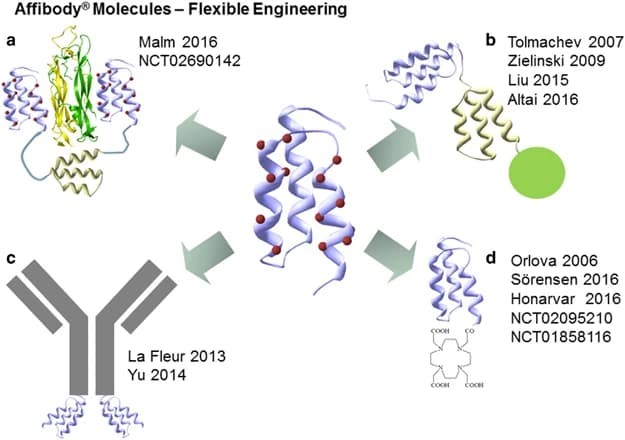
Chemical and genetic engineering are also broadening what antibodies can do. Smaller formats, including antibody fragments, nanobodies, and affibody-like proteins, may improve tissue penetration and provide greater flexibility for constructing multifunctional therapeutics.
Intracellular antibodies, sometimes called intrabodies, are designed to bind proteins inside cells. Their broader therapeutic use remains limited by delivery, because most antibody proteins cannot naturally cross cell membranes. Advances in delivery systems may eventually make intracellular antibody engagement more practical.
Other engineered antibodies combine several functions in one molecule, including target recognition, immune-cell recruitment, imaging, enzymatic activity, or controlled payload release. These designs shift antibodies from passive binding agents toward programmable therapeutic platforms.
Computational protein design may further expand the range of accessible targets. Traditional antibody discovery often depends on existing binders, experimentally generated libraries, or detailed structural information. De novo design aims to generate antibodies directly from target structure, including for epitopes with little or no prior binder information.
Absci, for example, has described the design of antibodies against “zero-prior” epitopes, which are target sites without known antibody complexes or extensive structural precedent. The KRAS(G12D) study similarly combined computational design with experimental screening to identify antibodies against a difficult peptide-HLA target.
While designing a binder against an underexplored extracellular epitope is different from reaching an intracellular protein, computational methods can increase the number of sequences and target sites that can be explored.
As design capacity grows, the bottleneck increasingly shifts to experimental validation. AI-generated antibodies must still be assessed for expression, affinity, specificity, cross-reactivity, stability, aggregation, nonspecific binding, cellular activity, and manufacturability.
No single technology will make every disease-driving protein accessible to antibodies. Instead, the emerging trend is toward modality-specific solutions.
TCR-like antibodies can recognize fragments of intracellular mutations. Bispecific antibodies can amplify immune responses against low-density targets. Conjugates can deliver therapeutically active molecules into selected cells. Smaller formats and intracellular binders may access biological spaces that conventional antibodies cannot. Computational design can explore epitopes that previously lacked known binders.
The more useful question may therefore be a combination of recognition mechanism, antibody format, payload, delivery strategy, and experimental validation that can make that target therapeutically actionable.
Biointron’s Q2 2026 Antibody Industry Trends report aims to explore the events a……
Artificial intelligence (AI) can be used throughout the drug development process……
Peptides and antibodies have different strengths as therapeutic molecules. Pepti……
Therapeutic antibodies are often used to block receptors or neutralize soluble m……