



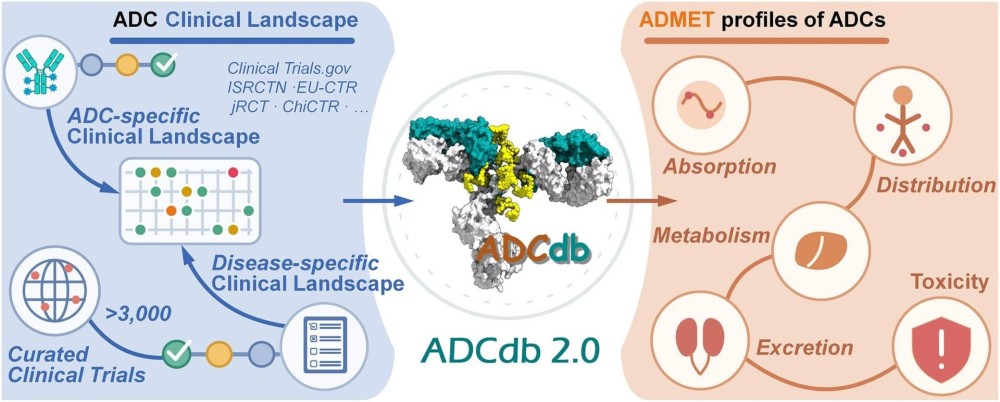
The latest update to ADCdb, a resource for antibody-drug conjugate research, captures the scale of the field. Published by Sun et al. (2026), ADCdb 2.0 showcases clinical development information on 542 ADCs and more than 3,000 curated trials. It also includes more than 4,000 profiles covering absorption, distribution, metabolism, excretion, and toxicity (ADMET). These records let researchers explore how target selection, drug design, and pharmacology vary across programs.
This leads to a question facing researchers of new ADCs. When several candidates target the same antigen or compete in the same indication, what evidence would show that one offers a meaningful advantage? The answer depends on the problem the drug was designed to solve. An ADC intended to reach a wider range of tumor cells poses a different clinical question from one designed to reduce a dose-limiting toxicity.
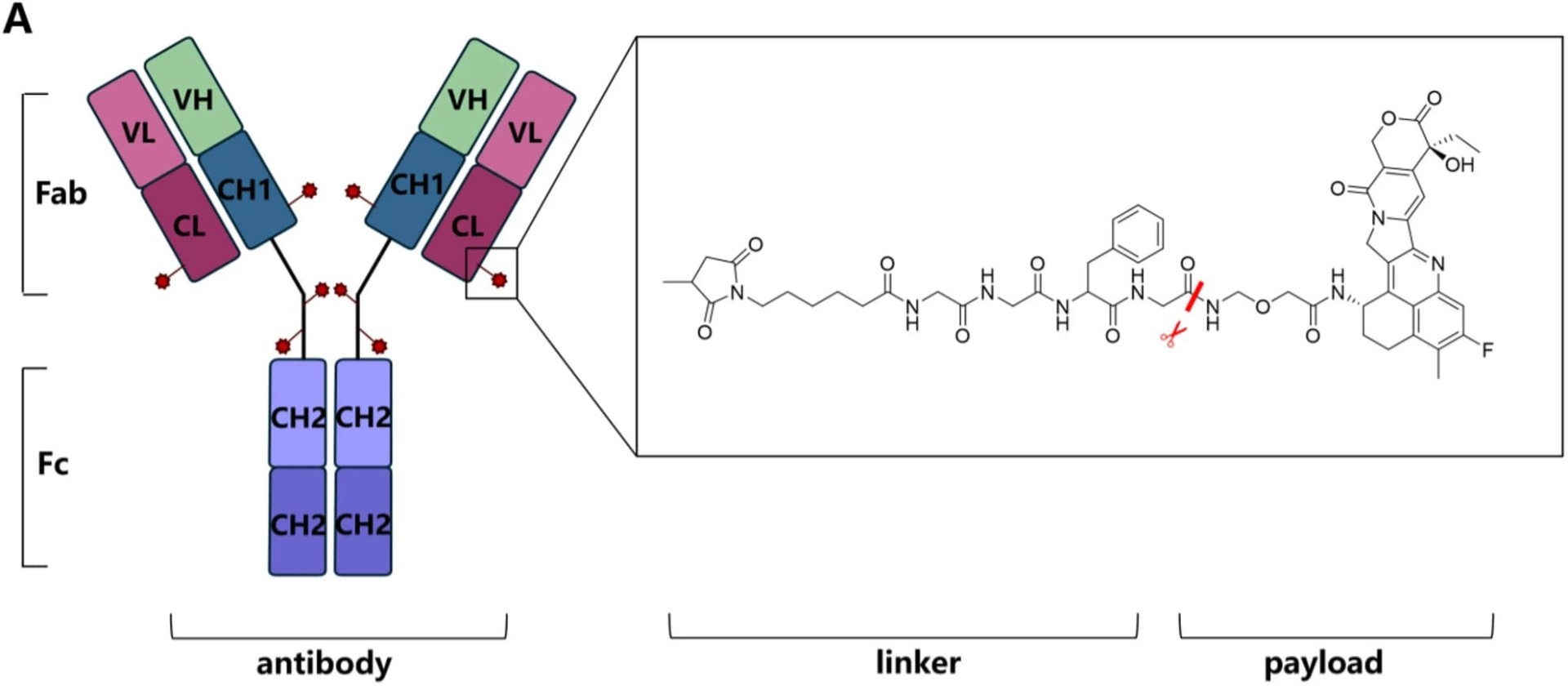
A conventional ADC links a targeting antibody to a cytotoxic payload. Its activity depends in part on where the target is expressed, how the conjugate behaves in circulation, and where the payload is released. Tumors can contain a mixture of cells with high, low, or undetectable levels of the target. An ADC directed at a single antigen can therefore leave some tumor cells less exposed to the drug. Some payloads can also reach neighboring cells after release, a phenomenon known as the bystander effect.
Bispecific ADCs offer another way to address variable antigen expression. A construct that recognizes two distinct antigens could, in principle, reach more cells in a heterogeneous tumor. Other programs are exploring new cytotoxic payloads or payloads that stimulate an immune response. Each approach has a different rationale, and any gains in tumor coverage or tolerability need to be demonstrated for the individual drug. A recent research highlight focused on China points to gastric and esophageal cancers as settings where these approaches could address substantial unmet need. It also highlights persistent barriers, including limited predictive biomarkers and toxicities such as ocular adverse events and interstitial lung disease.
In late-stage trials, progression-free survival (PFS) measures the time from randomization until disease progression or death. Overall survival (OS) measures the time from randomization until death from any cause. PFS can provide an earlier readout of disease control, while OS captures outcomes across a longer period that may include several subsequent treatments.
In an analysis of 21 randomized ADC trials in metastatic breast cancer, Costa de Almeida and colleagues (2026) found a moderate association between treatment effects on PFS and OS across trials, with considerable uncertainty around the estimate. In about one-quarter of the trials, the PFS improvement was statistically significant while the OS improvement did not reach statistical significance. The findings suggest that a PFS gain can be informative, but its size alone offers limited guidance about the survival benefit a new trial may show.
Treatment after progression adds another layer. Patients in a control group may later receive the same ADC through crossover, another ADC, or a different effective therapy. As an accompanying JNCI editorial notes, these treatment sequences can narrow survival differences between groups. They also raise a practical question as ADCs move into earlier lines of treatment. Does giving a particular ADC sooner improve outcomes over the full course of care? Answering that question requires knowing which therapies patients received after progression, alongside measures of toxicity, quality of life, and function.
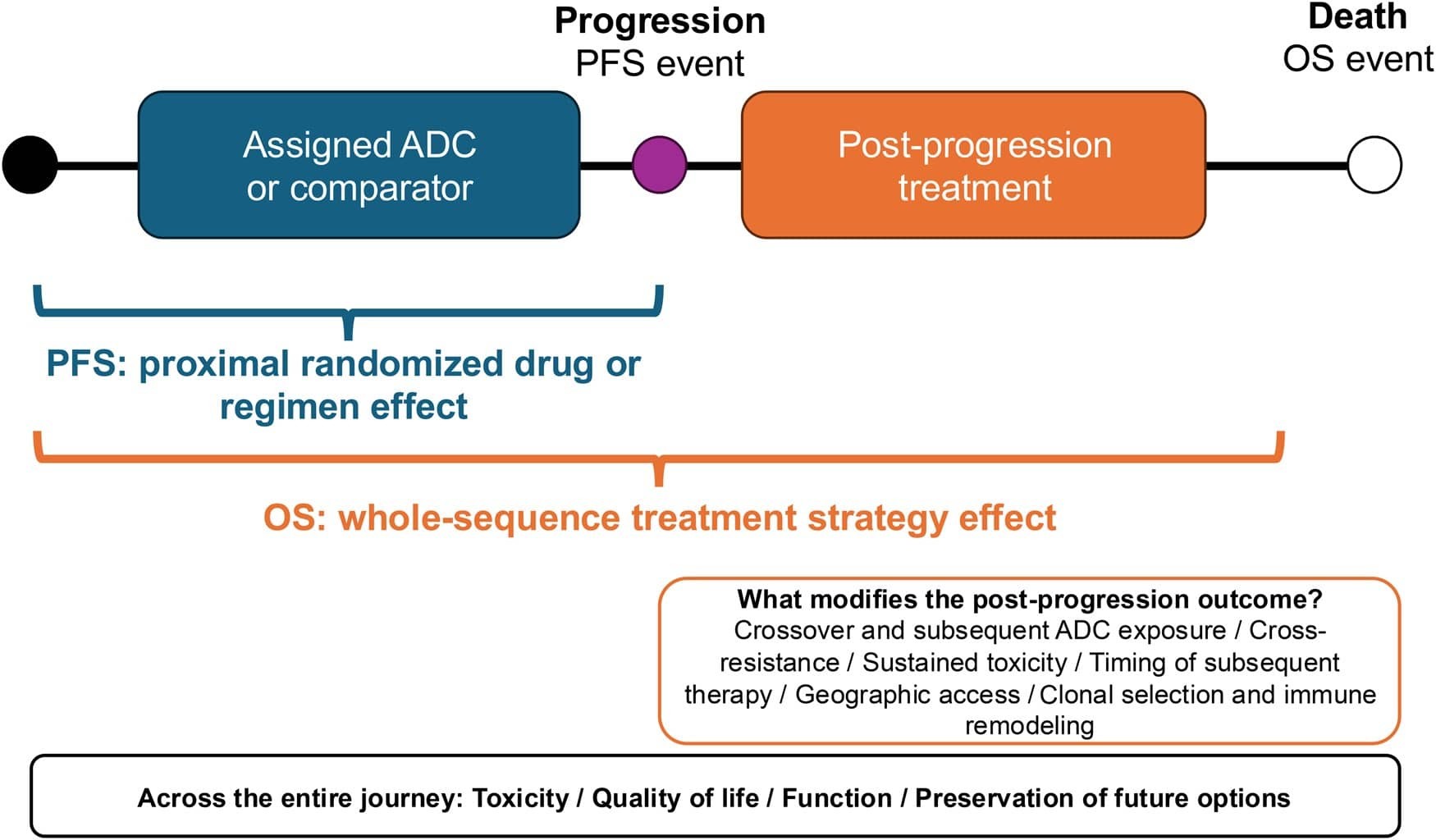
For the next wave of ADCs, the most persuasive evidence will connect a specific design goal to an outcome that matters to patients. A candidate designed to address uneven antigen expression could be evaluated for activity across prespecified biomarker groups. A candidate designed to improve tolerability would need to show that patients experience fewer or less severe side effects while maintaining disease control. As development advances, those are the comparisons that can show where a new ADC fits in care.
Biointron's Q3 2026 Antibody Industry Trends report aims to explore the events a……
A recent paper highlights a growing challenge in computational discovery. Resear……
Bispecific antibodies (BsAbs) can bind two different antigens simultaneously, of……