




Recombinant antibody production involves introducing the genetic sequence encoding an antibody into a suitable expression host. The host's cellular machinery then produces the protein, which can be collected and purified for downstream analysis.

The host cell can influence protein folding, disulfide bond formation, glycosylation and other post-translational modifications. These factors may affect antibody stability, solubility, binding behavior and other molecular properties.1
For example, antibodies produced in mammalian cells can undergo glycosylation patterns that differ from those produced in microbial systems. Since the Fc region of an antibody can carry important glycans, the production system may be particularly relevant when researchers are investigating Fc-mediated functions.
The appropriate expression system therefore depends on what researchers want to learn from their experiments. A workflow designed for rapid sequence screening may have different requirements from one intended to evaluate antibody behavior in a mammalian expression context.
Cell-free protein synthesis offers an alternative to conventional cell-based expression.
Instead of relying on living cells to produce the protein, this approach uses a prepared biological system containing the machinery required for protein synthesis. Researchers introduce the DNA or RNA template, along with the necessary substrates and energy sources, to produce the target protein outside living cells.
One of its main advantages is speed. Without the need to maintain and grow production cell cultures, cell-free systems can support rapid protein synthesis and evaluation.
This makes them useful in applications where researchers need to screen large numbers of sequences or quickly assess whether designed candidates can produce detectable protein.
For AI-driven antibody programs, rapid expression can help shorten the time between computational sequence generation and initial experimental assessment.
However, cell-free expression has limitations. Its biochemical environment differs from that of living cells, and post-translational modifications may not fully reproduce those found in mammalian expression systems. Protein yield and quality can also vary depending on the reaction conditions and molecular design.
As a result, cell-free expression is not necessarily a substitute for mammalian production. Its suitability depends on the intended application and the properties being investigated.
Chinese hamster ovary (CHO) cells are widely used in the production of therapeutic recombinant proteins, including monoclonal antibodies.
One reason for their widespread use is their ability to produce complex proteins with folding and post-translational processing characteristics associated with mammalian cells.
CHO expression can be particularly relevant when researchers need to evaluate antibody candidates in a mammalian production context. It provides an opportunity to assess expression behavior and obtain material for downstream characterization.
For example, researchers investigating antibody developability may want to understand how efficiently a candidate expresses in CHO cells and whether the resulting protein demonstrates acceptable quality.
CHO expression is also relevant when studying antibody Fc properties, since mammalian cells can introduce glycosylation patterns that influence Fc receptor interactions and other biological functions.
However, CHO expression does not automatically guarantee therapeutic suitability. Glycosylation and other product characteristics can vary with cell lines and culture conditions. Additional characterization is needed to understand the properties of each antibody preparation.
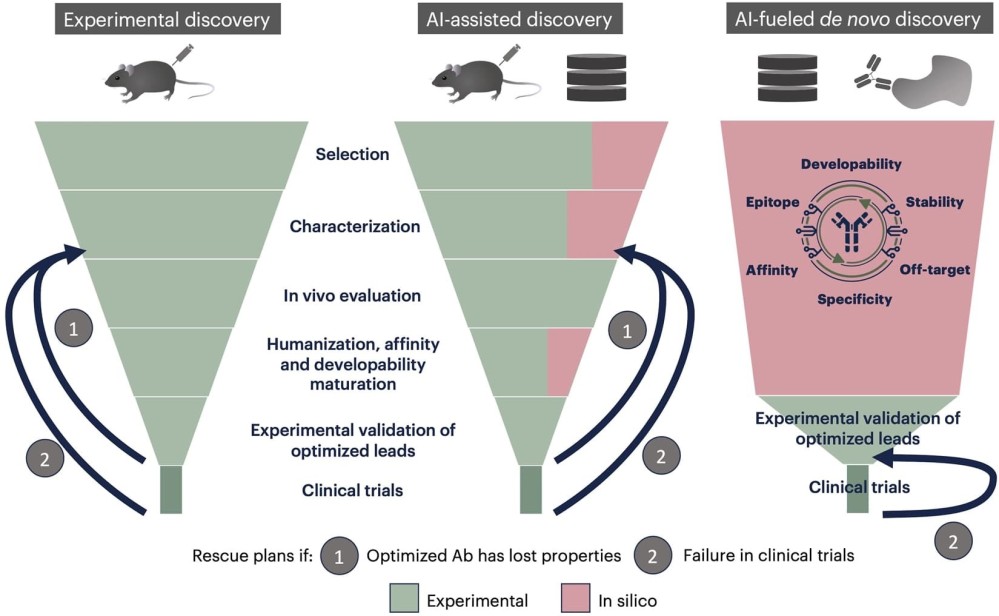
As AI models generate more antibody sequences, researchers increasingly need production workflows that can keep pace with computational design.
Biointron's RushDATA™ service supports high-throughput antibody expression and characterization, offering both cell-free and CHO expression workflows. With a processing capacity of 10,000+ antibodies per day, the platform is designed to support large-scale antibody evaluation.
Depending on the selected expression approach, sequence-to-data turnaround can be as fast as 2 days with cell-free expression or 3 days with CHO expression.
Following expression, antibody candidates can undergo characterization using relevant analytical methods, including binding analysis by biolayer interferometry (BLI) or surface plasmon resonance (SPR), as well as developability-related assessments.
This connects antibody production with experimental measurements, helping researchers evaluate computational designs using data generated under defined laboratory conditions.
Expression systems influence the properties of the antibodies researchers ultimately measure. Choosing the right system requires understanding the research objective, the biological properties under investigation, and the limitations of each production approach.
For AI-driven antibody discovery, these decisions are particularly important. Reliable experimental datasets depend on more than the number of sequences tested. They also require appropriate expression methods, consistent conditions, and measurements that reflect the questions researchers are trying to answer.
By selecting the right expression system and connecting production with downstream characterization, researchers can build a stronger experimental foundation for evaluating and optimizing antibody candidates.
Mark, J. K. K., Lim, C. S. Y., Nordin, F., & Tye, G. J. (2022). Expression of mammalian proteins for diagnostics and therapeutics: a review. Molecular biology reports, 49(11), 10593–10608. https://doi.org/10.1007/s11033-022-07651-3
Antibody discovery has traditionally relied on screening large libraries of mole……
Explore September 2026 antibody biotech deals, including major licensing agreeme……
As AI models become more involved in antibody discovery and design, the need for……