


Artificial intelligence is changing how researchers think about antibody discovery. For decades, antibody programs have usually started with experimental screening: immunizing animals, searching display libraries, identifying “hits,” and then improving those molecules through rounds of affinity maturation and developability engineering.
AI is now being used to shift more of that work upstream. Instead of only analyzing antibody candidates after they are found, computational models are increasingly being used to design, rank, optimize, and filter candidates before they enter the lab. In the broader biologics field, this reflects a larger transition from trial-and-error experimentation toward data-driven engineering, supported by sequence language models, structure prediction tools, and generative models for de novo design.
Thus, if AI can help generate candidates with strong binding, acceptable stability, low aggregation risk, and favorable developability profiles, it could shorten early discovery timelines. However, a molecule that looks promising in silico is not automatically a therapeutic antibody. It still needs to express well, bind the intended target, avoid problematic liabilities, and perform in biological systems.
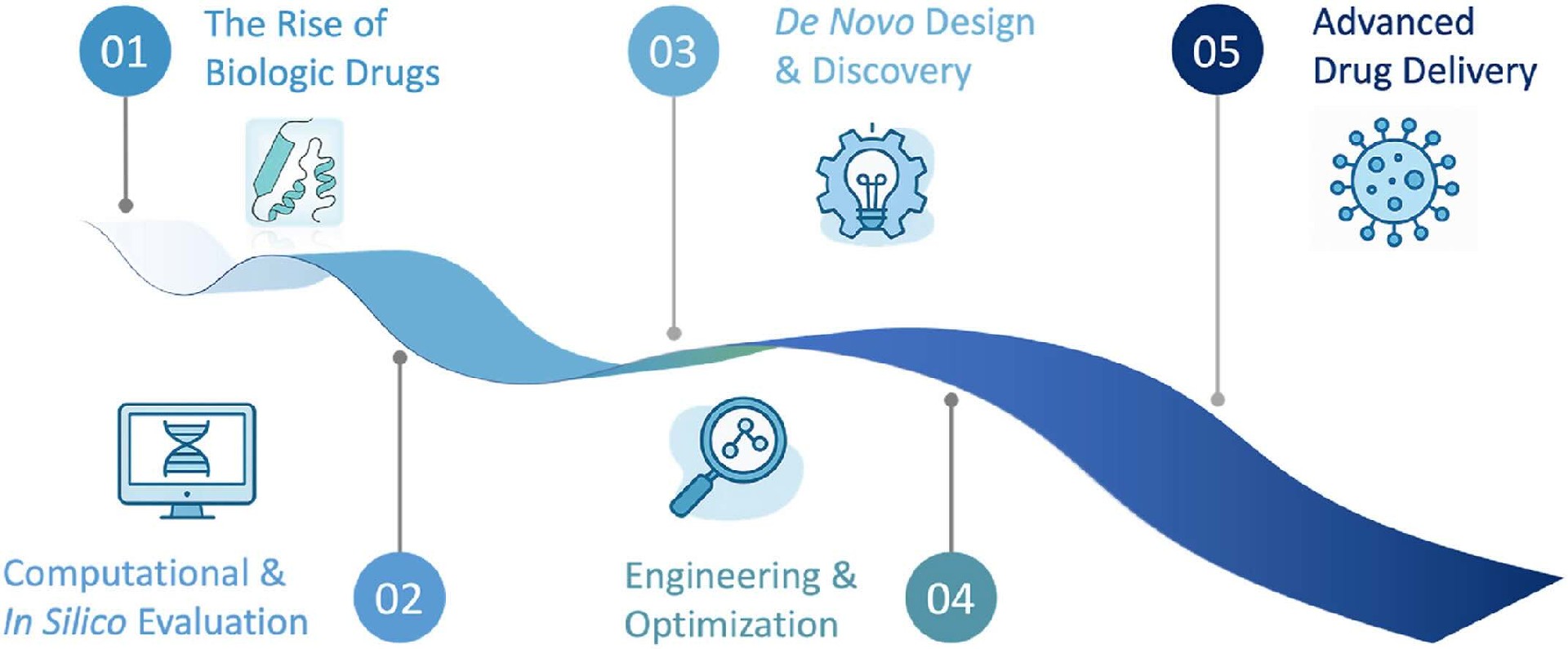
Typically, antibody discovery begins by searching large biological libraries for binders. Once a hit is found, scientists improve it through multiple rounds of mutation, screening, and testing. Generative AI aims to improve this sequence of events by designing candidates with desirable properties at the start. A recent article describes this as allowing researchers to optimize multiple antibody properties at once, including stability, solubility, pharmacokinetics, pharmacodynamics, and immunogenicity.
There are still several challenges, including antibody binding being difficult to predict because specificity is largely determined by the complementarity-determining regions (CDRs), which are flexible loops that contact the antigen. Modeling these loops accurately is challenging, and public structural data remain limited compared with the enormous diversity of possible antibody-antigen interactions.
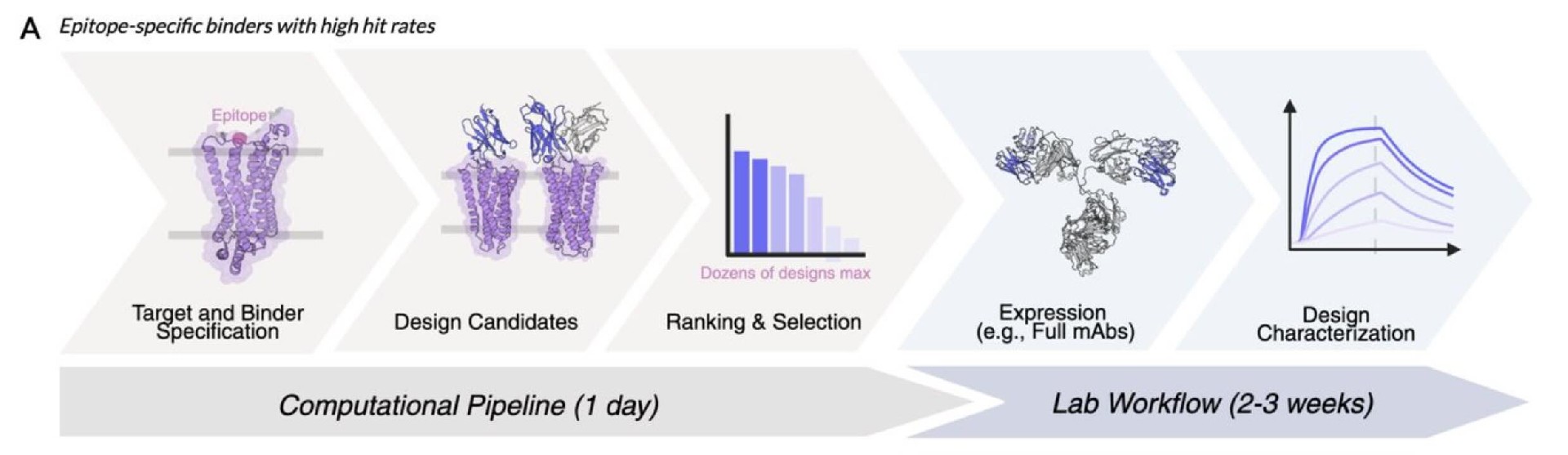
Even so, recent industry activity shows strong interest. For example, DenovAI Biotech has described a one-shot approach that aims to combine hit discovery and early optimization into a single design loop, using both AI and physics-based modeling to account for protein movement and conformational change. The company argues that this could reduce dependence on existing binder datasets, which are often scarce for difficult targets.
Chai Discovery is another high-profile example. The company is working with major large pharmas, such as Pfizer and Eli Lilly and Company, and the company is now valued at $1.3 billion while pursuing additional financing. Their Chai-2 model was used to design antibodies against 52 targets, with a reported 100-fold improvement over the success rates associated with earlier computational approaches. They have since developed the Chai-3 model.
One of the most exciting parts of AI antibody discovery is the potential for targets that are difficult, dynamic, or poorly represented in current antibody datasets. Examples include:
GPCRs (G protein-coupled receptors), which are membrane proteins with complex shapes and flexible conformations.
Ion channels, which are also membrane-associated and structurally challenging.
Peptide-MHC complexes, which are important in immunology and oncology but can be difficult to target selectively.
Multispecific antibodies, where multiple binding arms must be engineered with the right geometry and function.
Disordered or flexible protein regions, which may lack stable structures for conventional design.
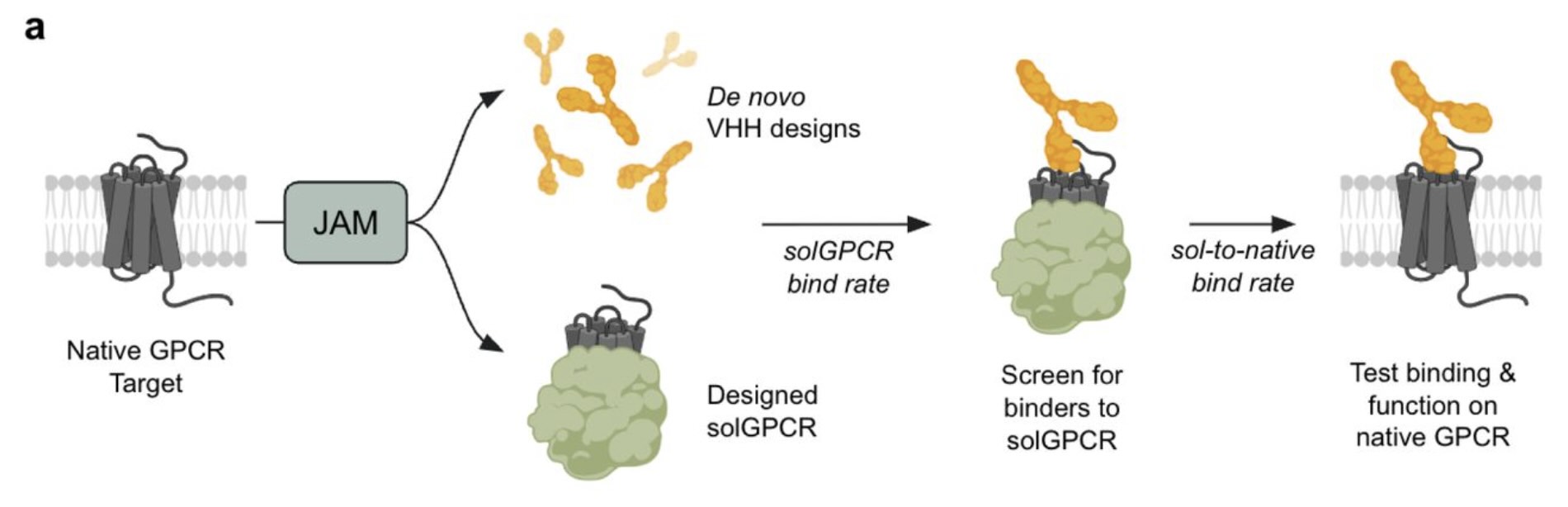
A recent article highlights GPCRs: a large family of cell membrane proteins that transmit chemical signals in and out of cells. Roughly one-third of FDA-approved medicines target GPCRs, but they are tough antibody targets because they barely protrude beyond the cell membrane.
Nabla Bio recently reported that its AI platform “JAM” generated tens of thousands of GPCR-binding antibody designs in a matter of months. In lab studies, dozens showed binding affinities comparable to, or stronger than, existing antibody drugs that took years to develop. Some candidates targeted CXCR7 without affecting the closely related GPCR CXCR4. Interestingly, one of the AI-designed antibodies appeared to turn on GPCR signaling rather than block it, which if validated, suggests AI-designed antibodies may also be able to help control cellular signaling.
In antibody development, developability includes properties such as:
Expression yield: Can cells produce enough of the antibody?
Stability: Does the antibody maintain its structure?
Solubility: Does it remain dissolved rather than forming aggregates?
Aggregation risk: Does it clump together?
Chemical liabilities: Are there sequence motifs that may degrade or modify over time?
Immunogenicity risk: Is the molecule likely to trigger unwanted anti-drug antibodies?
Pharmacokinetics: How long does it remain in the body, and where does it go?
AI models are increasingly being used to predict and optimize these features. Antibody affinity maturation can be thought of as a molecular recognition problem involving six CDRs, where AI can help navigate large sequence spaces and balance binding with developability. AI can also help identify potential T-cell epitopes or guide more precise humanization of non-human antibody sequences.
For instance, researchers at The University of North Carolina at Chapel Hill received up to $5.6 million from ARPA-H’s CATALYST program for AIM-PATH, a project designed to use AI, machine learning, pharmacokinetic modeling, and tissue-chip systems to predict how antibody-based therapies behave in the human body. The project is focused on distribution, activity, and potential toxicity, with the goal of reducing reliance on animal studies and improving prediction of human-relevant behavior.
The business environment around AI-designed biologics has become more active. One example is Generate:Biomedicines, a company that uses AI-driven technology to develop protein-based therapies, with a pipeline centered on immunology and oncology. In February 2026, the company lined up for an IPO.
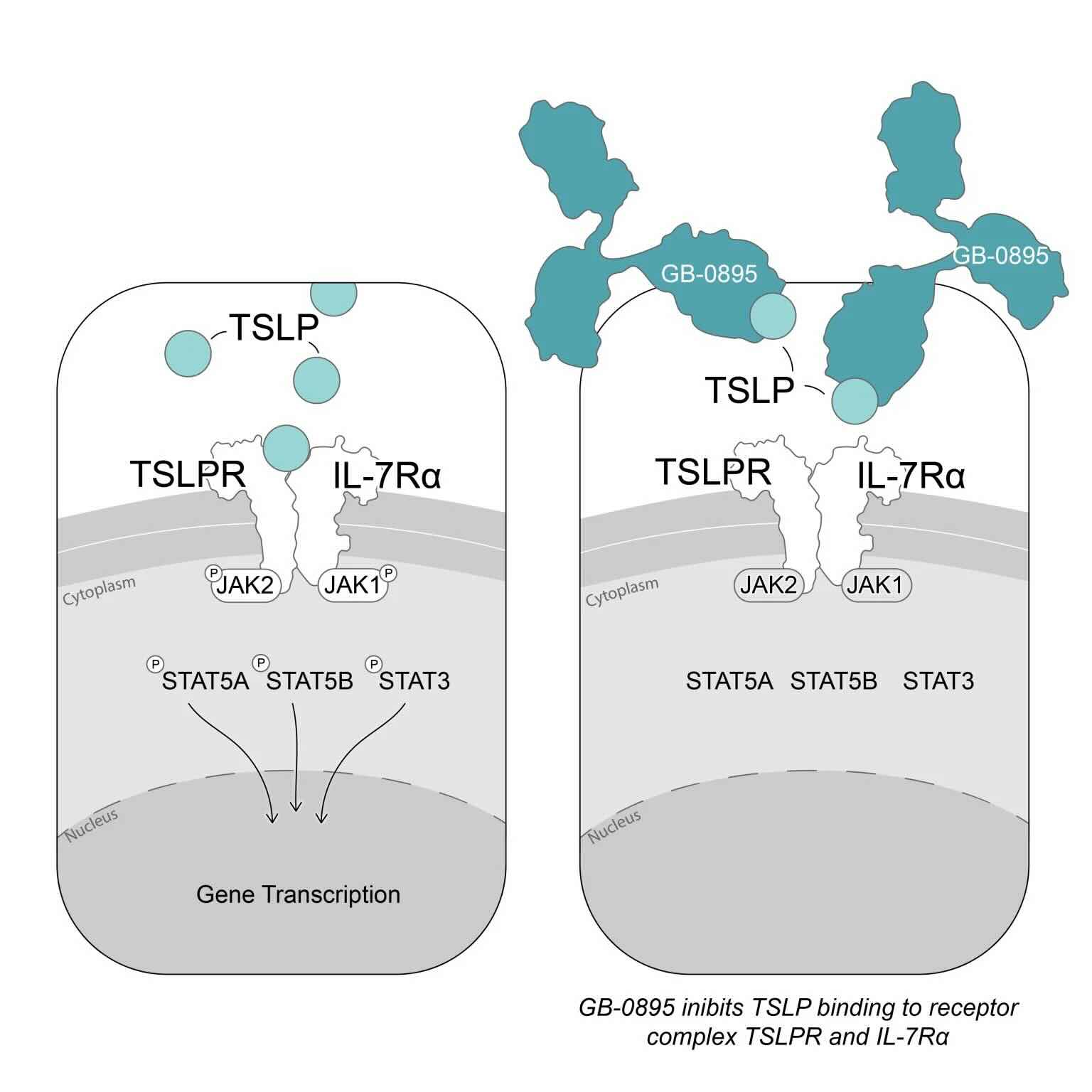
They are using AI to computationally generate therapeutic candidates, including GB-0895, a long-acting antibody designed to block TSLP, an inflammation-driving cytokine involved in asthma. The candidate was headed into Phase III testing, with two asthma studies expected to complete enrollment in 2027 and 2028. The antibody is also being studied in a Phase Ib trial for chronic obstructive pulmonary disease. Their platform combines generative and predictive models with wet-lab infrastructure, including DNA assembly, protein production, miniaturized multiplex assays, and cryo-electron microscopy. This feedback system thus generate molecules, measures them experimentally, collects structural and functional data, and uses those data to improve the next cycle of machine-learning hypotheses.
The next phase will likely be integration. AI can propose and prioritize antibody candidates, but wet-lab data determine whether those candidates express, bind, remain stable, and deserve further development.
For AI-driven antibody discovery teams, this makes high-throughput validation a critical part of the workflow. Biointron’s RushData is designed for this gap: helping teams move from AI-generated antibody sequences to rapid CHO expression and structured quality datasets. The goal is not to replace computational design, but to strengthen the feedback loop that makes AI models more useful over time.
Biointron's Q3 2026 Antibody Industry Trends report aims to explore the events a……
On September 18, 2026, the FDA approved Isembyld (apitegromab-mstn) from Scholar……
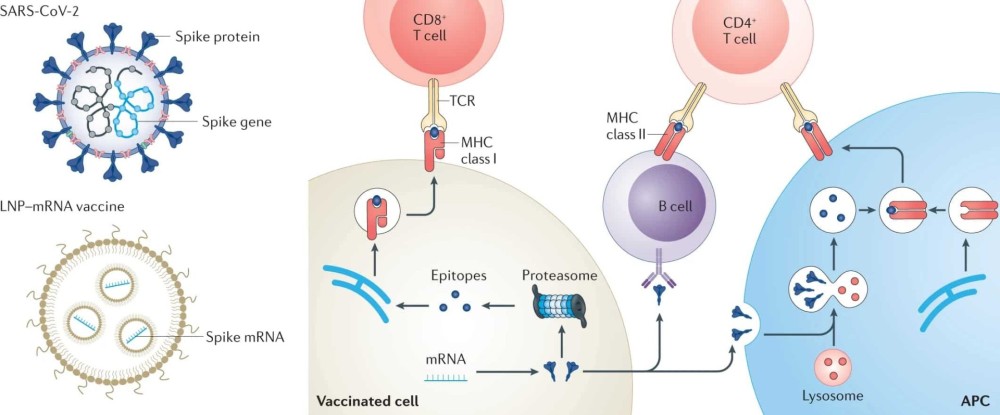
mRNA-encoded antibodies are an approach in which synthetic messenger RNA carries……
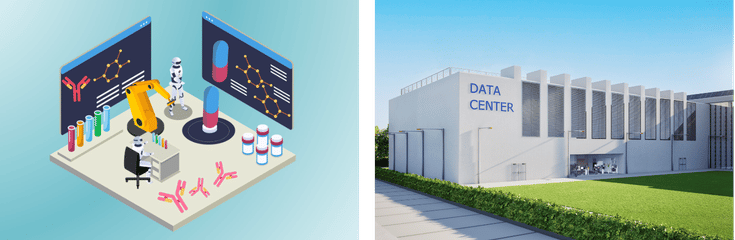
Artificial intelligence (AI) can be used throughout the drug development process……