



Monoclonal antibodies are well established in human medicine, where they are used to treat cancer, inflammatory diseases, and other conditions. Their use in veterinary medicine is newer, but antibody-based drugs are now established treatments for several conditions in dogs and cats.
These medicines are designed to bind specific biological targets, such as proteins involved in pain, inflammation, or infection. For veterinary use, another practical advantage is dosing frequency: some antibody therapies can be given weeks or even months apart, reducing the need for frequent treatment at home. Recent approvals and development programs suggest several areas of activity in companion-animal antibody therapeutics.
Osteoarthritis pain is one of the most practical applications for veterinary monoclonal antibodies. A recent review describes how bedinvetmab, marketed as Librela, targets nerve growth factor (NGF) in dogs. Meanwhile frunevetmab, marketed as Solensia, targets NGF in cats. Both are designed to reduce pain associated with osteoarthritis. More recently, additional anti-NGF antibodies have been authorized in some markets, including relfovetmab for cats and izenivetmab for dogs. Izenivetmab is notable because its European authorization uses a dosing interval of about three months.
Dermatology is another established application. Lokivetmab, marketed as Cytopoint, binds canine interleukin-31 (IL-31), a signaling protein involved in itch associated with allergic and atopic dermatitis. In late 2025, the USDA also approved tirnovetmab, marketed as Befrena, another anti-IL-31 antibody for dogs.
These examples also show that multiple antibodies can be developed against the same biological pathway, with differences in molecule design, dosing, and product profile.
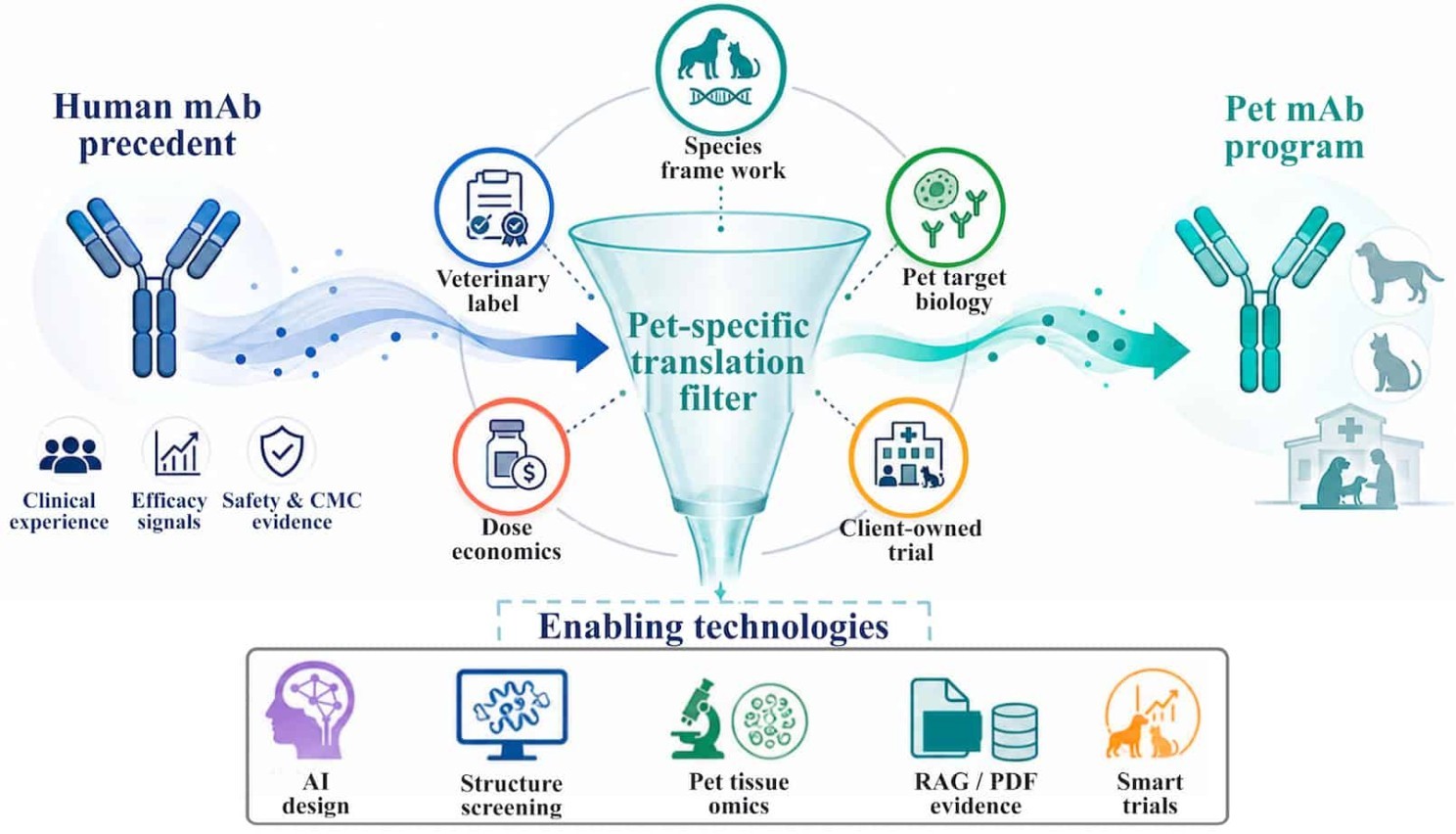
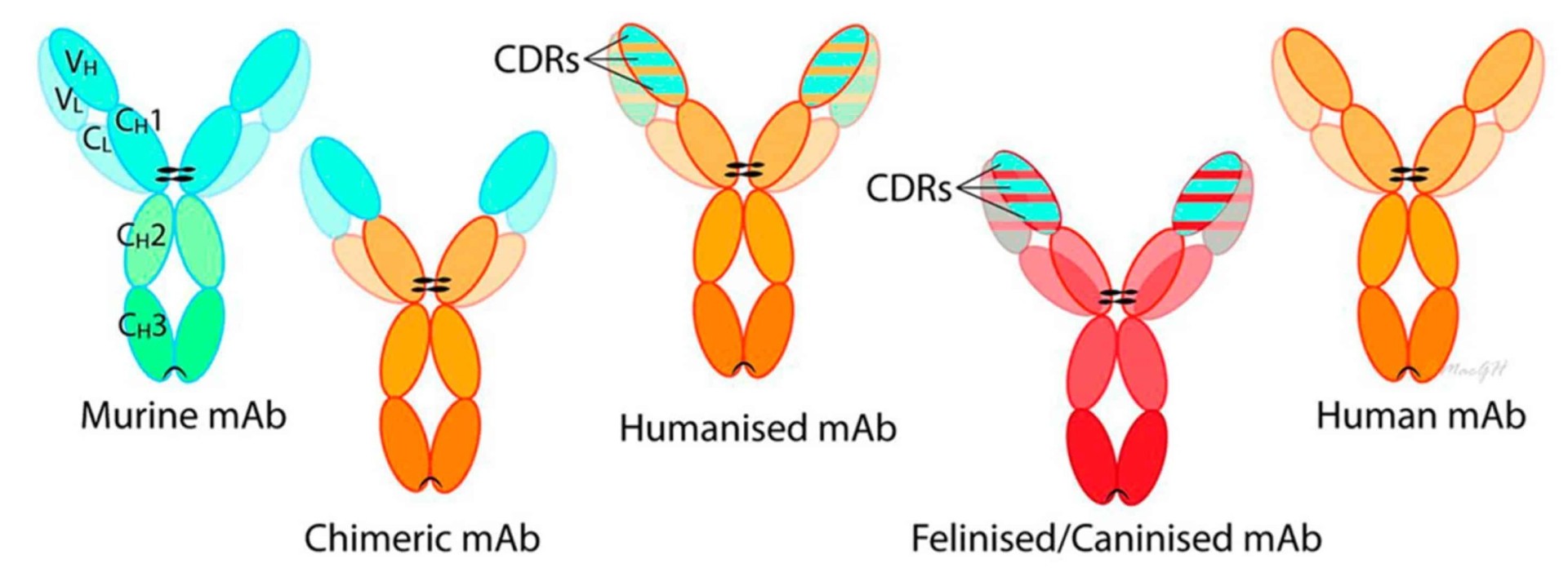
A human therapeutic antibody generally cannot simply be transferred into veterinary use. Dogs, cats, and humans differ in antibody subclasses, Fc receptors, antibody recycling biology, and immune repertoires. Those differences can affect how long an antibody remains in circulation, how it interacts with immune cells, and whether the animal develops an immune response against the treatment.
According to Wang et al. (2025), researchers therefore use approaches such as caninization and felinization, in which an antibody is engineered to be more compatible with the immune biology of dogs or cats. Techniques used in veterinary antibody discovery and engineering include recombinant methods, phage display, transgenic systems, and single B-cell approaches.
Thus, the target, antibody framework, pharmacokinetics, safety, and biological activity need species-specific evaluation.
Veterinary antibodies are also being developed outside chronic pain and inflammatory disease.
Canine Parvovirus Monoclonal Antibody (CPMA), conditionally licensed by the USDA in 2023, represents a different use case: instead of managing a chronic condition, the antibody directly neutralizes canine parvovirus during an acute infection. As an established antiviral-antibody target in dogs, CPMA is made up of a dog constant region and a rat variable region. According to Elanco, these two elements work together to neutralize canine parvovirus in vivo by selectively binding and blocking the virus from entering and destroying enterocytes.
Cancer immunotherapy is another area of investigation. Gilvetmab targets PD-1 in dogs and has been evaluated for canine oral melanoma, while other programs have explored targets such as CTLA-4 and CD20.
Most approved veterinary antibody drugs are conventional IgG molecules, but developers are also investigating:
Bispecific antibodies that recognize two targets
Antibody-drug conjugates (ADCs)
Single-domain antibodies (VHH antibodies)
Engineered Fc regions
mRNA-based antibody delivery
A recent related news article described a September 2026 deal between SyntekaBio and Geovista to use AI-assisted methods to optimize a canine bispecific antibody. The project is worth ₩530 million, and is focused on predicting antibody-antigen interactions and refining antibody sequences to improve binding.
Antibody therapeutics are now established in several areas of companion-animal medicine, including osteoarthritis pain, dermatology, and selected infectious diseases, while oncology programs remain at an earlier stage of clinical development. Compared with human medicine, however, the number of commercial veterinary mAbs is still small, and development is supported by a more limited body of species-specific biological and clinical data.
Further progress will depend on improving the foundations needed for veterinary antibody development: better characterization of canine and feline antibody frameworks and Fc biology, species-matched assays, practical manufacturing strategies, and regulatory approaches suited to veterinary biologics. New discovery and engineering methods, such as phage display, single B-cell approaches, recombinant technologies, bispecific antibodies, and antibody fragments, may also broaden the range of possible therapeutic designs.
Biointron's Q3 2026 Antibody Industry Trends report aims to explore the events a……
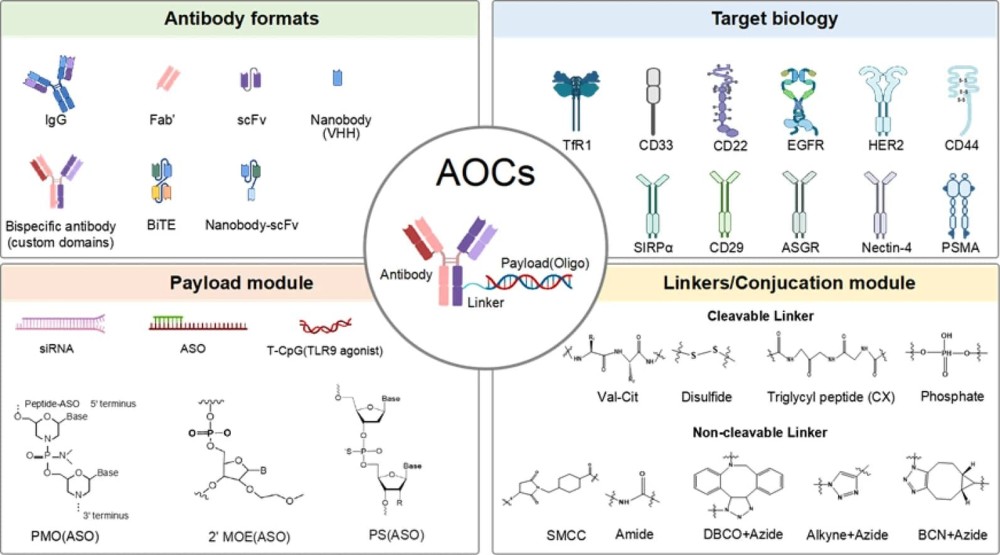
Antibody-oligonucleotide conjugates, or AOCs, are an emerging therapeutic format……
On September 18, 2026, the FDA approved Isembyld (apitegromab-mstn) from Scholar……