



Antibody-oligonucleotide conjugates, or AOCs, are an emerging therapeutic format designed to combine two established biological tools: the targeting ability of antibodies and the gene-regulating activity of oligonucleotides.
An AOC generally contains three parts:
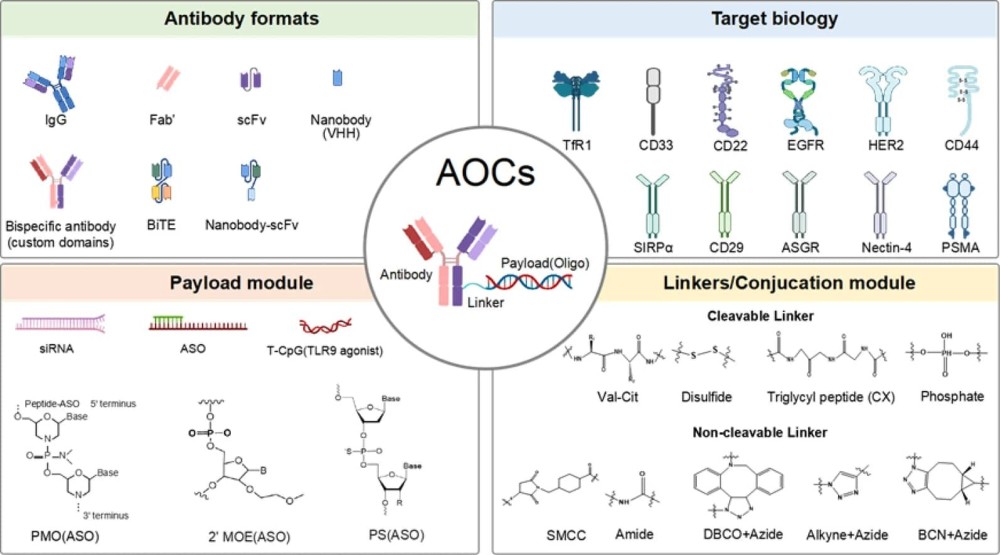
An antibody or antibody fragment, which recognizes a selected protein on the surface of a cell
An oligonucleotide payload, such as an antisense oligonucleotide (ASO), small interfering RNA (siRNA), or phosphorodiamidate morpholino oligomer (PMO)
A linker or conjugation system, which connects the antibody and oligonucleotide
The objective is to use the antibody to help deliver a sequence-specific nucleic acid therapeutic to selected cells or tissues.
Many oligonucleotide drugs naturally distribute more readily to the liver than to other tissues. Thus, according to a recent review, antibody-mediated delivery may provide a way to extend oligonucleotide therapeutics to locations such as skeletal muscle and potentially other extrahepatic tissues.
Antibodies are widely used as therapeutic molecules because they can recognize extracellular or cell-surface targets with high specificity. They can also remain in circulation for relatively long periods and, depending on the antigen being targeted, can be internalized by cells.
Oligonucleotides work differently, as they can regulate biological processes through sequence-specific interactions with RNA. Depending on the type of oligonucleotide, this can include:
Reducing expression of a selected RNA
Modifying RNA splicing
Promoting degradation of a target transcript
Activating certain nucleic-acid-sensing pathways
Common AOC payload classes under investigation include siRNA, ASOs, PMOs, and immunostimulatory oligonucleotides such as CpG sequences.
By bringing these two components together, researchers can potentially use an extracellular cell-surface marker to guide a therapeutic that ultimately acts on an intracellular RNA target.
Target recognition: The antibody portion binds a selected receptor or antigen on the cell surface.
Cellular uptake: If the receptor supports internalization, the antibody-receptor complex can be taken into the cell through receptor-mediated endocytosis.
Endosomal trafficking: The AOC enters membrane-bound compartments known as endosomes. As these compartments mature, their chemical environment changes, including changes in acidity and enzyme activity.
Payload release: Depending on the conjugate design, the linker may remain intact or may be cleaved by intracellular conditions.
Access to the site of action: For oligonucleotides that need to act in the cytoplasm or nucleus, sufficient amounts of payload must reach the appropriate intracellular compartment.
A useful AOC target generally needs several properties:
Suitable expression in the tissue or cell population of interest
Sufficient accessibility from the extracellular space
Antibody-induced or constitutive internalization
Intracellular trafficking that permits the oligonucleotide to reach a productive compartment
An acceptable safety profile based on where else the receptor is expressed
For example, transferrin receptor 1 (TfR1/CD71) naturally undergoes receptor-mediated endocytosis and is expressed in tissues including skeletal muscle. Because of this, several clinical AOC programs use TfR1-directed antibodies or antibody fragments to support oligonucleotide delivery. Besides TfR1, other targets being studied include CD22, EGFR, HER2, CD29, and ASGR.
Unlike the small molecule payloads attached to antibody-drug conjugates (ADCs), oligonucleotides are relatively large, highly charged molecules.
A typical ADC drug-linker may weigh less than 2 kDa, whereas an oligonucleotide can exceed 10 kDa. Oligonucleotides also carry numerous negative charges through their phosphate backbone. As a result, attaching an oligonucleotide can change the charge and analytical behavior of the resulting conjugate.
Modifications to the oligonucleotide backbone, sugar groups, nucleobases or termini can be used to improve properties such as nuclease stability and biological activity, but the optimal chemistry depends on the payload class and mechanism. An siRNA designed for RISC-mediated gene silencing, for example, has different structural requirements from a PMO intended to alter RNA splicing.
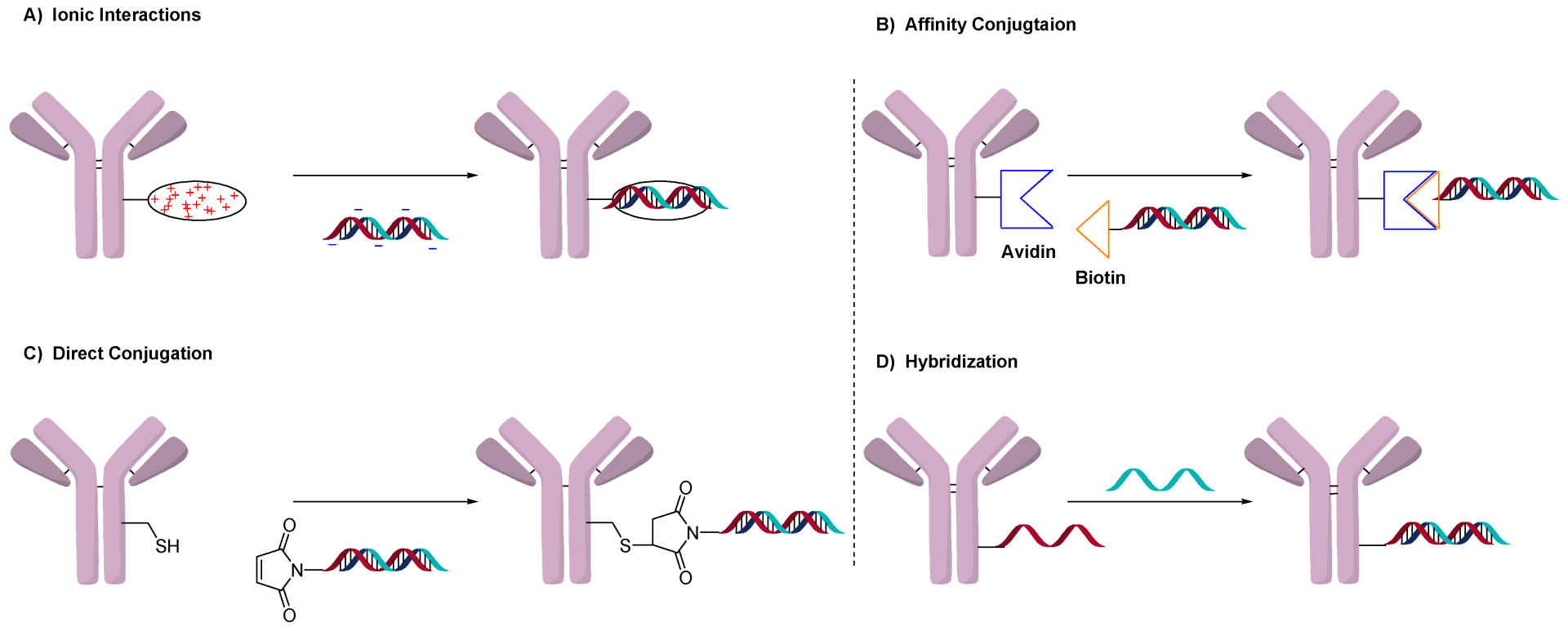
AOCs can be assembled using several conjugation strategies, such as:
Direct covalent conjugation, in which chemical groups on the oligonucleotide and antibody form a stable bond
Electrostatic association, which uses the negatively charged oligonucleotide backbone and positively charged protein domains
Affinity-based systems, such as biotin-avidin interactions
Hybridization-based strategies, where complementary nucleic-acid strands participate in assembly
Clinical development to date has been active in neuromuscular and genetic disorders, for delivery of oligonucleotides to skeletal muscle. Examples include AOCs for myotonic dystrophy type 1, Duchenne muscular dystrophy, facioscapulohumeral muscular dystrophy, and Pompe disease.
Other research programs are investigating applications in oncology and central nervous system diseases.
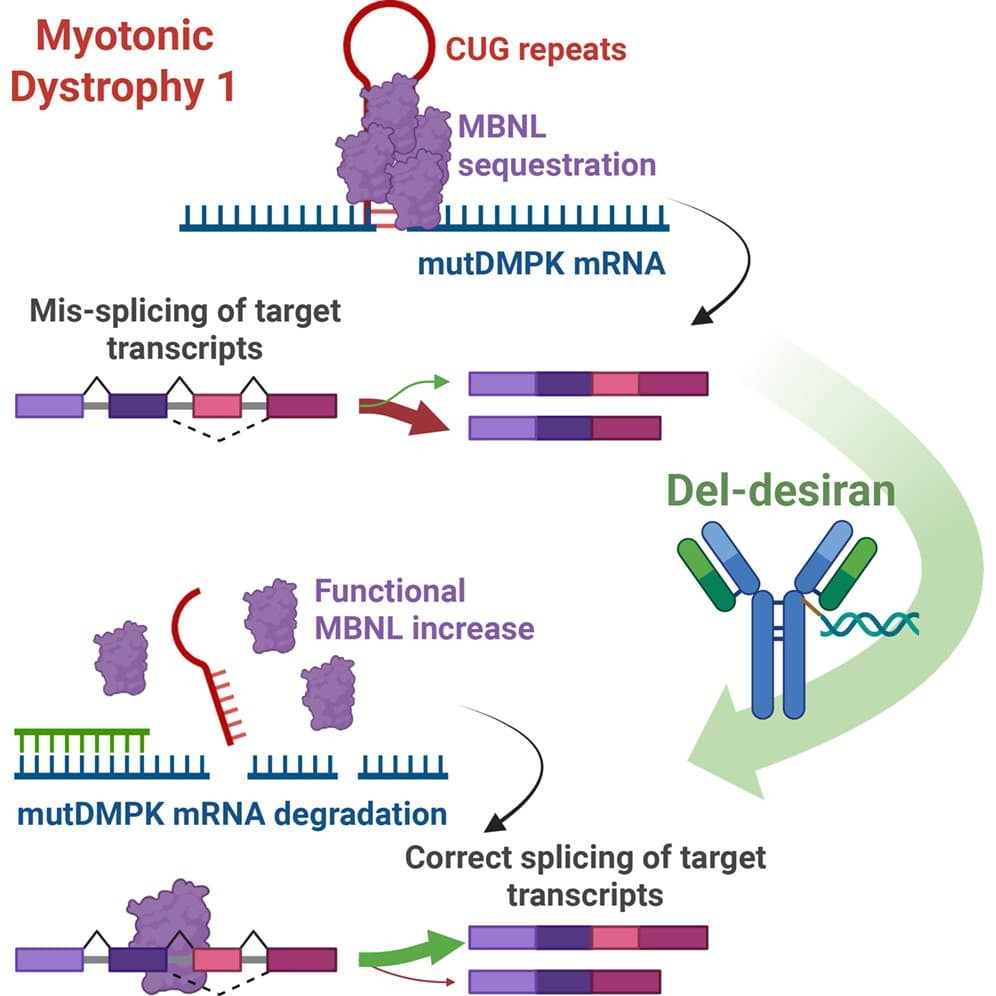
One advanced program is delpacibart etedesiran (AOC 1001), a TfR1-targeted AOC being developed for myotonic dystrophy type 1, currently in Phase III development. Delpacibart etedesiran (del-desiran, AOC 1001) is a small interfering RNA (siRNA) targeting DMPK mRNA conjugated to a humanized anti-transferrin receptor 1 (TfR1) antibody. Del-desiran is designed to reduce DMPK expression in muscle tissue, thus releasing sequestered MBNL proteins and correcting the mis-splicing underlying DM1 pathogenesis.
In summary, AOCs combine tissue-targeted antibody delivery with RNA-based pharmacology, offering a potential way to extend oligonucleotide therapeutics beyond their usual tissue distribution.
The field remains relatively early, with substantial variation in AOC design, targets, payloads, and evaluation methods. Much of the evidence is still preclinical or from early-stage clinical studies, particularly in oncology and central nervous system applications.
Continued advances in target selection, intracellular delivery, analytical methods, and translational models will help determine how broadly AOCs can be applied as precision therapeutics.
Biointron's Q3 2026 Antibody Industry Trends report aims to explore the events a……
On September 18, 2026, the FDA approved Isembyld (apitegromab-mstn) from Scholar……
mRNA-encoded antibodies are an approach in which synthetic messenger RNA carries……