


The antibody industry has experienced significant growth and transformation in 2023, driven by research and technological advancements, a focus on collaboration, and the impact of the COVID-19 pandemic.
The market size of the antibody industry is expected to grow substantially from USD 162 billion to USD 445 billion by 2028. This projection is backed by the ongoing advancements in the field, the expanding range of therapeutic areas covered, and the growing demand for more effective treatments worldwide.
The United States maintains its position as a global leader in antibody drug development, with the FDA approving 12 novel antibody therapeutics this year. Notable approvals include:
Lecanemab (Leqembi): A humanized IgG1 monoclonal antibody targeting amyloid beta protofibrils to treat Alzheimer’s disease
Nirsevimab (Beyfortus): A human recombinant monoclonal antibody targeting fusion protein on RSV virus surface to treat respiratory syncytial virus (RSV) lower respiratory tract disease
The increasing number of global first approvals from countries outside the US and EU indicates a global shift in the healthcare sector's focus and investments towards advanced therapeutic options. There is also an increased interest in expanding the scope of antibody drugs from cancer and immune-mediated disorders to include diseases related to the neurological, musculoskeletal, and cardiovascular systems.
While monoclonal antibodies are still dominating the current approved drug space, other formats, such as bispecific antibodies and antibody-drug conjugates (ADCs) are rising in popularity. The ADC market, in particular, is growing at a high rate as they combine the specificity of antibodies with a cytotoxic drug. For instance, the Trop-2 directed ADC Trodelvy (sacituzumab govitecan-hziy) for breast cancer, has been approved in more than 40 countries and is on its way to becoming a billion-dollar drug. Sales of Trodelvy increased 58% to $283 million in the third quarter of 2023 compared to the same period in 2022.
Lastly, there has also been a trend in the use of artificial intelligence for drug discovery and development processes. Novel platforms are emerging, offering more efficient and effective ways to develop antibody drugs, with several pharmaceutical companies announcing their collaborations with AI-focused companies towards the end of the year.
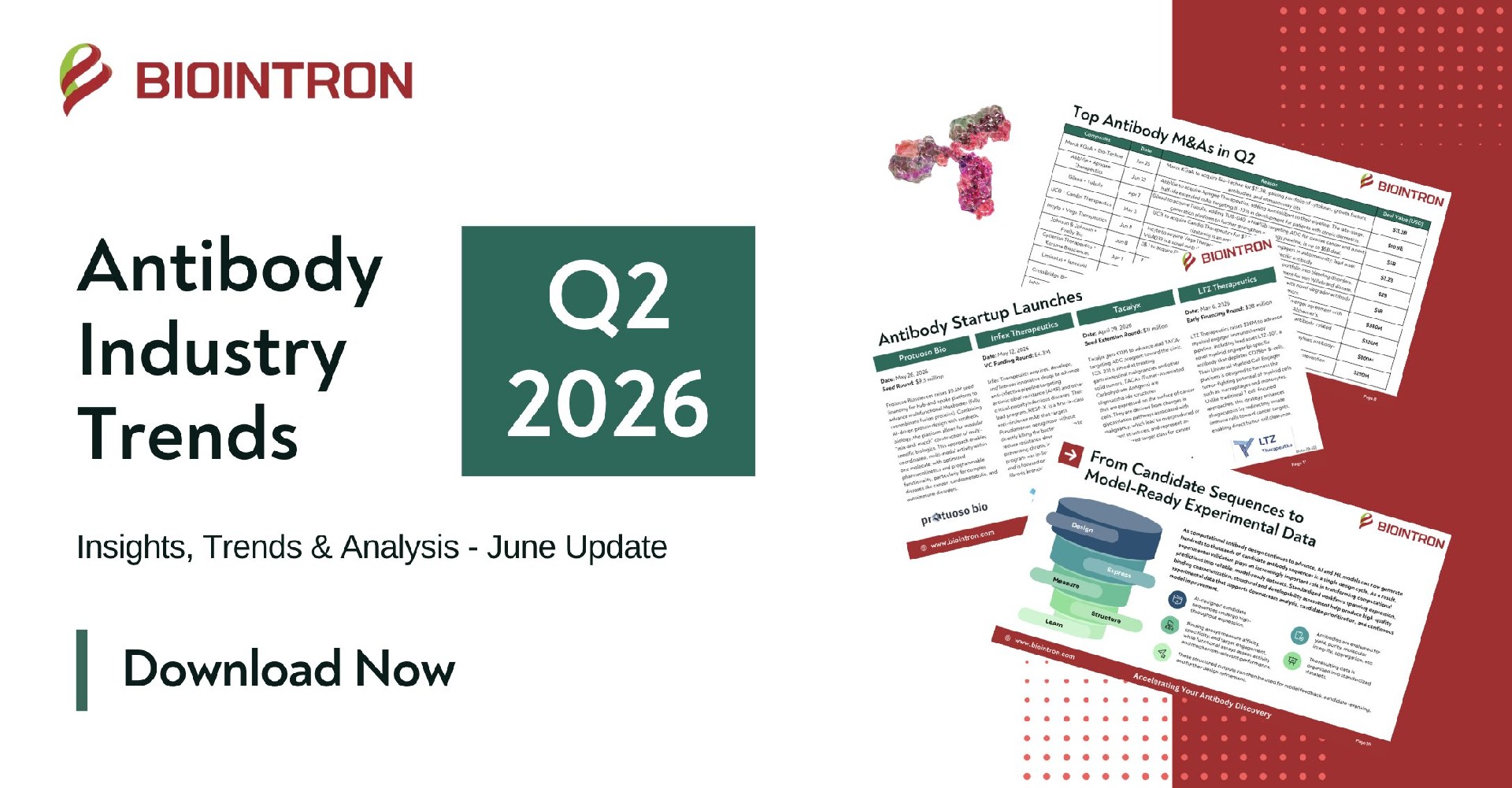
Biointron’s Q2 2026 Antibody Industry Trends report aims to explore the events a……
Artificial intelligence (AI) can be used throughout the drug development process……
Peptides and antibodies have different strengths as therapeutic molecules. Pepti……
Therapeutic antibodies are often used to block receptors or neutralize soluble m……