


The development and approval of novel antibody drugs represent a significant segment of pharmaceutical innovation, addressing a wide range of diseases from cancer to autoimmune disorders. Since the first monoclonal antibody (mAb) drug was approved in 1986, there has been explosive growth in this area. By 2021, the US FDA had approved its 100th mAb product, with mAbs now accounting for nearly a fifth of the agency’s new drug approvals each year.
Just this past week, two novel antibody-based drugs gained approval. Astellas Pharma's Vyloy (zolbetuximab) is a monoclonal antibody, developed as a treatment for patients with CLDN18.2 positive, unresectable, advanced or recurrent gastric cancer. Approved by Japan, it is the first and only CLDN18.2-targeted therapy approved in the world. Meanwhile, Merck's Winrevair (sotatercept), is a recombinant fusion protein made up of the extracellular domain of activin receptor type IIA linked to the Fc portion of human IgG1. Granted FDA approval, the novel drug will treat adults with pulmonary arterial hypertension (PAH) to increase exercise capacity, improve WHO functional class, and reduce the risk of clinical worsening events.
The journey to approval for novel drugs, including antibody therapies, is very complex. There are multiple steps towards clinical trials in addition to stringent regulatory reviews that assess the safety and efficacy of these therapies. The regulatory landscape requires a delicate balance between innovation and patient safety, often extending the time from discovery to market availability. Moreover, the high cost of drug development, along with the need for substantial evidence to demonstrate clinical benefit, adds layers of complexity to bringing new antibody drugs to patients.
On March 1, the FDA published a new guide for recommendations to assist industry and other parties involved in the development of antibody-drug conjugates (ADCs). It details the FDA’s current thinking regarding clinical pharmacology considerations, bioanalytical methods, dosing strategies, dose- and exposure-response analysis, intrinsic factors, QTc assessments, immunogenicity, and drug-drug interactions (DDIs).
In addition, a revised draft guidance for drug development for early Alzheimer’s disease was published by the FDA on March 12, representing their current thinking regarding the selection of subjects with early AD for enrollment in clinical trials and the selection of endpoints for clinical trials in this population. These guides are extremely helpful in directing pharmaceutical companies towards eventual drug approval.
However, the COVID-19 pandemic brought about a remarkable acceleration in vaccine and therapeutic development, showcasing the potential for rapid clinical trials and approvals. This experience has ignited hopes for a more streamlined approach to drug development and regulatory review, potentially benefiting the approval process for antibody drugs. The ability to fast-track clinical trials, without compromising on safety or efficacy, could revolutionize the way new treatments are brought to the market, especially for diseases with unmet medical needs.
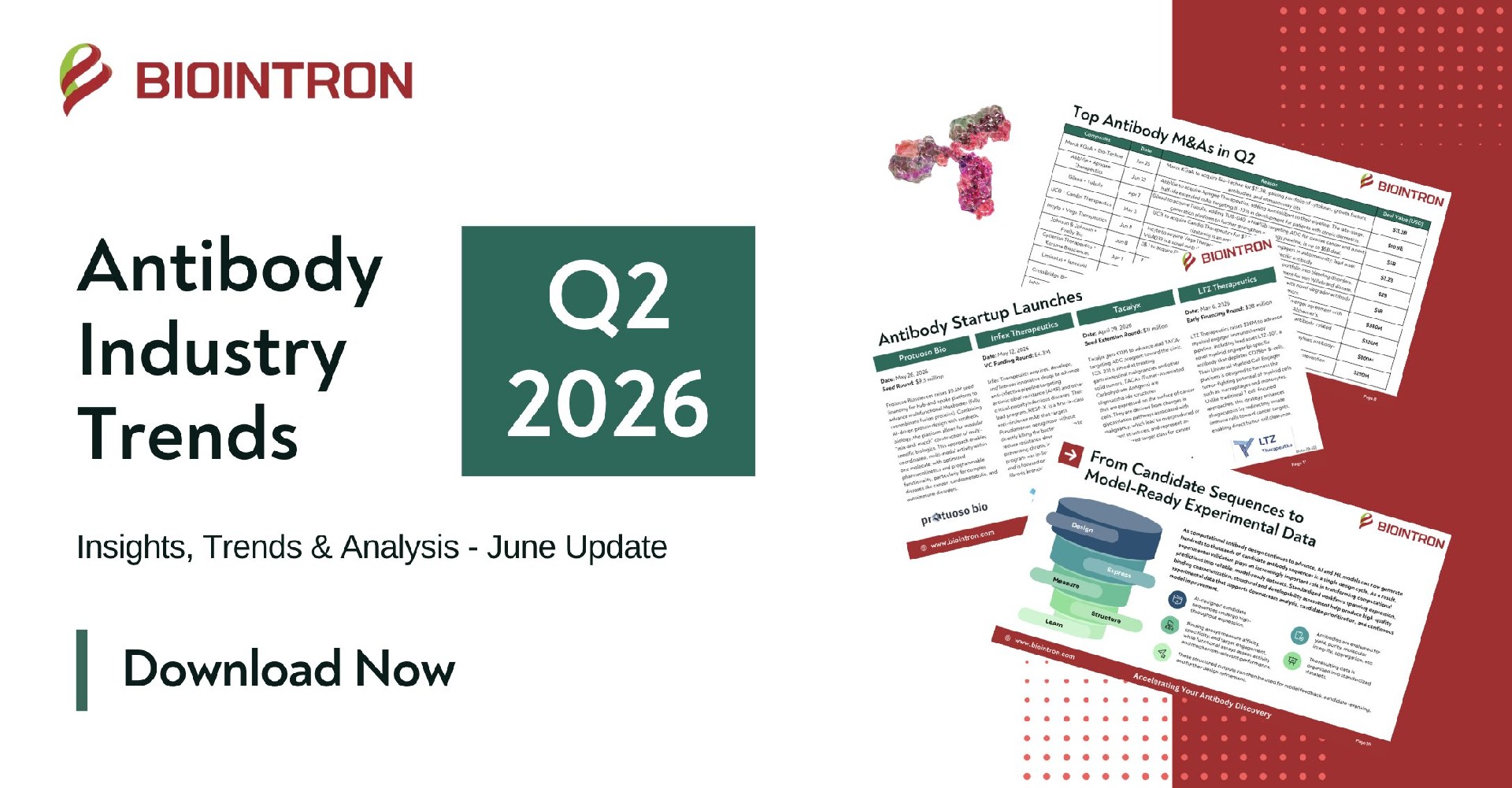
Biointron’s Q2 2026 Antibody Industry Trends report aims to explore the events a……
Artificial intelligence (AI) can be used throughout the drug development process……
Peptides and antibodies have different strengths as therapeutic molecules. Pepti……
Therapeutic antibodies are often used to block receptors or neutralize soluble m……