


Antibody-drug conjugates (ADCs) have revolutionized the landscape of oncology by delivering targeted therapies that minimize damage to healthy cells while maximizing the impact on cancerous tissues. However, researchers and clinicians are now exploring the many therapeutic possibilities of ADCs in treating a variety of non-cancerous conditions such as autoimmune, infectious, neurological, cardiovascular, and metabolic diseases. Oncology often receives considerable R&D funding due to the high incidence of cancer, significant unmet needs, and potential for high returns. Regulatory pathways, competitive landscape, therapeutic potential, strategic fit, partnerships, and financial ROI are essential factors in determining where to invest.
Various financing deals have been announced this past month, such as:
Myricx Bio announces $114M series A financing to advance its novel N-Myristoyltransferase inhibitor (NMTi) ADC therapeutics into clinical development.
Ipsen takes second antibody-drug conjugate (ADC) deal of the year – $1B deal with Foreseen Biotechnology for a preclinical solid tumor candidate. FS001 uses a cleavable linker coupled to a potent topoisomerase I (Topo1) inhibitor to target a novel, undisclosed tumor-associated antigen.
Vertex Pharmaceuticals will use Orum Therapeutics’ dual-precision targeted protein degradation (TPD²®) technology platform to discover targeted conditioning agents for use with gene editing therapies, through a collaboration of up to $945 million-plus for the degrader antibody conjugate (DAC) developer.
A review this week discussed precision targeting in oncology and the future of conjugated drugs. Technological advances have led to a combination of old and new concepts of coupled drugs. For example, antibody-oligonucleotide conjugates (AOCs) are a new class of chimeric biomolecules synthesized by coupling oligonucleotides with monoclonal antibodies through linkers, offering precise targeting and improved pharmacokinetic properties. More choices of localization ligands, linker arms and effector molecules have been realized, which has led to the segmentation of the field and the emergence of many coupled drug forms, such as Ribonucleic coupled drug (RDC), Small molecule coupled drug (SMDC), Peptide coupled drug (PDC), Antibody immunostimulant coupled drug (ISAC), Antibody fragment coupled drug (FDC), Antibody cell coupled drug (ACC), Virus like drug coupling (VDC), Antibody Oligonucleotide coupling (AOC), and so on.
However, developing and manufacturing types of ADCs are challenging due to their complex structure, which requires expertise across multiple disciplines to ensure safety and efficacy. Challenges include optimizing antibodies, cytotoxic drugs, and linkers, achieving consistent conjugation, maintaining molecular integrity, and scaling up production while maintaining quality. Future trends in ADC development include innovations in linkers and payloads, broader therapeutic applications, combination therapies, advanced manufacturing methods, and adaptive regulatory frameworks, all of which will drive further growth and development in the market.
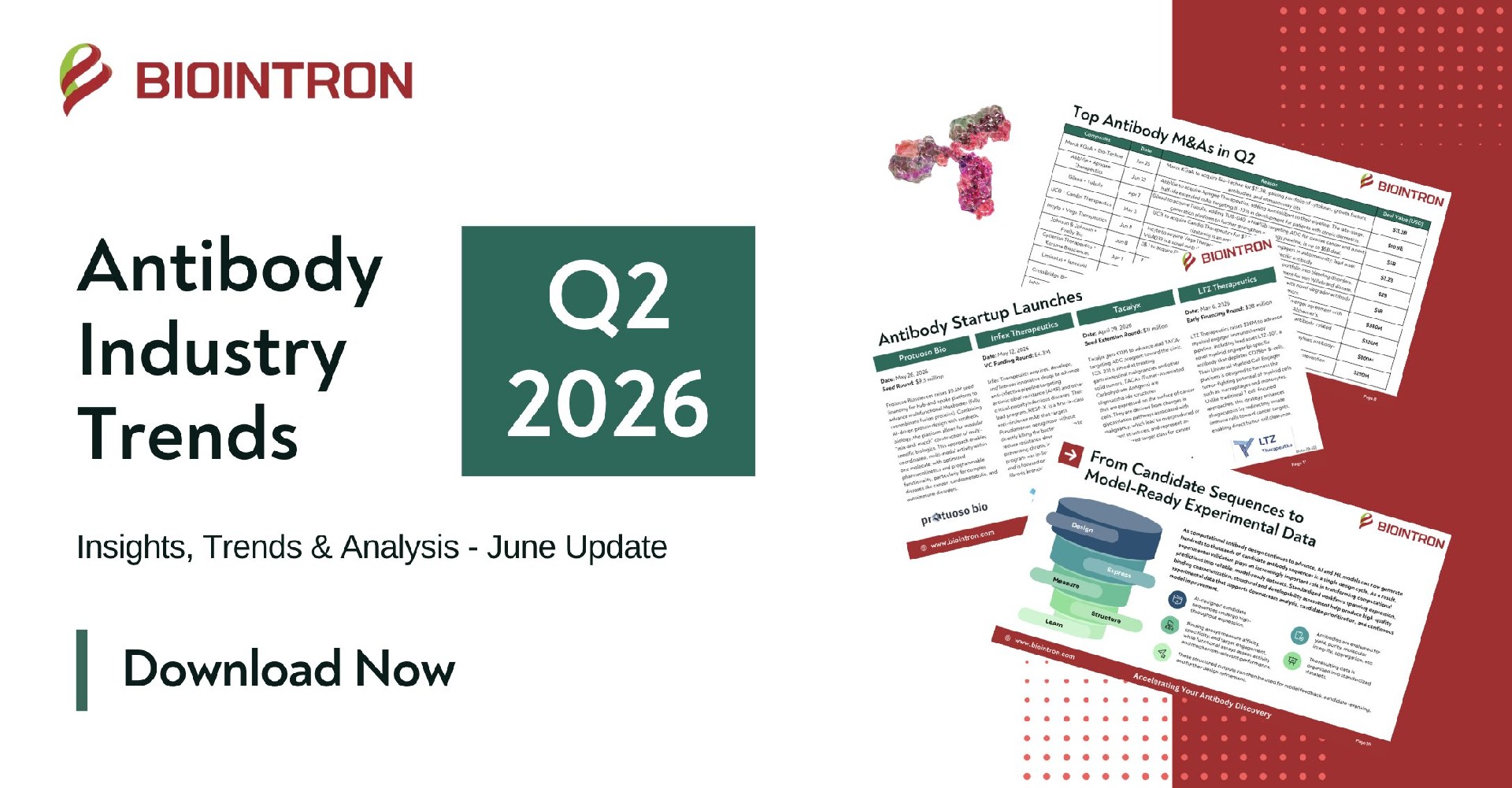
Biointron’s Q2 2026 Antibody Industry Trends report aims to explore the events a……
Artificial intelligence (AI) can be used throughout the drug development process……
Peptides and antibodies have different strengths as therapeutic molecules. Pepti……
Therapeutic antibodies are often used to block receptors or neutralize soluble m……