


Despite comprising the largest family of druggable membrane proteins, only three G protein-coupled receptor (GPCR)-targeting antibodies have been approved. The human genome has more than 800 GPCRs, which regulate various critical physiological processes, but many GPCRs are expressed poorly, or have unknown ligands and unclear signaling pathways. Advances in structural biology, synthetic biology, and functional screening technologies are overcoming longstanding obstacles in GPCR-targeted antibody discovery, accelerating the development of a new generation of precision biologics for intractable diseases.
GPCRs are the target of approximately one-third of all FDA-approved drugs. However, only a small fraction of the GPCR repertoire has been therapeutically accessed, and even fewer have been successfully targeted by monoclonal antibodies (mAbs). Barriers for antibody discovery include low surface expression, conformational heterogeneity, and minimal accessible extracellular surface area. However, there have been recent breakthroughs in membrane-mimetic systems, functional screening platforms, and AI-enabled modeling.

Typical antibody screens prioritize binding affinity, but to yield functional modulators of GPCR signaling, some researchers use function-based selection for the identification of rare agonists, antagonists, and allosteric modulators that modulate receptor activity rather than merely binding to it.
For example, Abalone Bio’s platform involves the functional screening of hundreds of millions of antibody variants. In collaboration with Pfizer, they are discovering activity-modulating antibodies against an undisclosed GPCR target, bypassing structural information altogether by using AI-trained models fueled by large-scale functional data.
Meanwhile, a collaboration between Nxera Pharma and Antiverse, aims to design de novo antibodies against GPCRs using generative AI. The collaboration integrates machine learning-derived epitope-specific libraries with a comprehensive structure-based discovery engine for GPCR target selection and characterization.
The first project in this multi-target collaboration focuses on the design of agonistic antibodies for a particularly challenging GPCR target implicated in disease. Antiverse’s AI models generate antibody libraries that are pre-tuned to specific epitope conformations, enabling more targeted and efficient screening for functional hits.
A recent review describes how advances in cryo-electron microscopy and X-ray free electron laser crystallography have unveiled previously cryptic GPCR epitopes, including conformationally selective binding pockets and ligand-access channels. These insights enable structure-guided design of functional antibodies, such as orthosteric or allosteric modulators, and support precision engineering of biased agonists that selectively activate desired signaling pathways.
Moreover, AI-assisted protein modeling is rapidly becoming useful for predicting GPCR–antibody interactions and optimizing antibody conformations for buried or dynamic epitopes. These tools are especially valuable for “orphan” GPCRs lacking known ligands, where antibody ligands can serve as both therapeutic agents and probes for signaling deorphanization.

While traditional mAbs dominate current efforts, next-generation modalities are redefining what is possible in GPCR-targeted therapeutics. These include:
Peptide-antibody fusions: e.g. dulaglutide and glutazumab, which fuse GLP-1 peptides to Fc domains for enhanced half-life and tissue localization.
Bispecific antibodies: e.g. talquetamab (targeting CD3 and GPRC5D), enabling dual-targeting for enhanced efficacy in oncology.
Antibody-drug conjugates (ADCs) and CAR-T cells: targeting CXCR4 or GPRC5D for precise cytotoxicity in cancer therapy.
These modalities extend the range of pharmacological actions beyond simple agonism or antagonism to include cell-specific cytotoxicity, receptor internalization, and biased signaling pathway engagement.
While still in its early phases, the GPCR-targeting antibody field is rapidly evolving. With only three approved antibodies against GPCRs to date, the integration of functional screening, structural biology, membrane engineering, and AI-driven design is poised to unlock dozens of new therapeutic targets across immunology, metabolism, neurology, and oncology.
Biointron's Q3 2026 Antibody Industry Trends report aims to explore the events a……
On September 18, 2026, the FDA approved Isembyld (apitegromab-mstn) from Scholar……
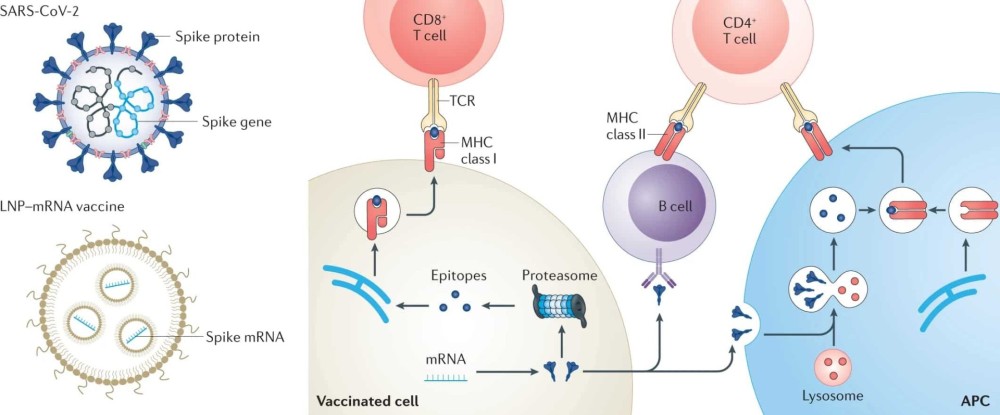
mRNA-encoded antibodies are an approach in which synthetic messenger RNA carries……
Artificial intelligence (AI) can be used throughout the drug development process……