


Antibody-drug conjugates (ADCs) are made up of a monoclonal antibody linked to a cytotoxic drug (payload) through a stable chemical linker, enabling targeted delivery of the drug to specific cancer cells. The ideal ADC payload should have sufficient toxicity, low immunogenicity, high stability, and modifiable functional groups. All approved ADC therapeutics currently possess a single-drug payload, such as monomethyl auristatin E (MMAE), monomethyl auristatin F (MMAF), or maytansinoids like DM1 and DM4. A recent review by Journeaux & Bernardes describes how researchers are now attempting to develop homogenous ADCs with multiple unique payloads to improve the efficacy of targeted therapy. However, due to the many reactive functional groups on the surface of an antibody, this task has been difficult.

Most of the research in this field focuses on dual-payload ADCs. Another review by Wang et al. highlights how dual-payload ADCs can have greater therapeutic effects and survival benefits than just two single-agent combinations. Just a few weeks ago, Hummingbird Bioscience presented promising data on their dual-payload ADC to overcome severe side effects and the intrinsic or acquired resistance seen in patients with earlier generation single payload ADCs.
The problem with heterogeneity within tumors such as breast cancer, is that multiple cells with different gene expression profiles results in drug resistance, recurrence, and metastasis after chemotherapy. Researchers from The University of Texas Health Science Center developed a homogeneous ADC containing two distinct payloads with HER2-specific cell killing potency by chemoenzymatic conjugation. Unlike other methods, their linker systems allowed for the generation of a panel of homogeneous dual-drug ADCs with flexible combined drug-to-antibody ratios (DARs) of 2 + 2, 4 + 2, and 2 + 4. DARs are typically maintained under a value of 4 to avoid monoclonal antibody aggregation and limit hydrophobicity, as they have been linked to toxicity, reduced half-life and a narrow therapeutic index.
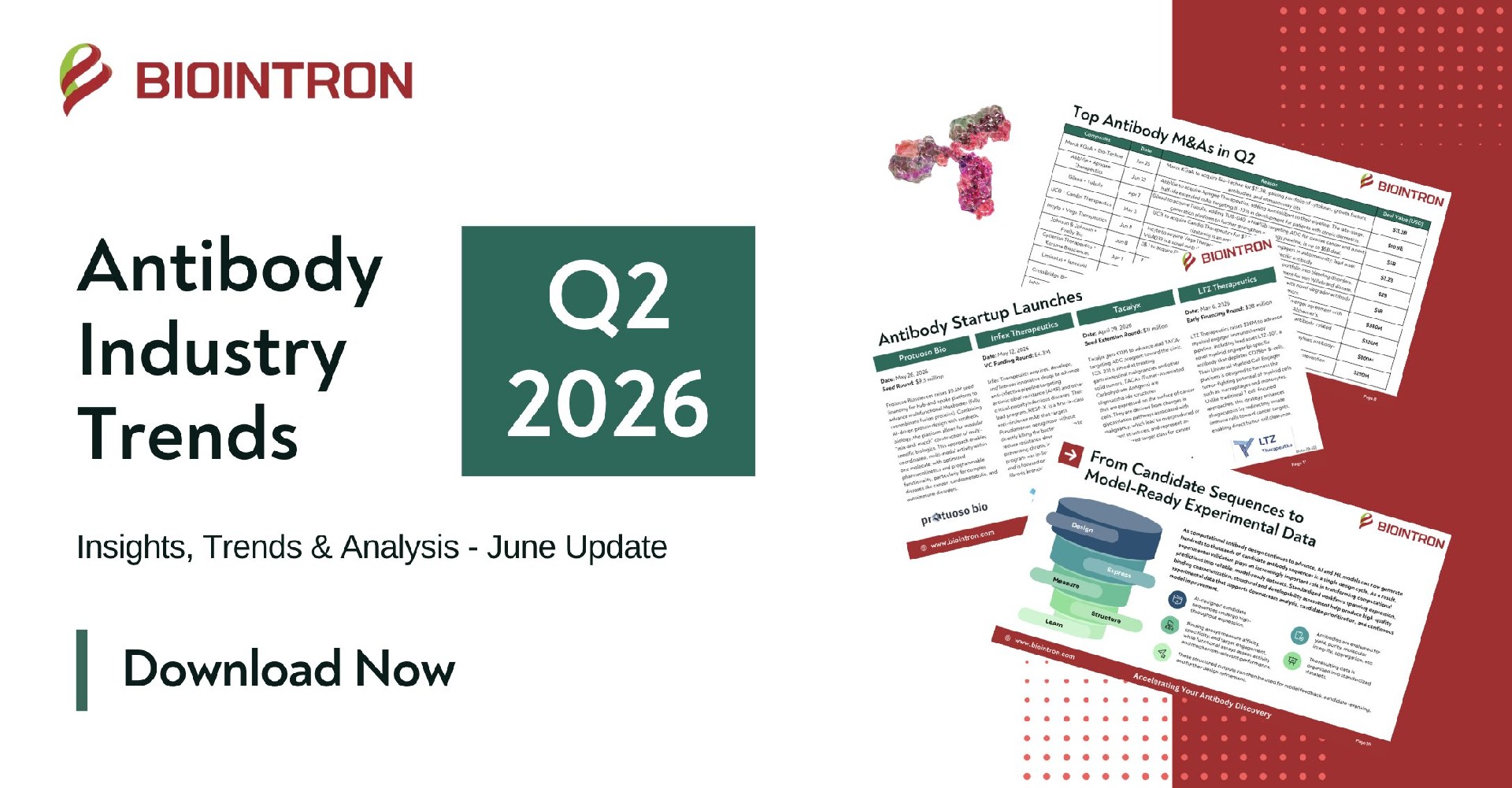
Biointron’s Q2 2026 Antibody Industry Trends report aims to explore the events a……
Artificial intelligence (AI) can be used throughout the drug development process……
Peptides and antibodies have different strengths as therapeutic molecules. Pepti……
Therapeutic antibodies are often used to block receptors or neutralize soluble m……