



For decades, the blood-brain barrier (BBB) was believed to be a shield that restricted efficient penetration of large antibody therapeutics from the central nervous system. This perception limited efforts to treat neurological diseases with biologics. However, this view is rapidly changing, as advances in antibody engineering and new insights into CNS immunology are driving the development of therapies capable of crossing the BBB to target proteins involved in neurodegenerative disorders such as Alzheimer’s and Parkinson’s disease. Recent studies have shown that in the context of neurodegeneration, disease-associated antigens can exit the brain through lymphatic vessels and stimulate peripheral immune responses, leading to the production of autoantibodies that can access the brain. These observations, along with a growing understanding of antibody trafficking dynamics within the brain, are redefining how therapeutic antibodies can be designed to function effectively in the CNS.
One obstacle in developing CNS therapeutics lies in the lack of human-relevant experimental models that accurately replicate the structure and function of the blood-brain barrier (BBB). Traditional two-dimensional (2D) cell culture systems and animal models often fail to reflect the cellular complexity, extracellular matrix composition, and dynamic flow conditions of the human BBB. Recent advancements in three-dimensional (3D) in vitro BBB models, including hydrogel-based constructs, microfluidic devices, organ-on-a-chip platforms, and brain organoids, offer improved physiological relevance. These models are increasingly used to simulate BBB permeability and to assess the efficacy and transport dynamics of therapeutic antibodies. Their application is particularly promising for high-throughput drug screening and mechanistic studies, providing critical insights that bridge preclinical findings with translational potential in CNS-targeted biologics.

Among the most promising strategies for delivering antibodies across the BBB is receptor-mediated transcytosis (RMT), which exploits endogenous transport pathways in brain endothelial cells. Several receptors have been identified as viable targets for RMT, including the transferrin receptor (TfR), insulin receptor (InsR), and neonatal Fc receptor (FcRn). Antibody engineering approaches that increase affinity and specificity for these receptors have yielded notable progress in preclinical models. However, receptor choice significantly impacts safety, brain uptake, and distribution profiles. For instance, targeting TfR has shown efficacy but also introduces hematological side effects due to off-target interactions. Ongoing efforts aim to refine receptor targeting and antibody formats to balance effective transcytosis with minimal systemic liabilities, positioning RMT as a cornerstone in the rational design of BBB-penetrant antibody therapeutics.

FcRn has emerged as a critical mediator of IgG homeostasis and a promising target for enhancing antibody transport into the brain. By engineering the Fc region of IgG antibodies to improve binding affinity for FcRn at neutral pH, researchers have demonstrated increased transcytosis efficiency and CNS accumulation in both murine and non-human primate models. This approach allows for enhanced receptor engagement without disrupting natural recycling functions. Moreover, Fc variants with optimized FcRn interactions have been shown to extend antibody half-life and promote target engagement within the CNS. Despite some concerns about altered clearance rates and the complexity of optimizing pH-dependent binding, Fc engineering offers a broadly applicable strategy to boost CNS exposure of IgG-based therapeutics without relying on bispecific formats or fusion proteins.

Successfully transporting antibodies across the BBB is only the first step; their fate within the brain parenchyma ultimately determines therapeutic efficacy. The distribution, retention, and target engagement of large biologics are governed by factors such as internalization rates of parenchymal targets, extracellular diffusion limitations, and potential reuptake or efflux by endothelial cells. Emerging strategies to address these challenges include the use of anchoring proteins to stabilize antibodies at target sites, selection of transport receptors with favorable trafficking kinetics, and computational modeling to predict distribution dynamics. These efforts underscore the need to consider the entire pharmacokinetic profile of antibody therapeutics, integrating transcytosis efficiency with downstream parenchymal behavior to achieve effective CNS intervention.

In parallel with receptor-based strategies, alternative molecular approaches are being explored to enhance BBB penetration. One such method involves fusing therapeutic antibodies with brain-targeting peptides derived from rabies virus glycoprotein (RVG). In a preclinical model of tick-borne encephalitis virus (TBEV) infection, RVG-fused antibodies demonstrated improved binding to brain endothelial cells and enhanced permeability in an in vitro BBB model. Peripheral administration of these engineered antibodies significantly reduced viral load in the brains of infected mice, without compromising neutralization efficacy. These findings illustrate the potential of peptide-mediated delivery systems for treating viral encephalitis and other acute CNS infections, especially where rapid therapeutic access to the brain is critical.
While most strategies focus on vascular access to the CNS, intranasal delivery offers a non-invasive alternative to bypass the BBB. The Minimally Invasive Nasal Depot (MIND) technique has demonstrated efficacy in delivering full-length, BBB-impermeant antibodies directly to inflamed brain regions. In a mouse model of neuroinflammation, MIND-administered anti-IL-1β antibodies significantly reduced cytokine levels and microglial activation, outperforming traditional intravenous administration. This approach highlights the potential for regionally targeted, systemic side-effect-sparing delivery of antibody therapeutics. As an adjunct or alternative to systemic RMT-based strategies, nose-to-brain delivery could expand the therapeutic toolbox for CNS diseases, particularly where focal pathology or immune modulation is desired.

Biointron's Q3 2026 Antibody Industry Trends report aims to explore the events a……
On September 18, 2026, the FDA approved Isembyld (apitegromab-mstn) from Scholar……
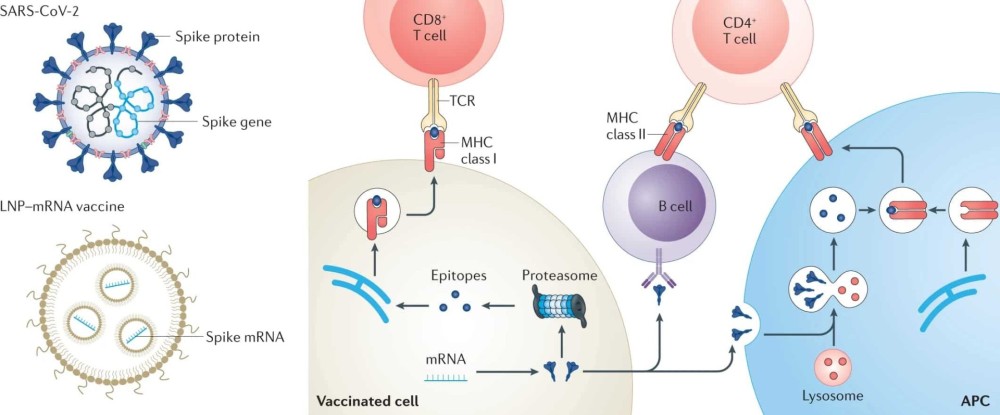
mRNA-encoded antibodies are an approach in which synthetic messenger RNA carries……
Artificial intelligence (AI) can be used throughout the drug development process……