


Antibody research is increasingly supported by computational methods, such as structure prediction methods and molecular dynamics (MD) simulations, particularly to look at behavior over time under a defined set of simulation conditions. In recent literature, MD is being used less as a standalone technique and more as part of broader workflows that combine structure modeling, feature extraction, machine learning, and experimental characterization.
One example is the use of MD to complement static structure prediction rather than replace it. A recent paper on aggregation prediction describes a pipeline that starts from sequence, builds a structure with AlphaFold, refines and samples it with MD, and then derives surface-based features for machine learning. In that study, the authors used 100 ns MD trajectories of antibody variable fragments and reported that features combining local surface curvature and hydrophobicity correlated with aggregation rate in a 20-molecule dataset. Their central point is not that MD alone solves aggregation prediction, but that time-dependent structural descriptors may capture information missed by sequence-only or static structural descriptors.

A second use of MD is to look beyond the antigen-contacting loops alone. A study on framework mutations by UCL researchers argues that antibody engineering workflows often emphasize CDRs, whereas framework regions also contribute to structural support and can influence stability and function. The authors combined static structural analysis, MD simulations, and in vitro assays to design framework mutations in trastuzumab. They reported that some distal framework mutations could preserve antigen engagement while altering other functional properties, including effector-related behavior. This is a useful example of how MD is being applied not just to binding questions, but to broader questions about how local structural changes may relate to whole-antibody behavior.

MD is also being used more often in developability-related studies, especially where researchers want molecular-level descriptors for properties such as aggregation, viscosity, or self-interaction. An ADC perspective notes that physics-based approaches for antibodies are still dominated by docking and MD, while coarse-grained MD is used when longer timescales or larger systems are needed, such as antibody self-association. The same paper contrasts MD with machine learning in a measured way: ML is faster, but MD can provide mechanistic detail about interactions with excipients, buffers, ions, payloads, and partially unfolded states that may matter for formulation or aggregation behavior.

Another recent direction is the extension of MD into more complex antibody modalities. Antibody-drug conjugate (ADC) development introduces additional variables, including linker type, conjugation site, and drug-antibody ratio. Because payloads and linkers add flexibility and introduce new intramolecular interactions, researchers can use MD and related physics-based modeling to evaluate how linker and payload choices may affect accessibility, stability, and interactions with the antibody scaffold before extensive experimental iteration.
A new review places these examples into a broader context. It notes that MD remains widely used in antibody research despite major progress in deep-learning-based structure prediction, largely because many questions of interest involve ensemble properties, binding behavior, developability, or environmental effects that are not fully addressed by a single predicted structure. At the same time, conventional MD can be computationally expensive, and convergence and reproducibility need to be checked.

Taken together, these papers highlight how MD is increasingly used in antibody research as a follow-on step after structure modeling, especially when researchers need time-dependent structural features or mechanistic interpretation. Current work is also expanding from classic antibody-antigen questions toward framework engineering, developability, and complex formats such as ADCs. Furthermore, the most practical workflows appear to be hybrid ones, where MD is combined with AI-based structure generation, machine learning, and experimental assays rather than used in isolation.
Biointron's Q3 2026 Antibody Industry Trends report aims to explore the events a……
On September 18, 2026, the FDA approved Isembyld (apitegromab-mstn) from Scholar……
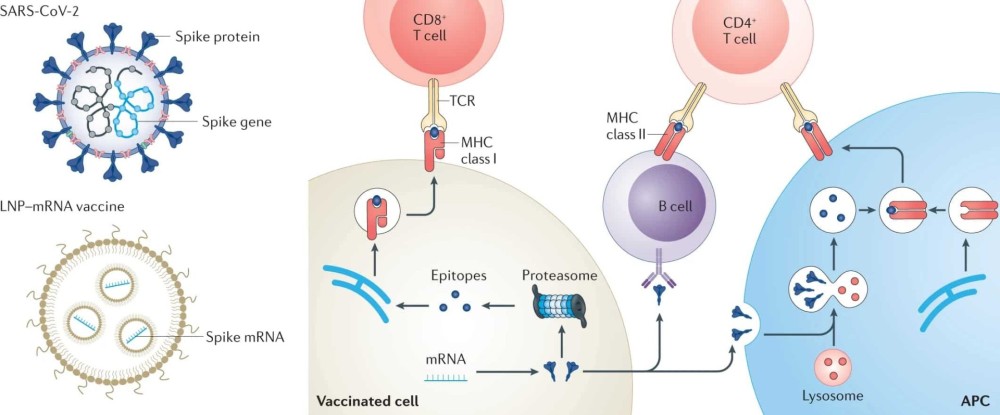
mRNA-encoded antibodies are an approach in which synthetic messenger RNA carries……
Artificial intelligence (AI) can be used throughout the drug development process……