


Antibody-drug conjugates (ADCs) rely critically on the chemical linker as the molecular bridge between the antibody and the cytotoxic payload. This component governs not only stability and pharmacokinetics but also the specificity and mechanism of payload release. Recent research describes computational and chemically innovative strategies to expand the functional and pharmacological space of linkers.
Most ADCs rely on a few cleavable motifs such as disulfides, hydrazones, or cathepsin B-sensitive dipeptides. In response, Su et al. introduced Linker-GPT, a generative model based on the Transformer architecture, trained on curated molecular datasets and fine-tuned for ADC-relevant linkers. Through reinforcement learning (RL), the model optimized for physicochemical properties including synthetic accessibility, hydrophobicity, and drug-likeness, yielding linker candidates with favorable scores across QED, LogP, and SAS metrics. While the outputs remain computational, the study proposes a scalable approach to de novo linker exploration that departs from empirical iteration.

Recent reviews have also outlined broader applications of artificial intelligence in ADC engineering, emphasizing the unique complexity of linker-payload pairing. In a systematic review, Lu et al. described how generative models and reinforcement learning algorithms are increasingly applied to the design of linker-payload systems that must simultaneously meet conflicting requirements: systemic stability, intracellular release, immunogenic neutrality, and manufacturability. The authors underscore that AI-based platforms are still limited by sparse ADC-specific datasets, particularly regarding conjugation chemistry and intracellular trafficking. Nonetheless, they advocate for iterative DBTL (design-build-test-learn) frameworks as a path forward, enabling co-optimization of all three ADC components (antibody, linker, and payload) within a unified modeling pipeline. However, the review refrains from overinterpreting early AI results, instead calling for the development of curated, multimodal datasets to support robust, generalizable linker predictions.

Beyond computational innovations, linker chemistry itself is undergoing diversification to accommodate previously incompatible payloads. Ochtrop et al. report the development of phosphoramidate-based self-immolative linkers capable of stably conjugating a broad spectrum of hydroxy-containing drugs, which are a functional group underrepresented in ADCs due to limitations in existing linker chemistries. Their system enables traceless release of both aliphatic and aromatic alcohols via intracellularly triggered cleavage and cyclization. In comparative studies using SN38 and gemcitabine as model payloads, these linkers demonstrated improved serum stability and in vivo efficacy relative to conventional carbonate-based constructs such as CL2A-SN38 (used in sacituzumab govitecan). The study suggests that the ProTide-inspired design, which were originally developed for small-molecule prodrugs, may be repurposed for antibody-based delivery systems, though broad generalization across diverse chemical environments will require further validation.

Thus, machine learning frameworks offer rapid in silico generation and screening, but remain contingent on dataset quality and biological validation. Novel cleavable motifs, such as phosphoramidates, show promise in diversifying payload options, but their synthetic tractability and immunological safety across varied ADC constructs remain underexplored. As the field progresses, integration between AI-based design, empirical validation, and mechanistic pharmacology will be used to advance linker innovations.
Biointron's Q3 2026 Antibody Industry Trends report aims to explore the events a……
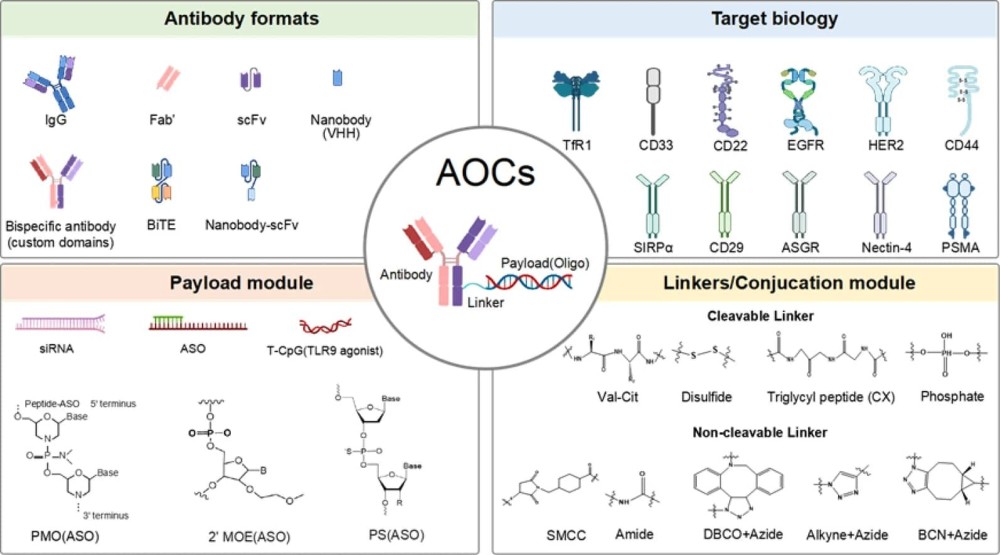
Antibody-oligonucleotide conjugates, or AOCs, are an emerging therapeutic format……
On September 18, 2026, the FDA approved Isembyld (apitegromab-mstn) from Scholar……
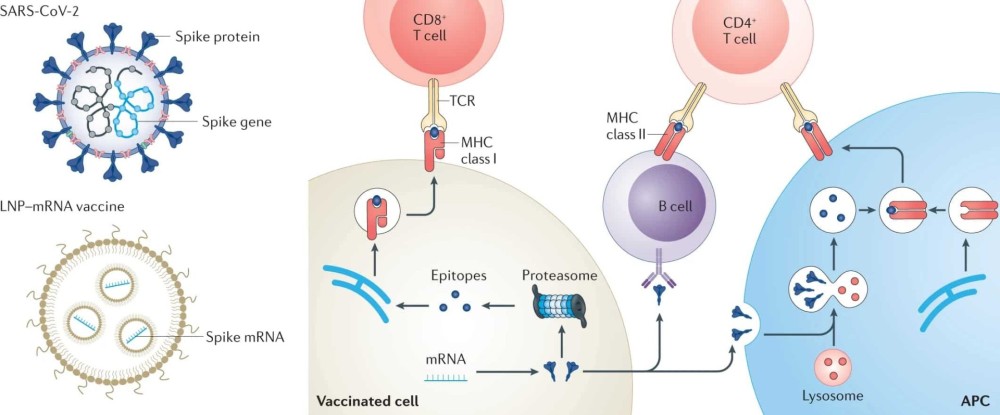
mRNA-encoded antibodies are an approach in which synthetic messenger RNA carries……