



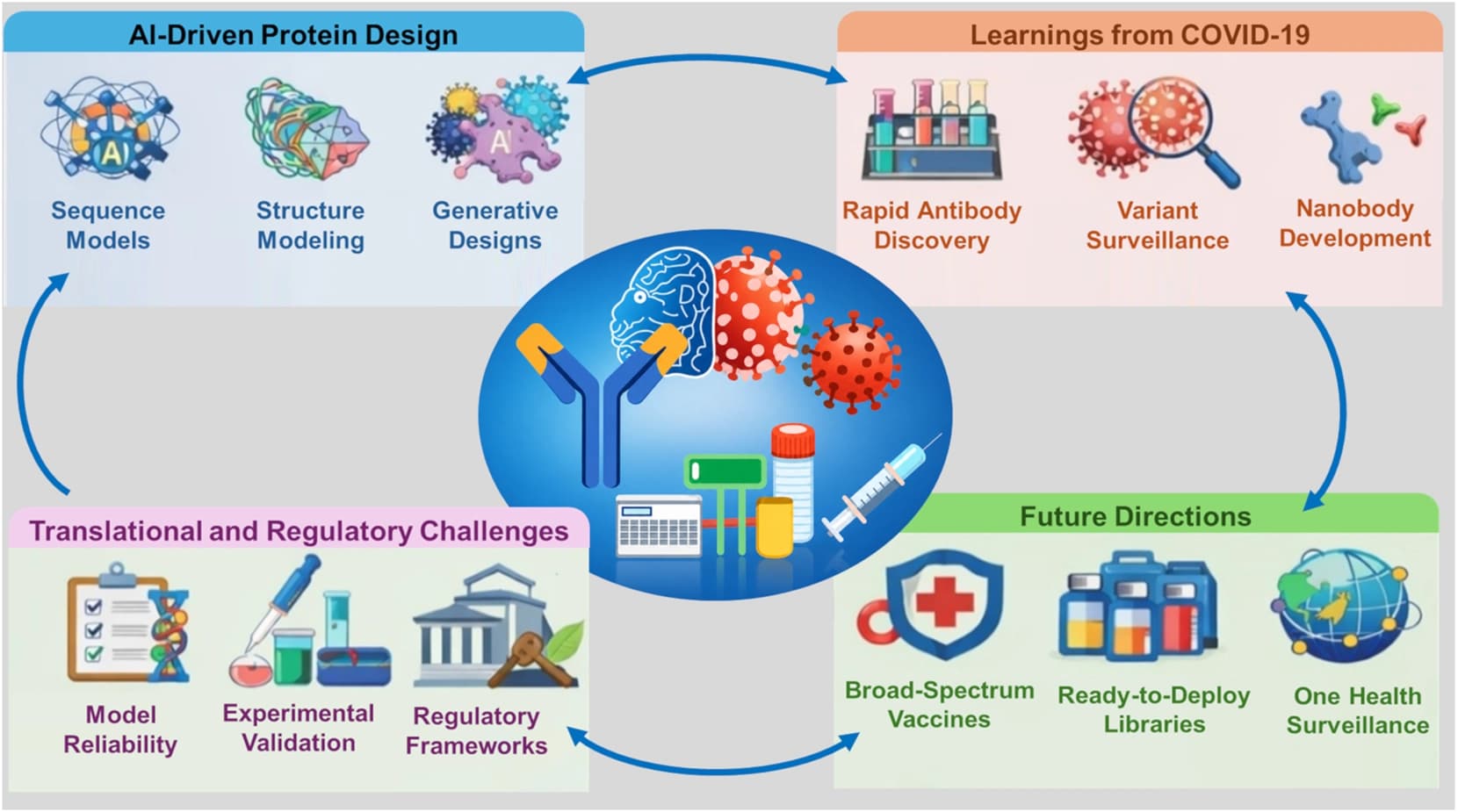
The first wave of antibody drugs against COVID-19 showed both the promise and the limitations of this form of treatment. Monoclonal antibodies could block SARS-CoV-2 and reduce the risk of severe disease. But as the virus accumulated mutations, several treatments lost activity. This process, known as immune escape, occurs when changes in a pathogen make it harder for existing antibodies to recognize or neutralize it. Researchers are now exploring ways to develop antibodies that remain effective against a wider range of variants, while also using artificial intelligence to analyze viral evolution and guide protein design.
One lesson from the pandemic is that AI can help researchers navigate an otherwise overwhelming number of possible protein sequences. A recent review highlights how computational protein design was used during COVID-19 to examine viral genomes, model the structure of antigens, assess emerging mutations and prioritise vaccine or antibody candidates. Some models work mainly from amino-acid sequences, learning statistical patterns that are associated with protein stability or function. Others incorporate three-dimensional structure, which can help researchers examine how an antibody fits against a viral protein. Generative models go a step further by proposing new sequences or structures with selected characteristics, such as stronger binding or improved stability. During the pandemic, these approaches supported work on antibody discovery, antigen stabilization and the evaluation of variants.
However, a promising computational prediction is not the same as a working medicine, as models may be affected by biased or incomplete training data, and they cannot always capture flexible protein regions, glycosylation or other features of biological systems. Candidate molecules still need to be produced and tested, creating a validation bottleneck between rapid computer-generated designs and slower experimental development. Pandemic-ready biologics will require anticipatory development of broad-spectrum vaccines and antibodies targeting conserved viral features, supported by curated libraries of pre-validated candidates that can be rapidly adapted. Keeping these resources effective will depend on continuous viral surveillance, real-time global data sharing, sustained infrastructure investment, clear governance, and international collaboration.
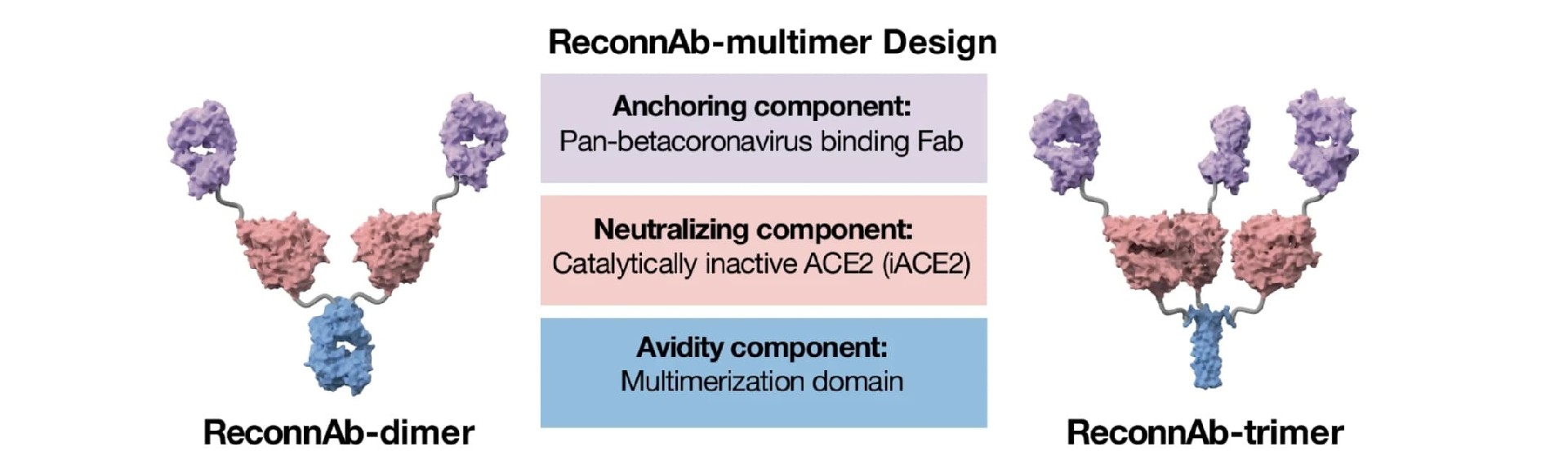
A recent paper by Stanford University researchers offers an example of how antibody engineering might address viral evolution directly. The team developed molecules called ReconnAb-multimers, intended to act against betacoronaviruses that use the human ACE2 protein to enter cells. Instead of relying on a conventional antibody that binds a single, mutation-prone region of the coronavirus spike protein, the molecules combine three elements. An antibody fragment attaches to a relatively conserved part of spike and acts as an anchor. A catalytically inactive version of ACE2 then serves as the neutralising component, binding the same viral machinery that normally engages the host receptor. A third component joins several copies of the molecule together, increasing avidity — the overall strength produced by multiple simultaneous binding interactions.
In laboratory tests, the ReconnAb-multimers neutralised all the SARS-CoV-2 variants examined, including later Omicron variants. This approach has potential beyond coronaviruses, as the ReconnAb-multimer modular platform could be extended to other rapidly mutating viruses, such as human immunodeficiency virus (HIV), Influenza, Ebola, and Lassa virus.
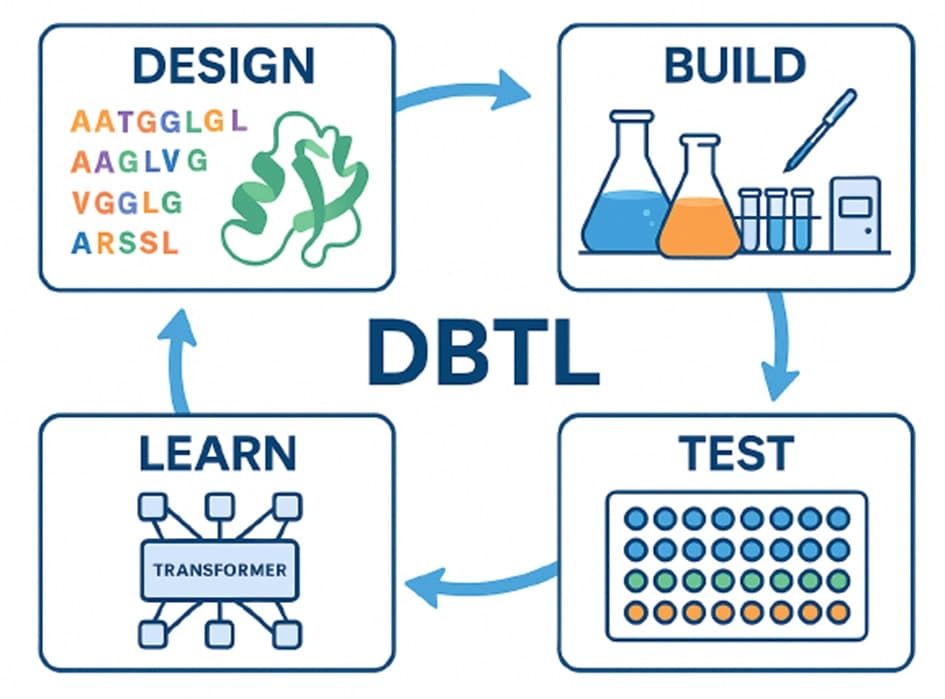
The same computational tools that could support broader antibodies also raise questions about how AI-enabled biology should be managed. Another perspective focuses on protein language models, or pLMs, which are trained on large databases of protein sequences in a way that is loosely analogous to language models learning patterns from text. These systems can estimate how mutations may affect protein fitness, binding or immune escape, and they have already been applied to antibodies targeting viruses including SARS-CoV-2, Ebola and influenza. Their impact may become greater when they are linked to automated laboratories and Design–Build–Test–Learn cycles.
In such a cycle, an AI system proposes protein sequences, robotic platforms produce and test them, and the experimental results are fed back into the model to guide the next round. Active learning can make this process more efficient by selecting the experiments expected to provide the most useful information. For therapeutic research, this could reduce the number of candidates that must be tested before stronger or broader antibodies are identified. The authors also describe the dual-use concern: systems able to predict antibody escape or improve protein function could potentially be applied to harmful biological goals. They therefore argue for safeguards tailored to the capabilities of each system, including better evaluation methods, controls during model use and oversight that extends from computational design through DNA synthesis and laboratory testing.
Taken together, there is a growing need for faster links between computational design and experimental evidence. Biointron’s RushData is positioned within this gap, using rapid, high-throughput wet-lab validation to turn AI-designed antibody sequences into structured datasets that can help researchers identify candidates with the binding, expression and developability profiles needed for further development.
Biointron's Q3 2026 Antibody Industry Trends report aims to explore the events a……
Antibody-oligonucleotide conjugates, or AOCs, are an emerging therapeutic format……
On September 18, 2026, the FDA approved Isembyld (apitegromab-mstn) from Scholar……
mRNA-encoded antibodies are an approach in which synthetic messenger RNA carries……