


The approval of Eli Lilly’s Kisunla (donanemab-azbt), a humanized IgG1 monoclonal antibody, is just one of the major advancements for the treatment of Alzheimer's disease (AD)! This drug is now available in the US for adults with early symptomatic AD, including those with mild cognitive impairment (MCI) and mild dementia stage of AD with amyloid pathology. Kisunla is the first and only amyloid plaque-targeting therapy with evidence to support stopping therapy when amyloid plaques are removed, which can result in lower treatment costs and fewer infusions.
As the second treatment approved by the FDA that has been demonstrated to slow a decline in memory and thinking abilities, donanemab targets an epitope at the N-terminal of pyroglutamate Aβ (which is found only in the brain amyloid plaques associated with AD). It works by inducing microglial-mediated clearance of existing Aβ plaques with the intent of slowing the progressive decline in cognitive function associated with AD.

Other antibody drugs for AD that are currently in development or in clinical trials include:
Aliada Therapeutics’ subcutaneous antibody, ALIA-1758, targets anti-pyroglutamate amyloid beta (3pE-Aβ), similar to the epitope targeted by donanemab. It uses a transferrin receptor to transport cargo to cells and force degradation and elimination of the plaques.
Roche's bispecific antibody, trontinemab, is delivered by its Brainshuttle module, which also uses the transferrin receptor. It showed “best-in-class” potential based on its ability to quickly clear clumps of amyloid protein from the brains of patients in a small clinical trial.
Eisai and Biogen have initiated a rolling Biologics License Application (BLA) for a weekly, subcutaneous version of Leqembi (lecanemab), the first monoclonal antibody medication approved by the FDA for treatment of AD last year.
Meanwhile, in the research space, scientists from the NIH developed an innovative nasal spray treatment that has shown promising results in clearing harmful tau protein build-up and improving cognitive functions in aged mice models with neurodegenerative diseases. They developed a toxic tau conformation–specific monoclonal antibody-2 (TTCM2), which selectively recognized pathological tau aggregates in brain tissues from patients with AD, dementia with Lewy bodies (DLB), and progressive supranuclear palsy (PSP). This study could be valuable in designing effective tau immunotherapies for AD and other tauopathies.
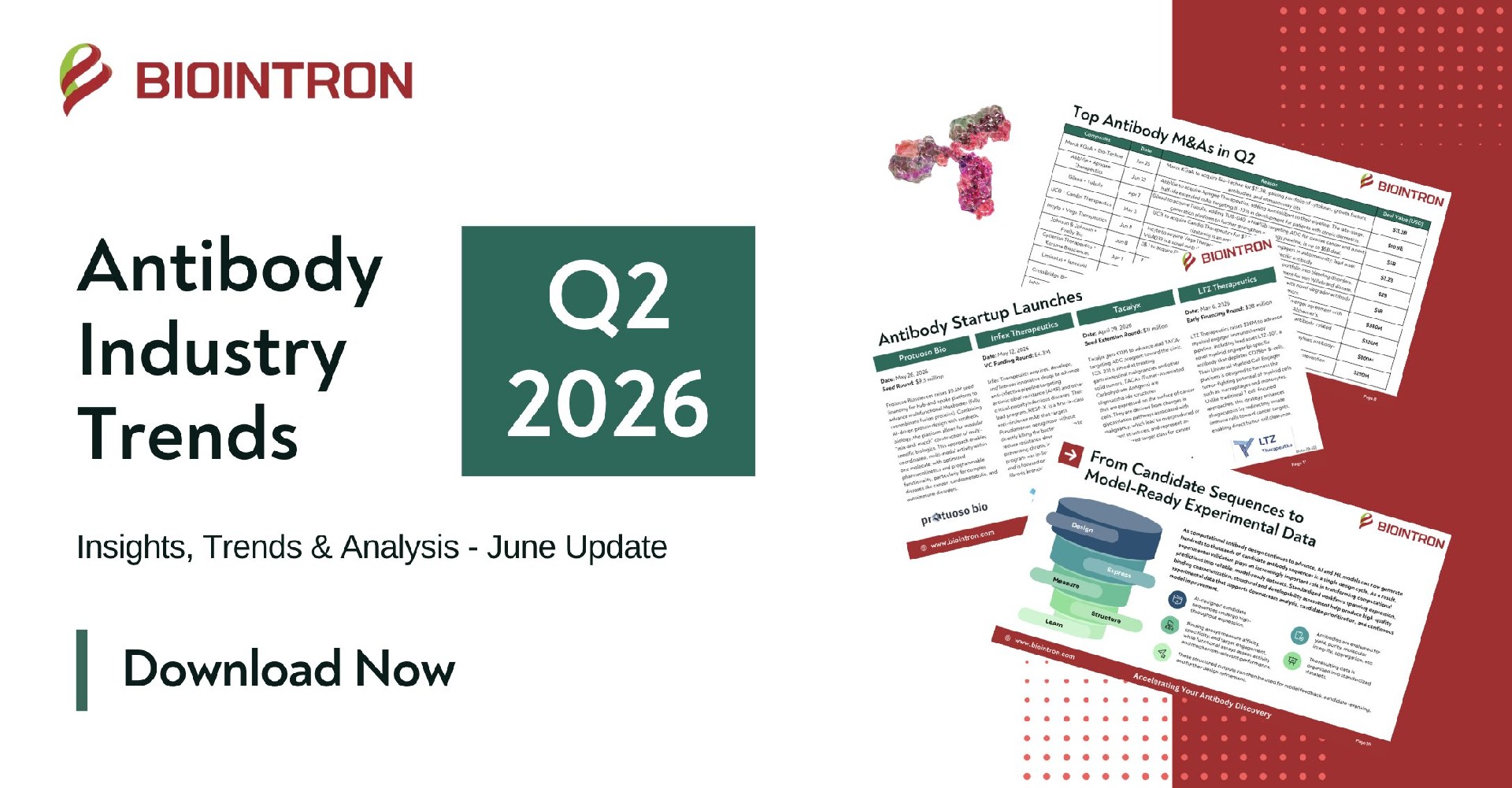
Biointron’s Q2 2026 Antibody Industry Trends report aims to explore the events a……
Artificial intelligence (AI) can be used throughout the drug development process……
Peptides and antibodies have different strengths as therapeutic molecules. Pepti……
Therapeutic antibodies are often used to block receptors or neutralize soluble m……