


Antibody-drug conjugates (ADCs) have seen significant developments in regulatory review, with several notable announcements in the past few weeks. Innate Pharma received FDA clearance for its investigational new drug (IND) application for IPH4502, a novel topoisomerase I inhibitor ADC conjugated to exatecan targeting Nectin-4. Nectin-4 is a cell membrane adhesion protein overexpressed in several solid tumors, including urothelial, breast, esophageal, lung, ovarian, and pancreatic cancers, with limited expression in normal tissues. This clearance is exciting as Nectin-4 is an emerging target in cancer therapy, with other successful ADCs like Padcev (enfortumab vedotin) already targeting this protein.
Similarly, Alentis Therapeutics also received FDA IND clearance for ALE.P02, a CLDN1-targeting ADC intended for squamous cancers. ALE.P02 is a first-in-class ADC designed by linking a tubulin inhibitor, a potent cancer drug, to an antibody that specifically targets a unique CLDN1 epitope exposed on cancer cells. This combination could be a powerful new tool to fight the many squamous cancers that overexpress CLDN1 with less toxicity than traditional cancer drugs. Phase 1/2 clinical trial in patients expected to start Q1 2025.
While these two announcements highlight growing support for advancing ADC technology, AstraZeneca and Daiichi Sankyo’s recent trial setback underscores the challenges in this space. Their ADC datopotamab deruxtecan (Dato-DXd), a rival to Gilead Sciences’ Trodelvy (sacituzumab govitecan), failed to improve overall survival in a phase 3 breast cancer trial, a reminder that despite breakthroughs in targeting mechanisms, clinical outcomes can still pose significant hurdles.
As more ADCs enter regulatory review, their approval and success depend on both innovative targeting approaches and clear clinical benefit, making these recent developments pivotal for the future of ADC therapies.
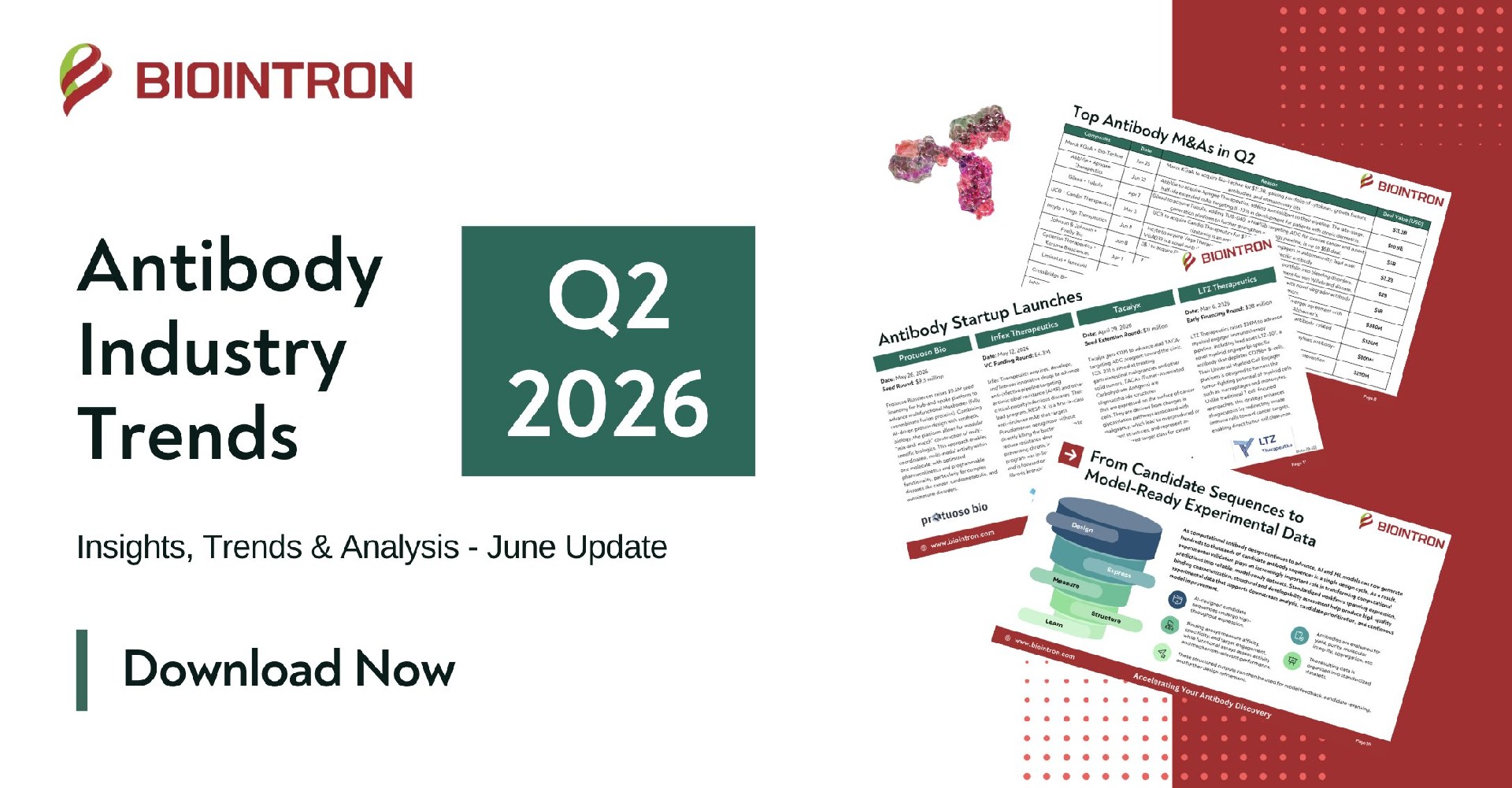
Biointron’s Q2 2026 Antibody Industry Trends report aims to explore the events a……
Artificial intelligence (AI) can be used throughout the drug development process……
Peptides and antibodies have different strengths as therapeutic molecules. Pepti……
Therapeutic antibodies are often used to block receptors or neutralize soluble m……