


Bispecific antibody-drug conjugates (BsADCs) are a new class of therapeutic drugs being developed to fight cancer. They combine the dual targeting ability of bispecific antibodies with the cell-killing power of cytotoxic drugs. BsADCs are designed to deliver cytotoxic drugs directly to cancer cells, while minimizing damage to healthy cells. While they are still in development, several exciting advances have occurred recently.
Last week, a paper published in Nature demonstrated the construction of a novel BsADC targeting HER2 and HER3 with more potent therapeutic efficacy against breast cancer over monospecific ADCs. It potently inhibited the viability of MCF7, JIMT-1, BT474, BxPC-3 and SKOV-3 cancer cells in vitro.
Meanwhile, ProfoundBio’s novel EGFR x cMET bispecific ADC PRO1286 demonstrated broad antitumor activity and promising tolerability in preclinical models. Set to enter clinical trials by this year, the BsADC has the potential to treat multiple tumor types and was built on the clinically validated sesutecan platform.
Also last month, a paper described a novel T cell-redirecting anti-GPRC5D x CD3 bispecific antibody with potent antitumor activity in multiple myeloma (MM) preclinical models. Their results show that the BsADC as a monotherapy and combination therapy with immunomodulatory drugs (IMiDs) could be a highly potent and effective treatment approach for a wide population of MM patients.
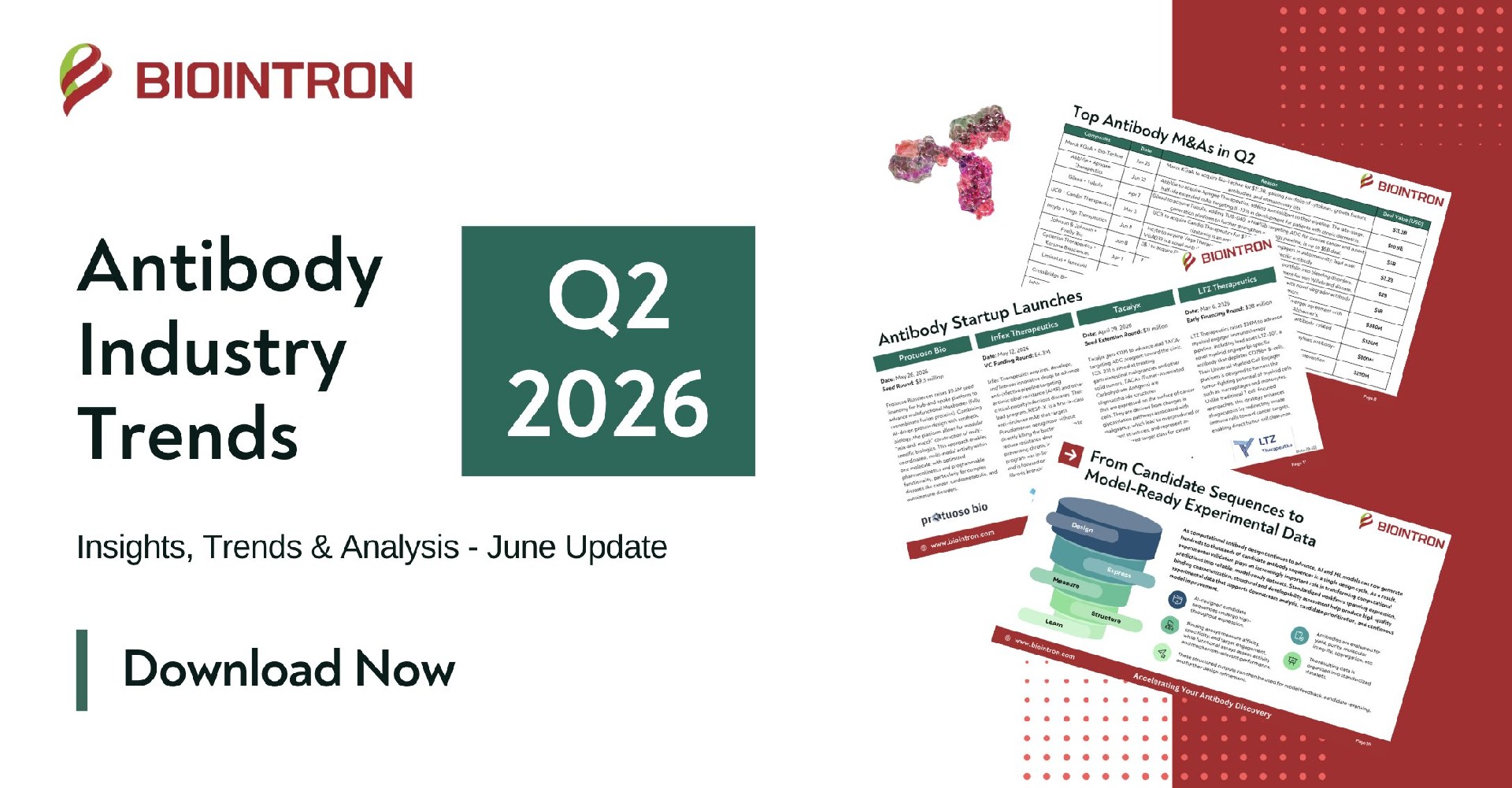
Biointron’s Q2 2026 Antibody Industry Trends report aims to explore the events a……
Artificial intelligence (AI) can be used throughout the drug development process……
Peptides and antibodies have different strengths as therapeutic molecules. Pepti……
Therapeutic antibodies are often used to block receptors or neutralize soluble m……