


The FDA has revoked Emergency Use Authorizations (EUAs) for multiple COVID-19 monoclonal antibody (mAb) therapies, including those developed by Eli Lilly, AstraZeneca, Vir Biotechnology, and Regeneron. This decision reflects the challenges of targeting rapidly mutating viruses like SARS-CoV-2, which have rendered the mostly expired drugs no longer effective against circulating SARS-CoV-2 strains. As circulating variants became resistant to these specific mAbs, the industry now faces an urgent need to develop next-generation solutions that are broader, more durable, and resilient to viral evolution.
The high mutation rate of SARS-CoV-2 has highlighted a significant vulnerability in variant-specific mAb therapies. This situation underscores the importance of identifying broadly neutralizing antibodies or targeting conserved viral epitopes that are less prone to mutation. Such strategies will not only address current viral challenges but also provide a foundation for future-proof therapies against evolving pathogens.
Meanwhile, scientists at the Icahn School of Medicine at Mount Sinai have developed the AMETA Nanobody Platform, an approach designed to combat rapidly mutating viruses like SARS-CoV-2. AMETA uses engineered nanobodies attached to a human IgM scaffold to target multiple stable regions of the virus simultaneously, significantly enhancing binding strength and reducing the risk of resistance. Lab tests and preclinical studies in mice show AMETA’s effectiveness against SARS-CoV-2 variants, including Omicron, and even the related SARS-CoV virus. The platform’s ability to disrupt viral structures and clump particles together sets it apart from traditional antibodies. Researchers highlight its potential to address other fast-mutating pathogens, such as HIV and influenza, offering a flexible, durable, and cost-effective solution for managing current and future infectious diseases.

Scientists from The University of Auckland have linked the post-COVID surge of respiratory illnesses like RSV and Strep A to waning antibody levels caused by pandemic restrictions. A study of 150 blood donors over three years showed that while antibodies against SARS-CoV-2 increased due to vaccination and infection, immunity to pathogens like Group A Streptococcus and RSV declined. This drop resulted from reduced exposure to germs during lockdowns, mask-wearing, and travel bans, which limited their circulation. Once restrictions eased, these pathogens rebounded at higher levels, impacting more vulnerable populations. These results highlight the need for awareness and preparedness for future immunity gaps.
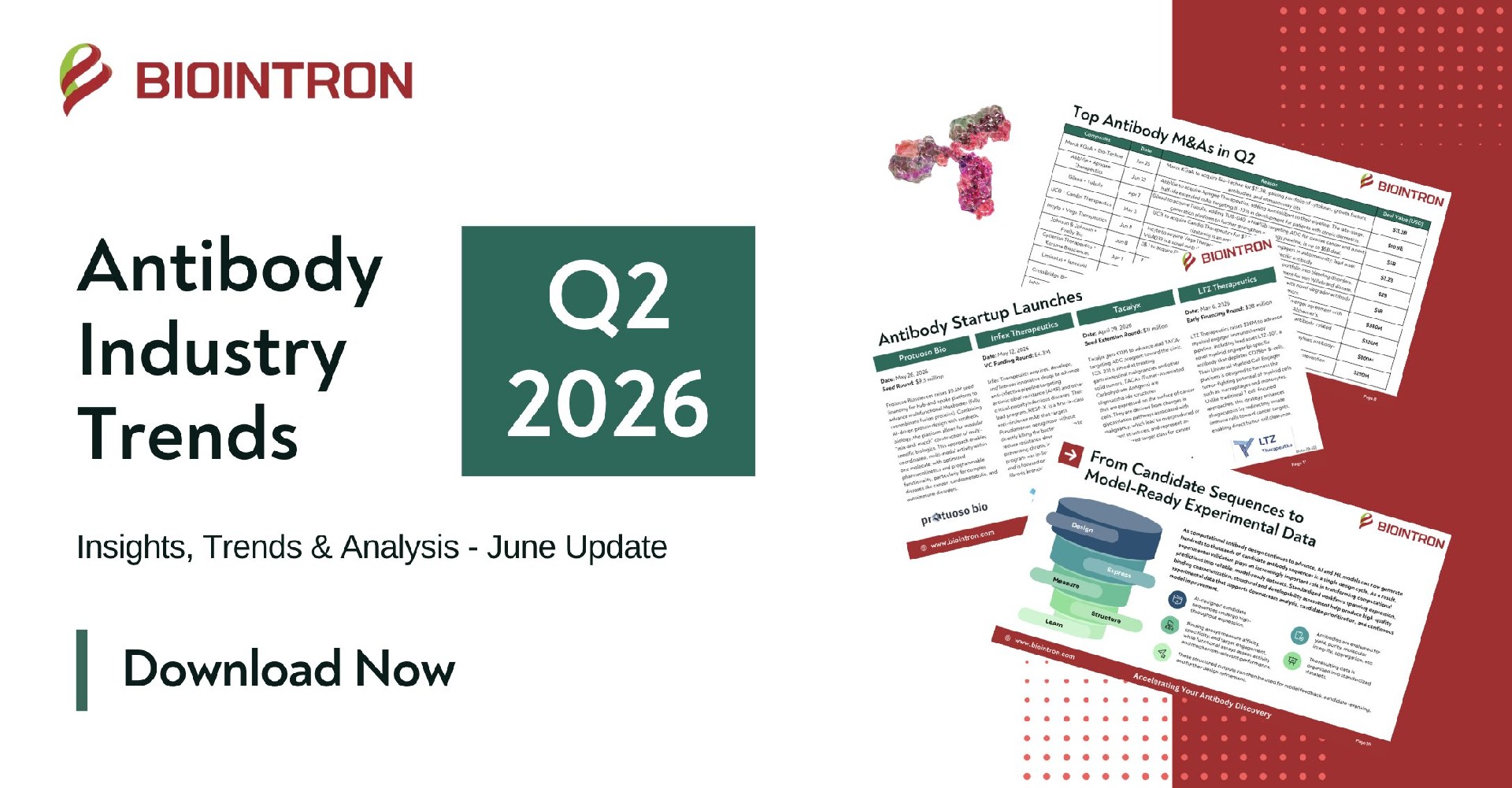
Biointron’s Q2 2026 Antibody Industry Trends report aims to explore the events a……
Artificial intelligence (AI) can be used throughout the drug development process……
Peptides and antibodies have different strengths as therapeutic molecules. Pepti……
Therapeutic antibodies are often used to block receptors or neutralize soluble m……