



Chemical conjugation is the process of using defined chemical reactions to attach a “payload” to an antibody. That payload can be a cytotoxic drug, imaging agent, radionuclide chelator, oligonucleotide, peptide, protein, or even another antibody fragment. In antibody therapeutics, this matters because the antibody provides target recognition, while the attached payload adds a therapeutic or diagnostic function.
Recent studies have described site-specific conjugation, meaning that the payload is attached at a controlled location on the antibody. This can improve product uniformity, reduce aggregation, preserve antibody binding, and make antibody-drug conjugates, bispecific antibodies, and other multifunctional biologics easier to design rationally.
ADCs are antibodies chemically linked to potent drugs; the antibody helps deliver the drug to cells expressing a target antigen, while the drug provides the killing activity. Earlier ADC conjugation methods often relied on naturally occurring lysines or cysteines, which can create heterogeneous mixtures with different drug-to-antibody ratios, or DARs. DAR refers to how many drug molecules are attached to each antibody.
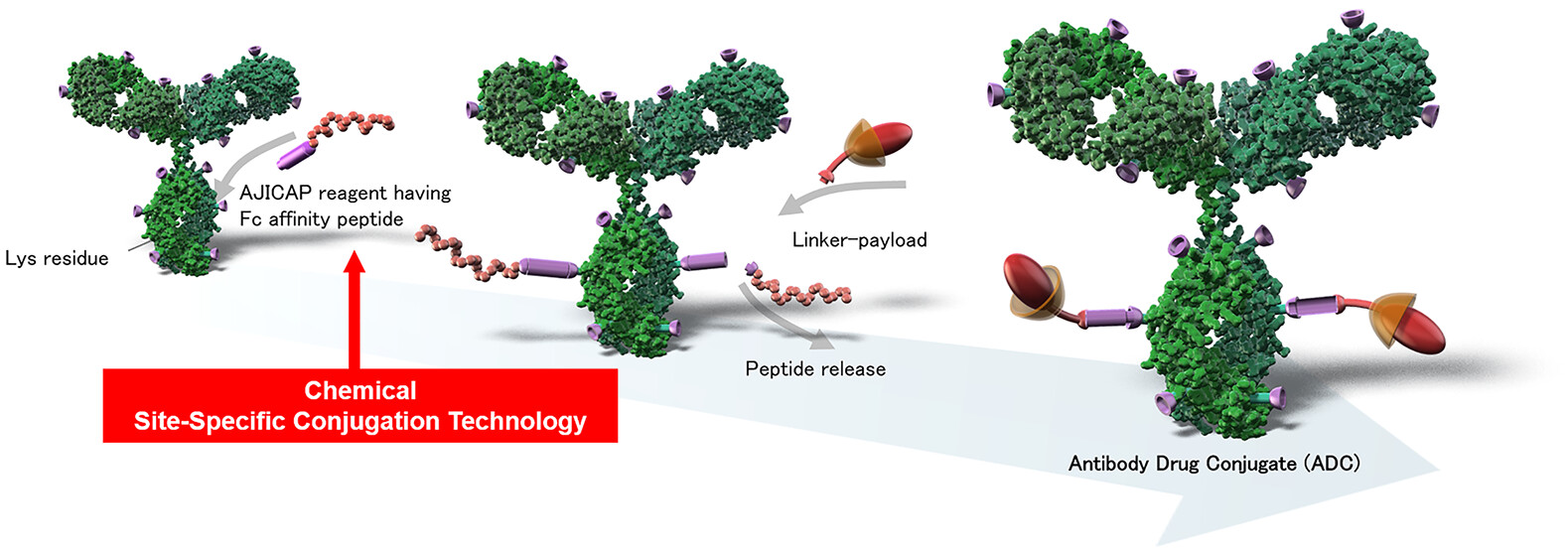
Fujii et al. (2023) reported a method termed “AJICAP”, where the team improved an Fc-affinity-guided conjugation platform that modifies native antibodies at defined Fc-region lysines, especially Lys248 and Lys288, without requiring antibody engineering. The second-generation method removed redox treatment and enabled a more streamlined one-pot modification process. Importantly, the platform generated more than 20 ADCs from different antibody and linker-payload combinations with low aggregation.
The AJICAP work also highlights a second important point: higher DAR is not always better. The paper discusses why DAR = 2 ADCs remain attractive because they can offer simpler structures and avoid some hydrophobicity-related liabilities seen with heavily loaded ADCs. Hydrophobic payloads can make antibodies less soluble, increase aggregation, and worsen pharmacokinetics. By producing homogeneous DAR = 2 ADCs at defined Fc sites, AJICAP second generation aims to balance potency with tolerability and stability. In vivo evaluation showed that Lys248- and Lys288-conjugated trastuzumab-MMAE ADCs produced antitumor activity in a HER2-positive xenograft model, while pharmacokinetic and tolerability data supported the conclusion that these site-specific ADCs could achieve higher therapeutic indexes than traditional stochastic ADCs.
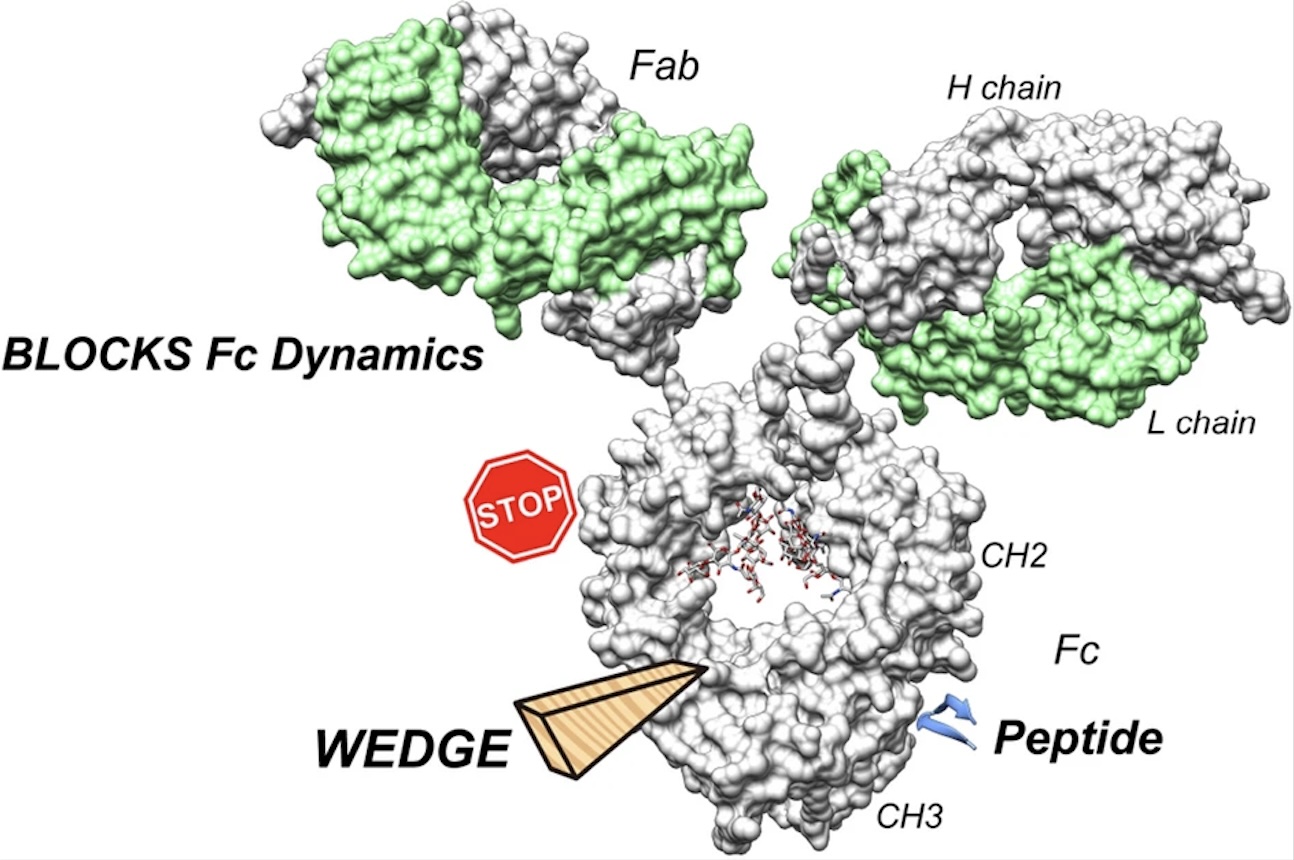
Meanwhile, another recent paper highlights how chemical conjugation can do more than just add a payload. This study used trastuzumab and attached a specially engineered peptide to the Fc region, the constant region of an antibody that interacts with immune receptors and helps determine immune effector functions. The peptide carried an azide group that could later be connected to DOTA, a chelator used to bind diagnostic or therapeutic radionuclides. This created a modular system in which the antibody first receives a peptide “adapter,” and then a payload is added through click chemistry. Click chemistry refers to fast, selective reactions that can join molecular components under mild conditions, often without damaging biomolecules.
The most interesting finding was that peptide/DOTA-conjugated trastuzumab showed enhanced antibody-dependent cellular cytotoxicity, or ADCC. ADCC is an immune killing mechanism in which immune cells, especially natural killer cells, recognize the Fc region of an antibody bound to a target cell and destroy that cell.
The study found that peptide- and peptide/DOTA-conjugated trastuzumab had stronger FcγRIIIa binding than unmodified trastuzumab, which helps explain the improved ADCC. Structural and thermodynamic analyses suggested that the peptide acts like a molecular “wedge” between Fc domains, reducing Fc flexibility. That reduction in Fc dynamics was associated not only with enhanced effector function but also with improved thermal stability.
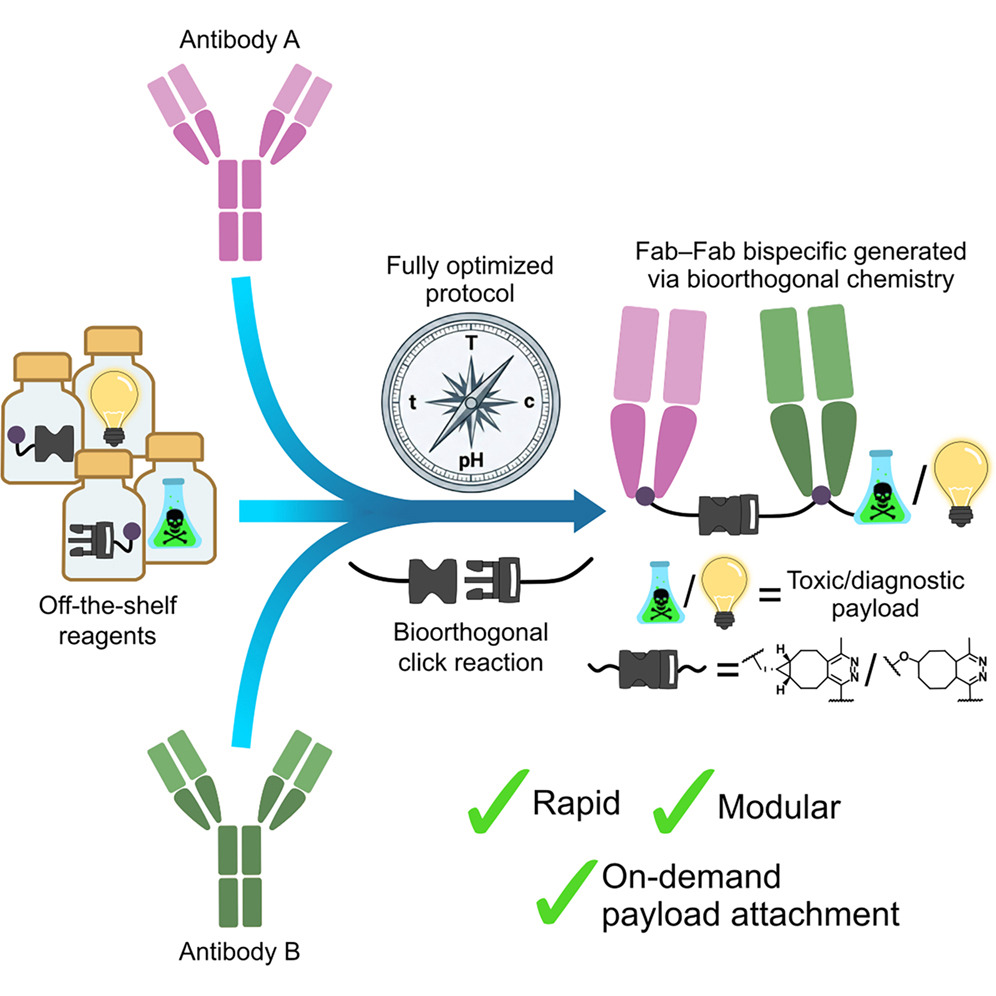
Petri et al. (2026) take this concept further, using chemical conjugation for bispecific antibody conjugates. Bispecific antibodies are designed to bind two different targets, or two different epitopes, at the same time. Traditional bispecific production often depends on recombinant protein engineering, which can be complex because different antibody chains must pair correctly. This study instead used bioorthogonal click chemistry to chemically assemble Fab-Fab bispecific constructs. “Bioorthogonal” means the chemical reaction is selective and compatible with biological molecules, so it can occur without interfering with native protein functionality.
This work is especially relevant to the future of bispecific ADCs, or bsADCs, which combine dual-target recognition with drug delivery. The authors demonstrated FabHER2×FabCD20×TAMRA fluorescent conjugates and FabHER2×FabEGFR×MMAE bispecific ADC-like constructs, showing that the same modular chemistry can connect antibody fragments and small-molecule payloads. That is important because bsADC development requires rapid testing of many variables: target pair, antibody geometry, linker, payload, and conjugation site. Chemical assembly could make early-stage screening faster by allowing researchers to swap components without rebuilding the entire antibody genetically.
Chemical conjugation thus has potential for improving antibody therapeutic design. Site-specific ADC production, Fc-directed peptide conjugation, and bioorthogonal bispecific assembly can generate antibody conjugates with controlled payload placement and potentially improved functional properties. Still, precision bioconjugation remains challenging because antibodies vary in structure, stability, accessibility, and tolerance to reaction conditions.
Biointron’s Q2 2026 Antibody Industry Trends report aims to explore the events a……
Artificial intelligence (AI) can be used throughout the drug development process……
Peptides and antibodies have different strengths as therapeutic molecules. Pepti……
Therapeutic antibodies are often used to block receptors or neutralize soluble m……