


Nanoparticles are tiny materials (<1000 nm in size) that have specific physicochemical properties different to bulk materials of the same composition and such properties make them very attractive for commercial and medical development. In recent years, the development of nanoparticles has expanded into a large range of clinical applications. They have been developed to overcome the limitations of free therapeutics and systemic, microenvironmental and cellular biological barriers that are heterogeneous across patient populations and diseases.
As lipid-based, polymeric and inorganic nanoparticles are engineered in increasingly specified ways, they can begin to be optimized for drug delivery in a more personalized manner, entering the era of precision medicine. Currently, lipid-based and polymeric nanoparticles are in focus for antibody-conjugation.

A major limitation to the antitumor efficacy of drug-loaded NPs is their off-target accumulation in organs such as the liver and spleen. While monoclonal antibodies (mAbs) have been widely employed as targeting ligands, antibody-conjugated NPs have yet to reach clinical translation.
A recent review describes how the multi-specificity of bsAbs is advantageous. By simultaneously binding two distinct TAAs, bsAbs can increase tumor specificity and NP retention. Moreover, incorporating a bsAb domain that recognizes a NP moiety can streamline NP functionalization. Many types of NPs functionalized with bsAbs have been investigated, including liposomes, lipid nanoparticles (LNPs), and polymeric NPs. These formulations are primarily designed for the targeted delivery and protection of therapeutic nucleic acids, or cytotoxic agents like doxorubicin and docetaxel, linked to significant side effects.

The field of antibody-nanoparticle conjugates (ANCs) has rapidly diversified in terms of nanoparticle platforms, conjugation chemistries, and antibody formats. Innovations span from traditional liposomes and LNPs to protein nanostructures and metal-based nanoparticles. Covalent conjugation strategies such as carbodiimide or thiol-maleimide chemistry, are often employed for stable, site-specific attachment, although non-covalent and click chemistry approaches offer simpler or bioorthogonal alternatives. Each method carries trade-offs regarding antibody orientation, stability, and reproducibility.
Antibody fragments such as Fab, scFv, and nanobodies are increasingly used to reduce steric hindrance, improve tissue penetration, and minimize Fc-mediated off-target effects. These design elements can be tailored to optimize internalization, circulation half-life, or avoid immune clearance, depending on the therapeutic context.
In cancer therapy, ANCs are designed to exploit the enhanced permeability and retention (EPR) effect, while improving specificity through antigen recognition. Bispecific antibody-conjugated PEGylated liposomes and LNPs have shown improved accumulation in tumors and reduction in systemic toxicity, although effects on off-target biodistribution remain variable and context-dependent.
In non-oncologic indications, ANCs are employed to cross the blood-brain barrier (e.g., via transferrin receptor targeting), deliver payloads to infected or inflamed tissues, or support membrane repair in ischemic disease. These emerging uses illustrate the broad translational potential of antibody-guided NP systems.

While the therapeutic potential of antibody-functionalized nanoparticles is compelling, translation to clinical practice requires balancing efficacy, manufacturability, and regulatory complexity. Factors such as antibody density, PEG architecture, conjugation reproducibility, and immunogenicity significantly affect biodistribution, safety, and therapeutic index. Recent studies underscore the importance of optimizing not only target binding but also pharmacokinetic coordination, particularly in pre-targeting strategies that require sequential administration.
Antibodies can be incorporated into nanocarriers either through surface attachment (conjugation) or internal complexation (encapsulation or entrapment).
Surface conjugation is the predominant strategy for antibody incorporation. Covalent attachment via carbodiimide (EDC/NHS), maleimide-thiol, or click chemistries enables stable anchoring of antibodies onto liposomes, lipid nanoparticles (LNPs), and polymeric carriers. The primary objective is receptor-mediated targeting and cellular uptake through tumor-associated antigen binding. However, non-site-specific chemistries frequently result in random antibody orientation, impairing antigen recognition and internalization efficiency. Maleimide- or click-based site-selective conjugation reduces such limitations by preserving antigen-binding regions and improving reproducibility. Comparative studies in antibody-conjugated breast cancer nanocarriers confirm that oriented immobilization enhances both cellular uptake and therapeutic efficacy over non-oriented methods.
Complexation strategies aim to encapsulate antibodies within nanocarrier matrices to facilitate intracellular delivery, particularly for non-membrane-bound targets such as mutant oncoproteins. Recent work utilizing palmitoyl hyaluronate-based nanoassemblies (HANAs) has demonstrated efficient loading of full-length antibodies (e.g., anti-KRAS^G12V^) via hydrophobic and electrostatic interactions. These assemblies form bilayered structures composed of hyaluronate and phospholipids, enclosing a hydrophilic core suitable for antibody retention. Functionalization with tumor-penetrating peptides (e.g., tLyP1) further enhances tumor accumulation and cytosolic delivery. Intracellular release of the encapsulated antibody led to specific engagement of cytoplasmic KRAS^G12V^ and measurable in vivo tumor suppression.

Unlike attachment strategies, complexation enables antibody-based therapeutics to reach intracellular targets inaccessible by extracellular binding. However, challenges remain, including maintaining antibody conformation, controlling release kinetics, and avoiding lysosomal degradation.
The integration of antibody engineering and nanotechnology is reshaping the therapeutic landscape. Whether through bispecific targeting, advanced conjugation techniques, or incorporation into delivery vehicles, antibody-guided nanoparticles represent a crucial innovation at the intersection of precision medicine and drug delivery. As design principles mature and clinical data accumulate, these platforms are poised to redefine targeted therapies across diverse disease domains.
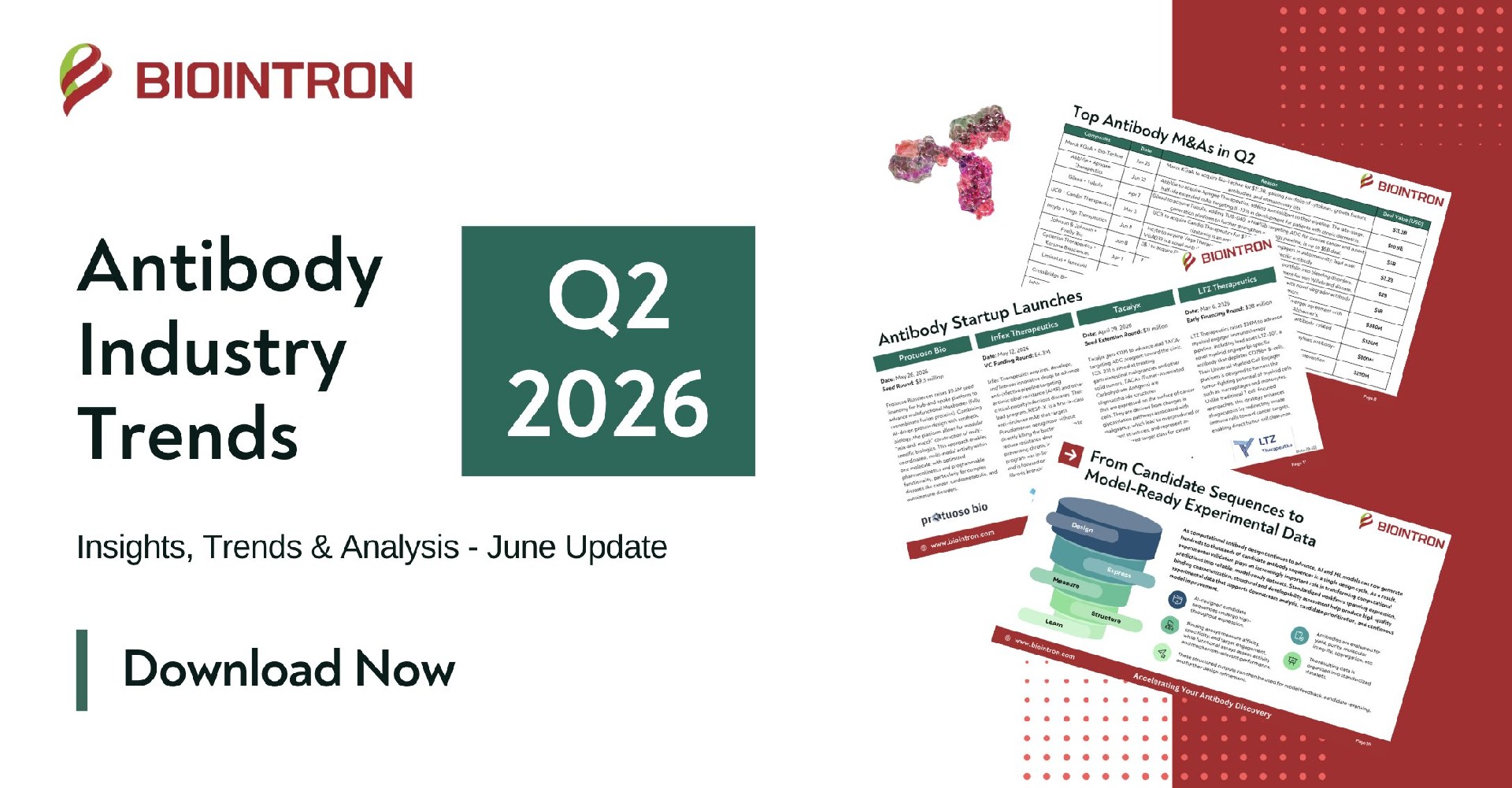
Biointron’s Q2 2026 Antibody Industry Trends report aims to explore the events a……
Artificial intelligence (AI) can be used throughout the drug development process……
Peptides and antibodies have different strengths as therapeutic molecules. Pepti……
Therapeutic antibodies are often used to block receptors or neutralize soluble m……