


This August, we have seen several exciting antibody drug development announcements across Breakthrough Therapy, Fast Track, and Orphan Drug designations from regulatory agencies.
On August 27, Genmab announced BTD for rinatabart sesutecan (Rina-S), a folate receptor alpha (FRα)-directed ADC in development for patients with recurrent or progressive endometrial cancer who have failed both platinum-containing regimens and PD-(L)1 therapies. This ADC comprises a novel human monoclonal antibody linked to the topoisomerase I inhibitor exatecan via a protease-cleavable linker. Genmab has also initiated a Phase 3 program in endometrial cancer, complementing ongoing evaluation in ovarian and other FRα-positive tumors.
Similarly, Daiichi Sankyo and Merck received FDA BTD on August 18 for ifinatamab deruxtecan (I-DXd), a B7-H3-targeted ADC, for patients with extensive-stage small cell lung cancer (SCLC) following disease progression on platinum-based chemotherapy. I-DXd combines a humanized anti-B7-H3 monoclonal antibody with a topoisomerase I payload. B7-H3 is a checkpoint protein broadly overexpressed in aggressive malignancies, and no therapies targeting it are currently approved, positioning I-DXd as a potential first-in-class immunoconjugate.

Further expanding the list, izalontamab brengitecan (Iza-bren), a bispecific ADC co-developed by SystImmune and Bristol Myers Squibb, received the designation on August 18 for previously treated EGFR-mutant non-small cell lung cancer (NSCLC). This investigational agent targets both EGFR and HER3 and delivers a topoisomerase I inhibitor payload. Iza-bren's dual mechanism of action blocks EGFR and HER3 signals to cancer cells, reducing proliferation and survival signals. In addition, upon antibody mediated internalization, iza-bren's therapeutic payload is released causing genotoxic stress that leads to cancer cell death.
Finally, on August 19, Antengene Corporation announced that its ADC, ATG-022, was granted Breakthrough Therapy designation by China's National Medical Products Administration (NMPA) for CLDN18.2-positive, HER2-negative gastric and gastroesophageal junction adenocarcinoma in the third-line setting. ATG-022, targeting claudin 18.2, has demonstrated broad-spectrum antitumor activity in the ongoing Phase I/II CLINCH trial, including complete responses in patients with both high and ultra-low expression of CLDN18.2.

On August 4, Clarametyx Biosciences received both Fast Track and Qualified Infectious Disease Product (QIDP) designations for CMTX-101, an immune-enabling antibody targeting bacterial biofilms in patients with cystic fibrosis. CMTX-101 aims to dismantle biofilm structures that shield bacteria from antibiotics and the immune system, enhancing both microbial clearance and host response. The goal of treatment is to dramatically improve the effectiveness of innate immune system effectors and antibiotic therapies, thereby addressing inflammation pathways driven by the biofilm state.
On August 20, the FDA granted Orphan Drug Designation (ODD) to KER-065, a ligand trap therapeutic under development by Keros Therapeutics for Duchenne muscular dystrophy (DMD). KER-065 is engineered from modified activin receptor domains fused to an Fc domain, allowing it to neutralize myostatin and activin A, which are key regulators of muscle atrophy. The therapeutic aims to increase muscle regeneration, reduce fibrosis, and enhance skeletal integrity in a population with significant unmet need.
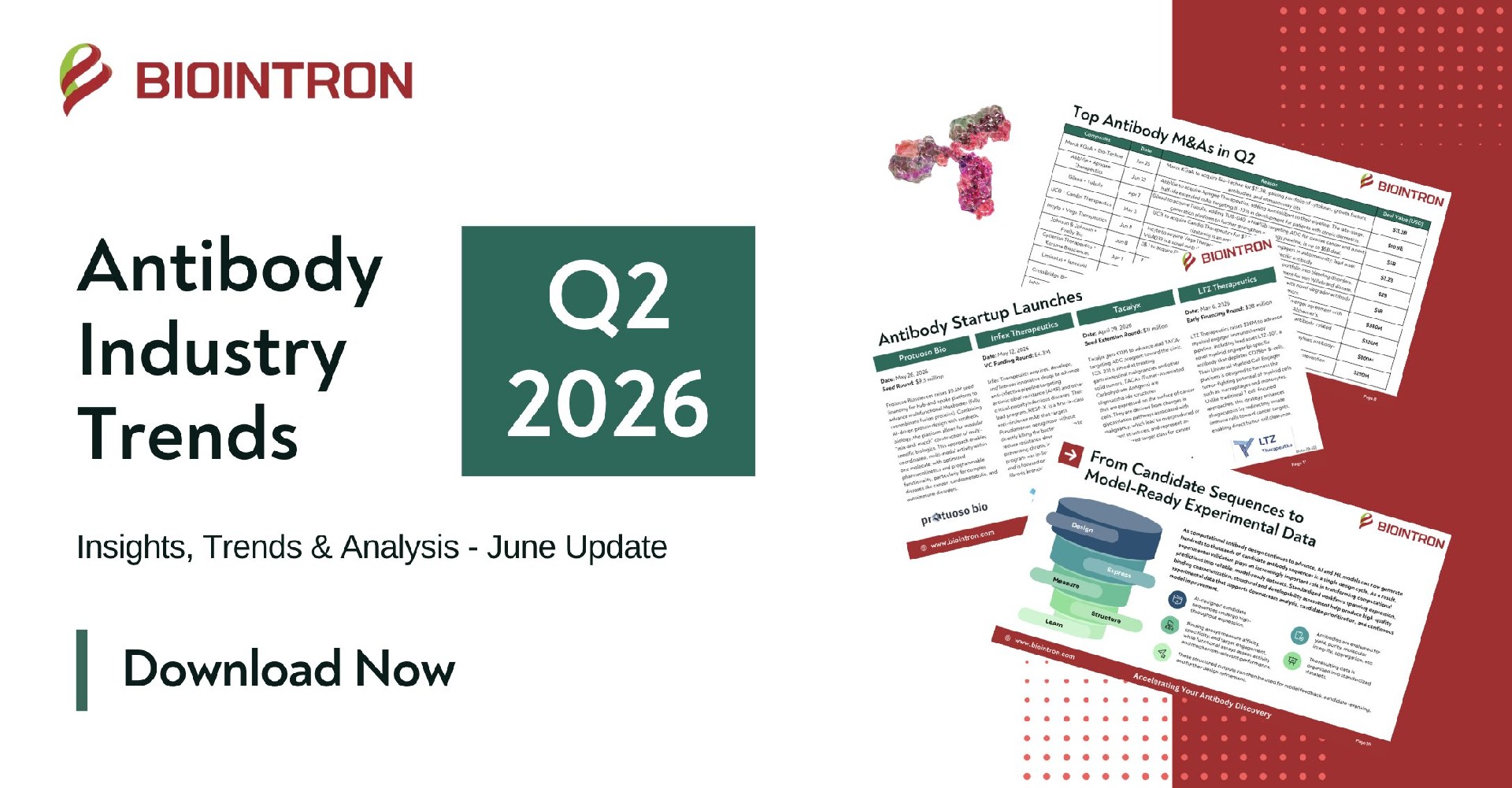
Biointron’s Q2 2026 Antibody Industry Trends report aims to explore the events a……
Artificial intelligence (AI) can be used throughout the drug development process……
Peptides and antibodies have different strengths as therapeutic molecules. Pepti……
Therapeutic antibodies are often used to block receptors or neutralize soluble m……