


Immune checkpoint blockade antibody therapy is an approach in cancer treatment that uses the body's immune system to target and destroy cancer cells. Immune checkpoints are regulatory pathways in immune cells that cancer cells exploit to evade detection. Key immune checkpoints include PD-1, PD-L1, and CTLA-4. By blocking these pathways, antibodies like pembrolizumab, nivolumab, and ipilimumab allow T-cells to recognize and attack cancer cells more effectively.
However, the effectiveness of monotherapy can be limited by tumor resistance. To address this challenge, numerous clinical trials are exploring the combination of immune checkpoint inhibitors (ICIs) and antibody-drug conjugates (ADCs). Last week, a review was published describing how ICIs activate the immune system, while ADCs combine monoclonal antibodies with cytotoxic agents, resulting in a synergistic effect. This combination offers several advantages in treating urogenital tumors. ICIs can relieve immunosuppression within the tumor microenvironment and stimulate the body’s immune response. Meanwhile, ADCs leverage the targeting precision of monoclonal antibodies and the potency of chemotherapy drugs, linked via specific biochemical connectors.

During the NGIO event last week, a novel approach of antibody-enabled targeted protein stabilization (TPS2) was presented. The development of immunostimulatory ADCs improved the anti-tumor immune response by delivering Cbl-b inhibitor to immune cells while blocking checkpoint molecule, PD1. Inhibition of E3 ligase Cbl-b can lead to the stabilization of target proteins downstream of T cell receptor signaling pathway, which restores the effector function of tumor-specific T cells that are dysfunctional due to either the immunosuppressive mechanisms in the tumor microenvironment or T cell exhaustion.
Another innovative development is the Fc-null anti-CTLA-4 antibody, a novel strategy aimed at facilitating cancer immunotherapy while mitigating colitis—a common adverse effect. Recent studies have revealed that the gut microbiota plays a critical role in CTLA-4 blockade-induced colitis. By using an extended half-life H11 (H11-HLE) antibody, comprised solely of heavy chain fragments (VHHs) targeting CTLA-4, researchers demonstrated that effective antitumor responses can be achieved. Notably, ICIs like anti-CTLA-4 antibodies can lead to adverse effects across a broad range of organ systems, so studying cutaneous, pulmonary, cardiac, and neurological effects is also important.
These advancements highlight the evolving landscape of cancer immunotherapy, promising more effective and safer treatment options for patients.
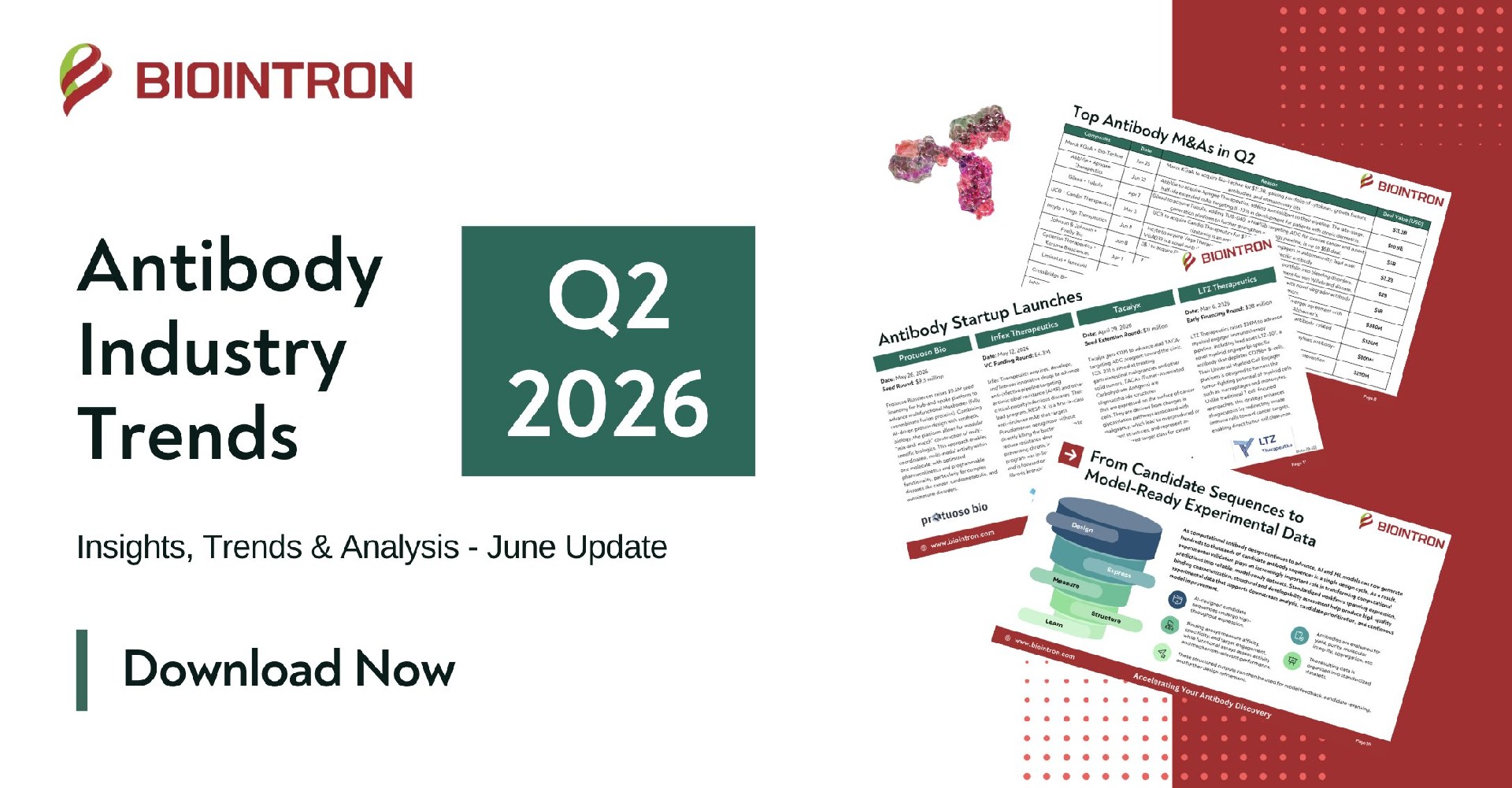
Biointron’s Q2 2026 Antibody Industry Trends report aims to explore the events a……
Artificial intelligence (AI) can be used throughout the drug development process……
Peptides and antibodies have different strengths as therapeutic molecules. Pepti……
Therapeutic antibodies are often used to block receptors or neutralize soluble m……