


Recently, we have seen exciting developments in the antibody-drug conjugate (ADC) space, from cloud computing to radioisotopes.
This month, BioCorteX announced a breakthrough in collaboration with Google Cloud technology by integrating large biological data and processing massive datasets rapidly. They discovered a crucial link between the tumor microenvironment and ADC efficacy, potentially transforming the landscape of personalized cancer therapy. This discovery could significantly improve the success rate of clinical trials and lead to more effective treatments for a wider range of patients.
Besides machine learning, researchers are using antibodies with radioisotopes in a bid to more precisely deliver radiation to cancers and tumors. Several companies are looking to radiolabeled antibody-drug conjugates (rADCs) to bypass these side effects of radiation treatments for cancer such as fatigue, hair loss, nausea and skin irritation. These rADCs would deliver radiation only to cancer cells without affecting healthy ones, speed up treatment times and enable lower doses than traditional therapies. Companies working on these drugs include:
Telix Pharmaceuticals
Actinium Pharmaceuticals
Convergent Therapeutics
Abdera Therapeutics
Bayer
Fusion Pharmaceuticals
A recent review describes the need for radiolabeled ADME (Absorption, Distribution, Metabolism, and Excretion) studies for ADCs if new linkers and payloads are used that have never been used in humans before as these studies provide valuable information on the pharmacokinetic properties, optimal dosing regimen, and potential safety concerns. However, clinical radiolabeled ADME studies are not recommended where patients are treated for life threating diseases like for indications in oncology.
Meanwhile, a recent paper describes exo-cleavable linkers for ADCs. Finding linkers that both enhance circulatory stability and enable effective tumor payload release remains a challenge, with the conventional valine-citrulline (Val-Cit) linker associated with several inherent drawbacks, including hydrophobicity-induced aggregation, a limited drug–antibody ratio (DAR), and premature payload release. Here, researchers have designed an exolinker approach, repositioning the cleavable peptide linker at the exo position of the p-aminobenzylcarbamate moiety, resulting in enhanced stability and therapeutic efficacy.

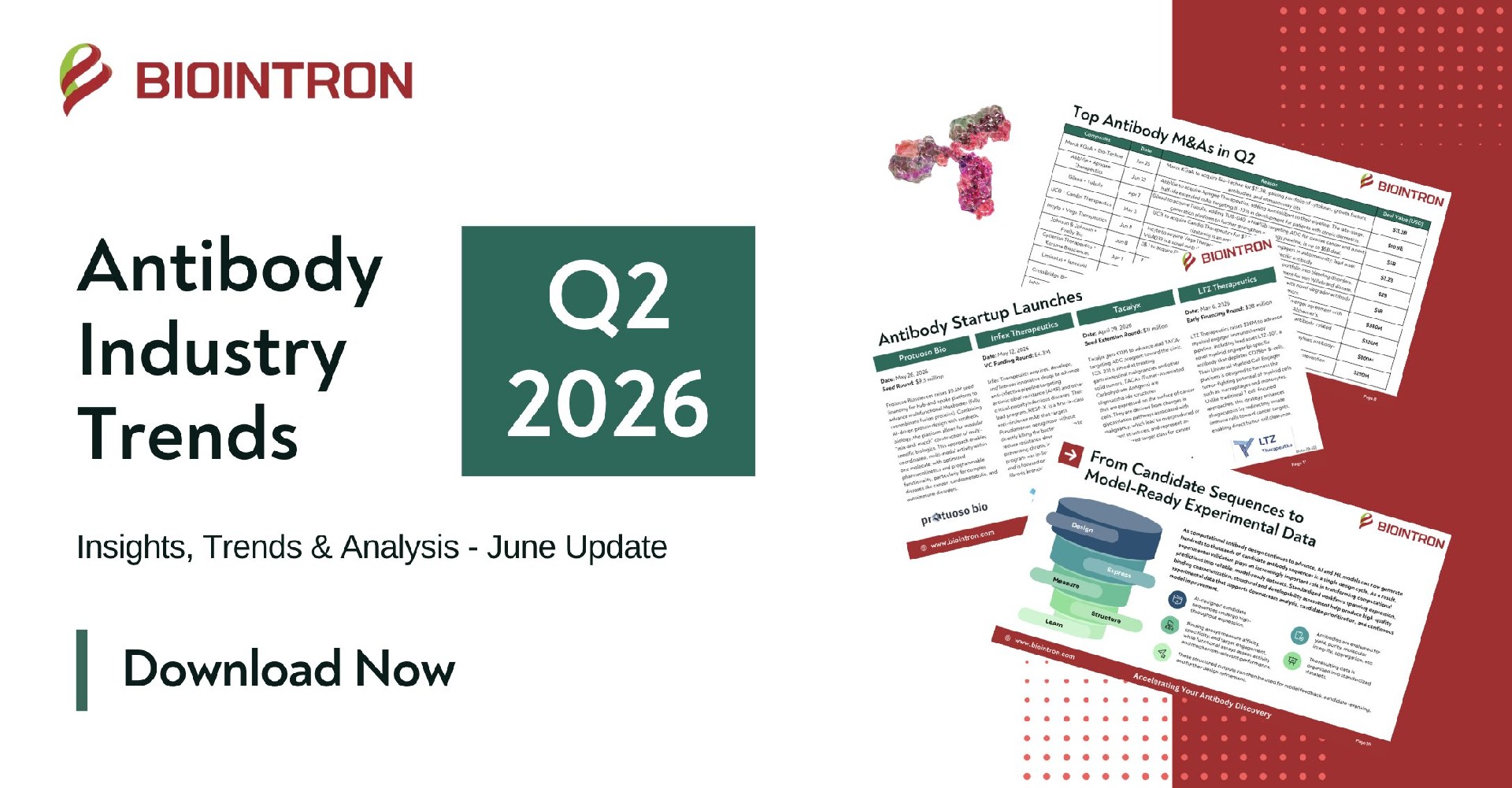
Biointron’s Q2 2026 Antibody Industry Trends report aims to explore the events a……
Artificial intelligence (AI) can be used throughout the drug development process……
Peptides and antibodies have different strengths as therapeutic molecules. Pepti……
Therapeutic antibodies are often used to block receptors or neutralize soluble m……