


Monoclonal antibodies (mAbs) have become increasingly important in clinical oncology, infectious disease, and neurodegeneration. Combination antibody therapies have been picked up to overcome limitations in monotherapy, such as resistance and lower efficacy.
Monoclonal antibodies can block growth signals, induce antibody-dependent cellular cytotoxicity (ADCC), or inhibit angiogenesis. Combining them allows for targeting distinct tumorigenic pathways. Preclinical and clinical studies support additive or synergistic benefits in select combinations. The well-documented success of trastuzumab plus pertuzumab in HER2-positive breast cancer and nivolumab plus ipilimumab in melanoma exemplifies the potential of rational combinations. However, negative outcomes, such as the combination of cetuximab with bevacizumab or panitumumab in colorectal cancer, reveal risks of antagonism and heightened toxicity. These examples underline the importance of understanding biological redundancies and interaction profiles before clinical deployment.
Combining ADCs with chemotherapeutics, molecular inhibitors, or immune checkpoint inhibitors (ICIs) has demonstrated promising efficacy in hematologic and solid tumors. For instance, enfortumab vedotin combined with pembrolizumab received FDA breakthrough designation for cisplatin-ineligible urothelial cancer, highlighting the translational potential of ADC combinations. Yet, these strategies must navigate overlapping toxicities and biological complexity, especially in solid tumors where antigen heterogeneity can compromise efficacy. Predictive biomarkers and ADC design accounting for drug-to-antibody ratio and bystander effects are critical to success.

ADC-based combinations have expanded treatment options in HER2-positive breast cancer, triple-negative breast cancer, urothelial carcinoma, and lymphomas. These regimens frequently combine cytotoxicity with immune modulation or pathway inhibition, improving progression-free survival and response rates. ADC-ICI combinations are particularly promising, though the clinical benefit in randomized settings remains to be fully validated. Innovative approaches include pairing ADCs with cellular therapies (e.g., CAR-T).

In immunocompromised patients with COVID-19 (especially those with hematologic malignancies or transplants) monotherapies can fail to achieve viral clearance, increasing the risk of persistent infection and resistance. A growing body of evidence supports early combined therapy (ECT) using neutralizing mAbs and direct-acting antivirals (DAAs). This dual-targeting strategy interrupts multiple stages of the viral lifecycle, reduces viral load more effectively, and improves survival outcomes. Though not yet standard of care, this approach is gaining traction, particularly in high-risk outpatient settings where early intervention is needed.

Anti-amyloid mAbs such as aducanumab, lecanemab, and donanemab have provided the first disease-targeted therapies in early Alzheimer’s disease (AD). However, their effects and the multifactorial nature of AD have created interest in combination approaches. Add-on strategies seek to incorporate novel agents targeting tau pathology, neuroinflammation, or synaptic function alongside existing mAbs. A recent collaborative paper, including researchers from Alzheimer's Drug Discovery Foundation, highlights that key considerations include timing (e.g., initiating novel agents after six months of mAb therapy), biomarker strategy, and managing confounding adverse events such as ARIA.
Trial Design and Dosing Complexity: In oncology, the unpredictability of pharmacodynamic interactions and toxicity profiles requires extensive preclinical modeling and cautious dose escalation. In Alzheimer’s, add-on studies must consider treatment history, mAb-specific mechanisms, and biomarker confounders to delineate treatment effects accurately.
Biomarker-Guided Development and Patient Stratification: Whether identifying responders to ADCs based on target expression or tracking tau or plasma p-tau changes in AD, biomarkers are essential for precision combination therapy. Strategic trial designs, including window-of-opportunity studies and patient-derived xenograft models, are valuable tools for de-risking development and tailoring regimens.
Ongoing research and clinical trials will be crucial in refining these therapies and ensuring their long-term success in this high-risk population.
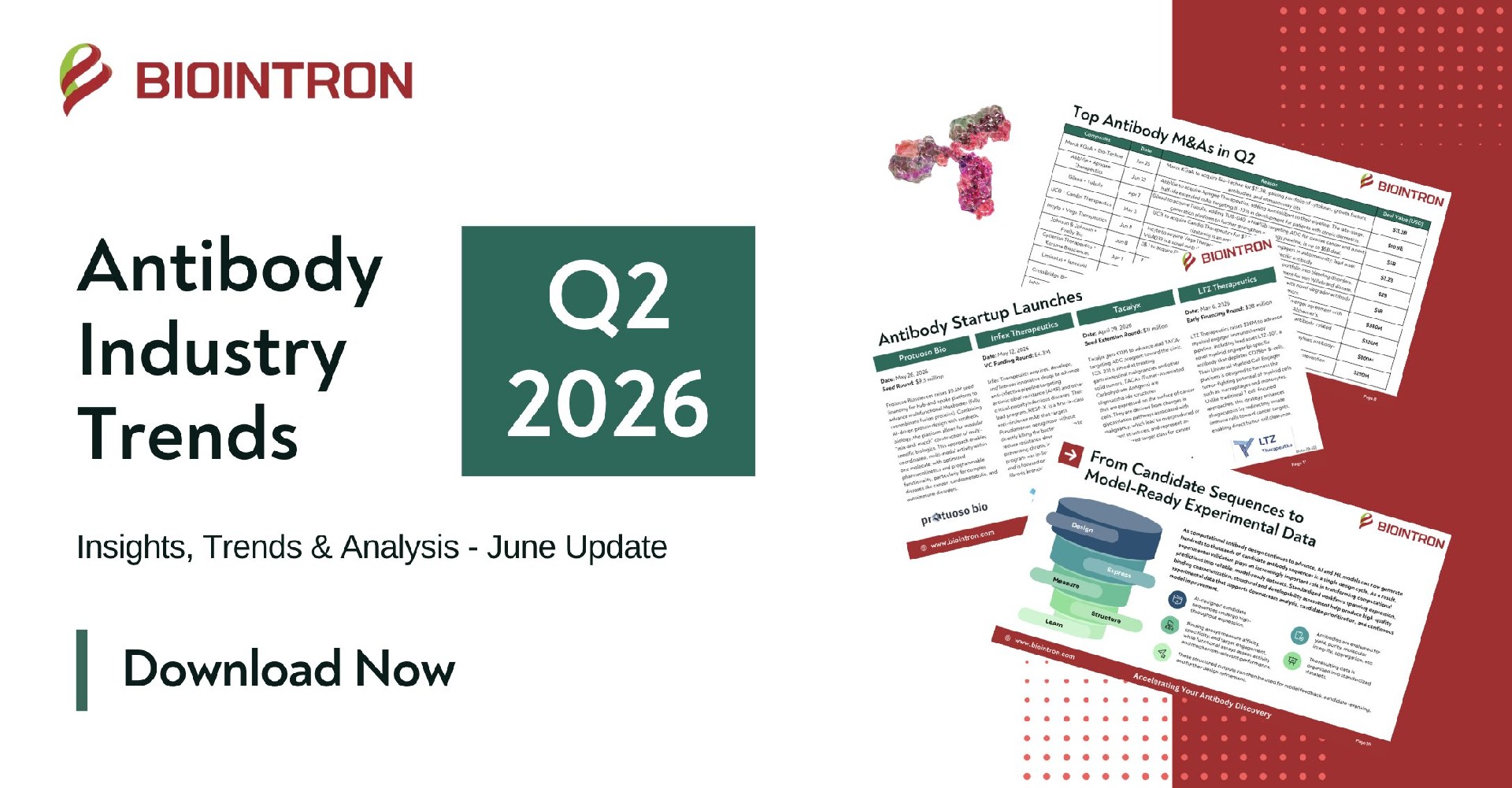
Biointron’s Q2 2026 Antibody Industry Trends report aims to explore the events a……
Artificial intelligence (AI) can be used throughout the drug development process……
Peptides and antibodies have different strengths as therapeutic molecules. Pepti……
Therapeutic antibodies are often used to block receptors or neutralize soluble m……