


As we age, our innate and adaptive immune system undergoes various changes, typically characterized by decreased lymphopoiesis and adaptive immunity, and increased inflammation and myeloid pathologies. Immunosenescence (the gradual deterioration of the immune system associated with ageing), makes individuals more susceptible to infections, less responsive to vaccines, and prone to the development of chronic inflammatory conditions and autoimmune diseases. Additionally, age-related alterations in the composition and function of the microbiota, the community of microorganisms living in and on the body, can further influence immune function and contribute to the overall ageing process.
This month, several papers related to antibodies and aging were published, including a comprehensive review by Quiros-Roldan et al., studying the impact of immune system aging on infectious diseases, including the progressive reduction of the body’s ability to trigger effective antibody responses. Here they describe the increased public interest in immune system aging due to prolonged life expectancy, contrasted to health expectancy. They also provide an analysis of the immune players involved, in addition to immune cells/mediators within endogenous and exogenous factors and co-morbidities.
Another paper this month provides insight into why age is a major risk factor for severe COVID-19. By evaluating the impact of aging and anti-IFN autoantibodies on host immune response in the blood, upper airway, and nasal microbiome, the researchers found that older age correlated with impaired viral clearance, dysregulated immune signaling, and persistent and potentially pathologic activation of pro-inflammatory genes and proteins.
Ending on a bright note, Ross et al.’s study in Nature demonstrates the antibody-mediated depletion of my-haematopoietic stem cells (HSCs) in aged mice restores characteristic features of a more youthful immune system. Their findings show it might be possible to reverse the ageing phenotype by eliminating my-HSCs in aged mice and contributes to the understanding and intervention of diseases exacerbated or caused by dominance of the haematopoietic system by my-HSCs.
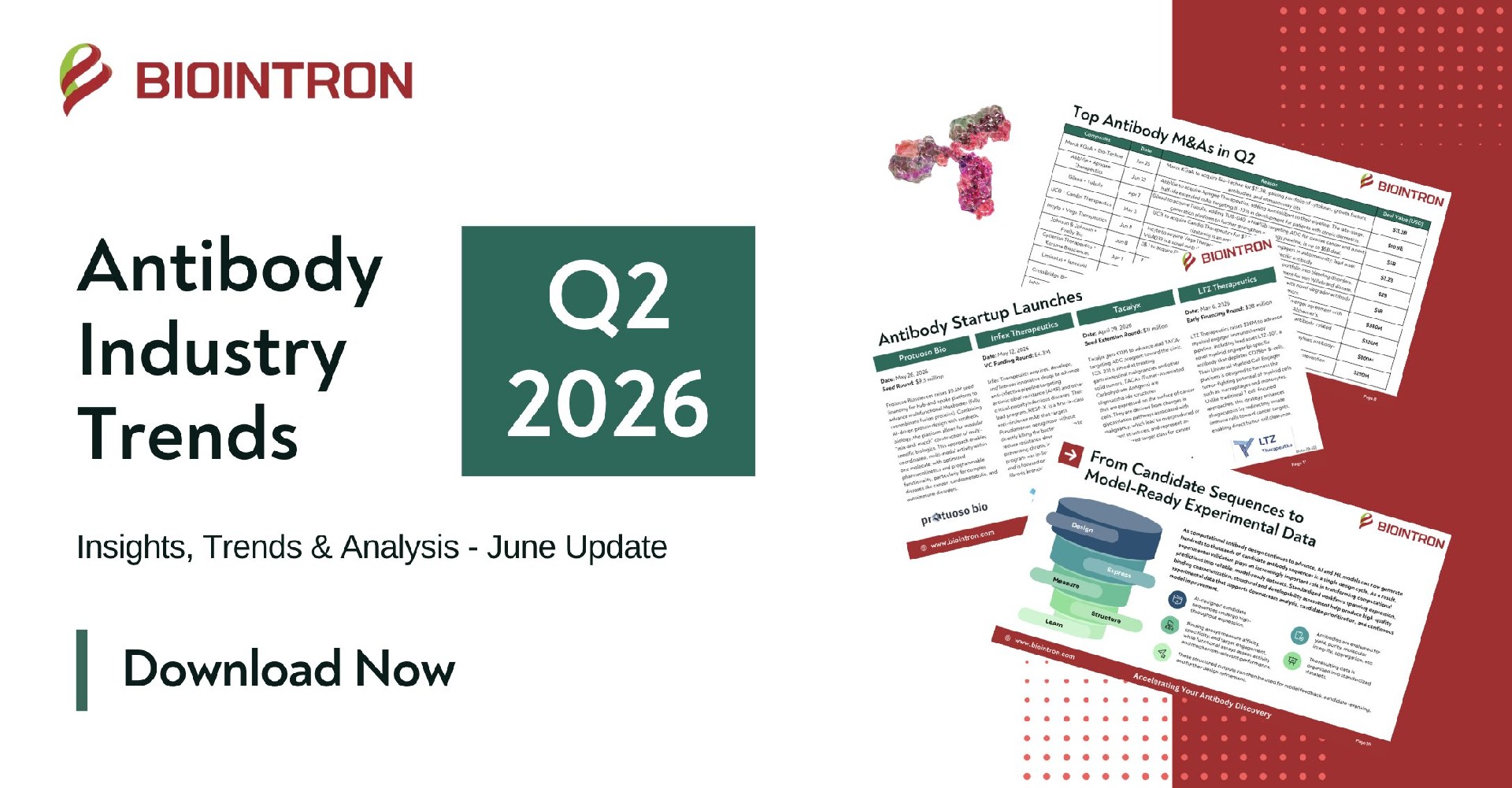
Biointron’s Q2 2026 Antibody Industry Trends report aims to explore the events a……
Artificial intelligence (AI) can be used throughout the drug development process……
Peptides and antibodies have different strengths as therapeutic molecules. Pepti……
Therapeutic antibodies are often used to block receptors or neutralize soluble m……