


Multiple myeloma (MM) is a cancer of plasma cells in the bone marrow, which can cause bone damage, anemia, kidney dysfunction, and weakened immunity. Despite being incurable, advances in antibody therapies have shown significant progress in the management of the disease, highlighting the ongoing efforts in the development of more effective treatments. These include monoclonal antibodies, antibody-drug conjugates (ADCs), and bispecific antibodies (bsAbs), which target specific antigens expressed on myeloma cells, such as CD38 and BCMA, offering an alternative to chemotherapy.
This Monday, GSK announced a promising update for its ADC Blenrep (belantamab mafodotin), which targets BCMA (B-cell maturation antigen). When used in a three-drug regimen, it led to a significant improvement in progression-free survival in patients with relapsed or refractory multiple myeloma. The news comes after previously withdrawing Blenrep as a monotherapy last year, and now new phase 3 data suggest its effectiveness as part of a combination therapy with Takeda’s Velcade (bortezomib) and dexamethasone (BorDex).
Also last month, Daratumumab, an antibody that targets CD38 on MM cells, was evaluated for its addition to the standard therapy regimen (bortezomib, lenalidomide, and dexamethasone) for MM. This combination demonstrated superior efficacy across various measures in a study spanning nearly four years. It significantly improved progression-free survival at four years (84% vs. 68%), increased rates of complete response or stringent complete response (88% vs. 70%), and enhanced MRD (minimal residual disease) negativity rates (75% vs. 48%).
Meanwhile, two recent reviews by Lee et al. and Rodriguez-Otero et al. highlight the remarkable efficacy of bispecific antibodies that target either BCMA or GPRC5D in treating MM. These therapies, including teclistamab, elranatamab, and talquetamab, have received accelerated approval from health agencies, offering new hope to patients who have exhausted other options. However, challenges remain in optimizing dosing schedules, integrating these treatments with existing therapies, and overcoming resistance mechanisms.
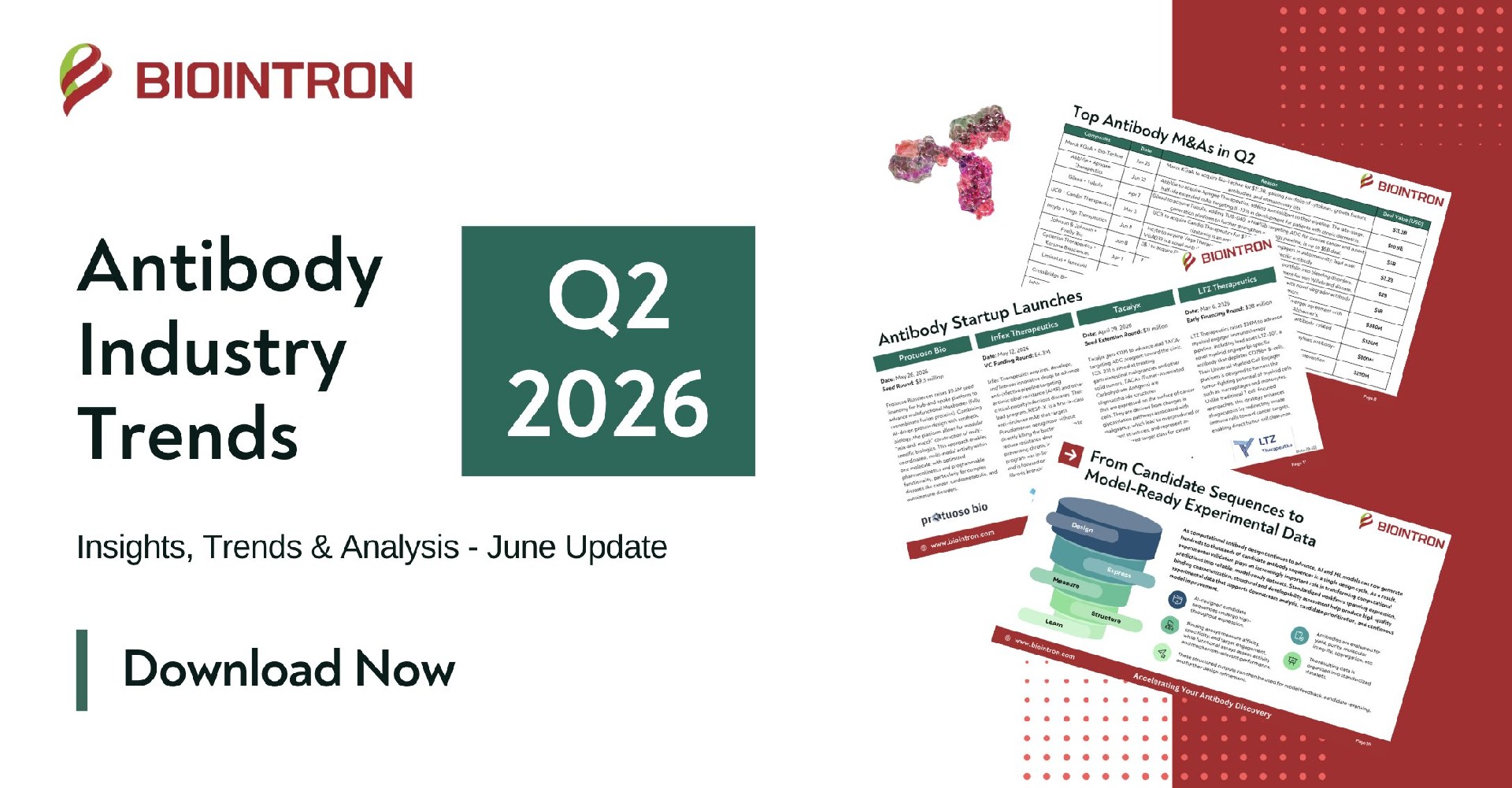
Biointron’s Q2 2026 Antibody Industry Trends report aims to explore the events a……
Artificial intelligence (AI) can be used throughout the drug development process……
Peptides and antibodies have different strengths as therapeutic molecules. Pepti……
Therapeutic antibodies are often used to block receptors or neutralize soluble m……