


Antibody combination therapies involve the use of two or more antibodies together as a treatment strategy to enhance the therapeutic effect against diseases, such as cancer or infectious diseases. This approach aims to target different epitopes or antigens simultaneously, increasing the efficacy of the treatment by overcoming resistance mechanisms, reducing the likelihood of disease escape, and providing a broader range of action. This method has been particularly valuable in treating conditions where monotherapy (using a single antibody) has limited effectiveness, showcasing the potential for more personalized and effective treatment options.
Combination therapies may also involve an antibody with a different type of drug. Just published today, the results of durvalumab and ceralasertib in a Phase 2 trial showed very promising results for advanced non-small-cell lung cancer (NSCLC) treatment. Durvalumab is a human IgG1 kappa monoclonal antibody (mAb) that blocks the interaction of programmed cell death ligand 1 with the PD-1. The immune checkpoint inhibitor drug was already approved by the FDA in 2022. Ceralasertib is an ATR kinase inhibitor which prevents ATR-mediated signaling. Together, these drugs may result into a more effective therapy for advanced/metastatic NSCLC.
Recently, a study showed that a novel triple antibody combination targeting PD-1, 4-1BB (CD137) and VISTA might control skin tumors and lead to circulating antitumor immunity without off-target toxicity. The antibodies all targeted inhibitory and stimulatory checkpoint molecules, with their results suggesting that peritumoral immunotherapy for skin tumors offers advantages over conventional intravenous delivery, allowing antibody dose sparing, improved safety and inducing long-term systemic memory.
Besides mAbs, other engineered antibody formats such as bispecific antibodies (bsAbs) can be used in combination therapies. For example, analysis from a Phase 2 trial for an anti-PD-L1/CTLA-4 bispecific antibody KN046, in combination with nab-paclitaxel, was published this month. Nab-paclitaxel is an injectable formulation of paclitaxel used to treat breast cancer, lung cancer, and pancreatic cancer. As a potential first-line treatment of metastatic triple-negative breast cancer, the combination showed encouraging outcomes.
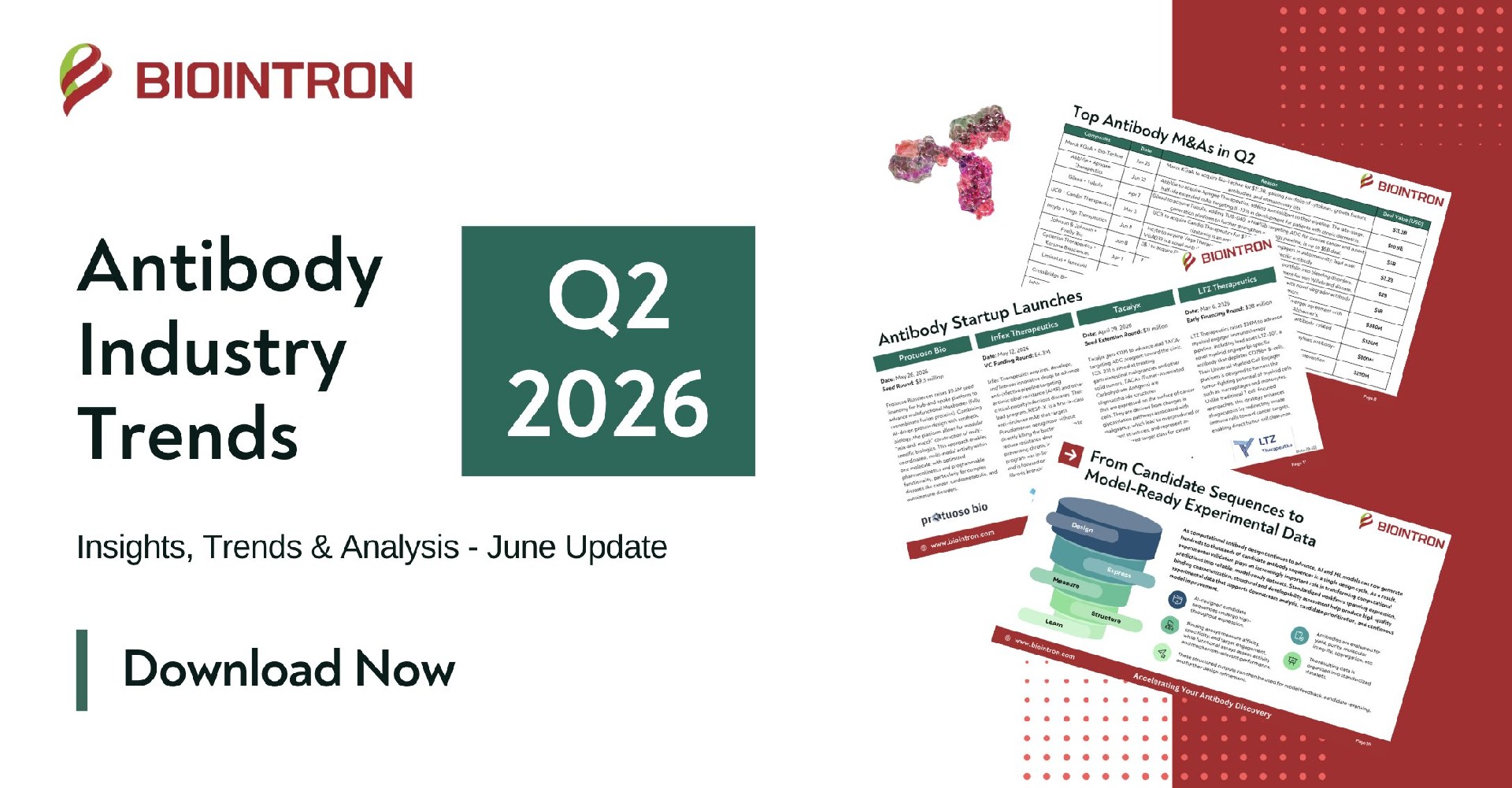
Biointron’s Q2 2026 Antibody Industry Trends report aims to explore the events a……
Artificial intelligence (AI) can be used throughout the drug development process……
Peptides and antibodies have different strengths as therapeutic molecules. Pepti……
Therapeutic antibodies are often used to block receptors or neutralize soluble m……