


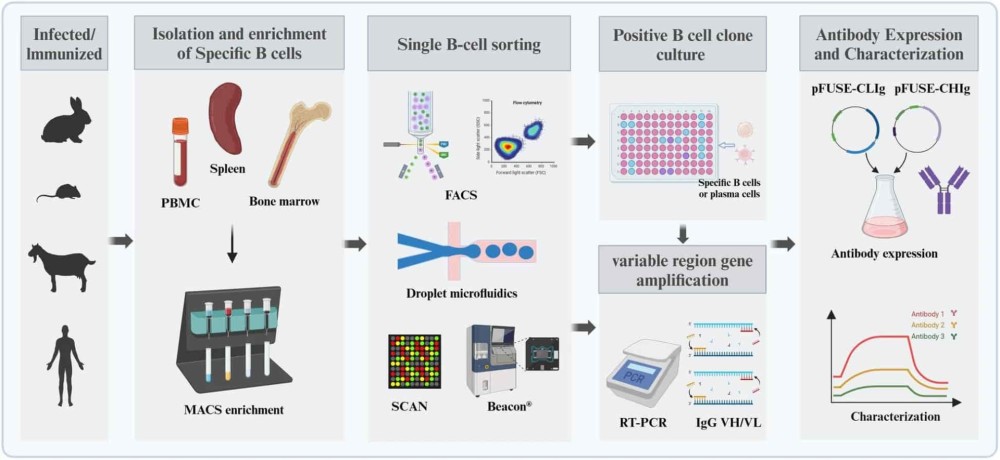
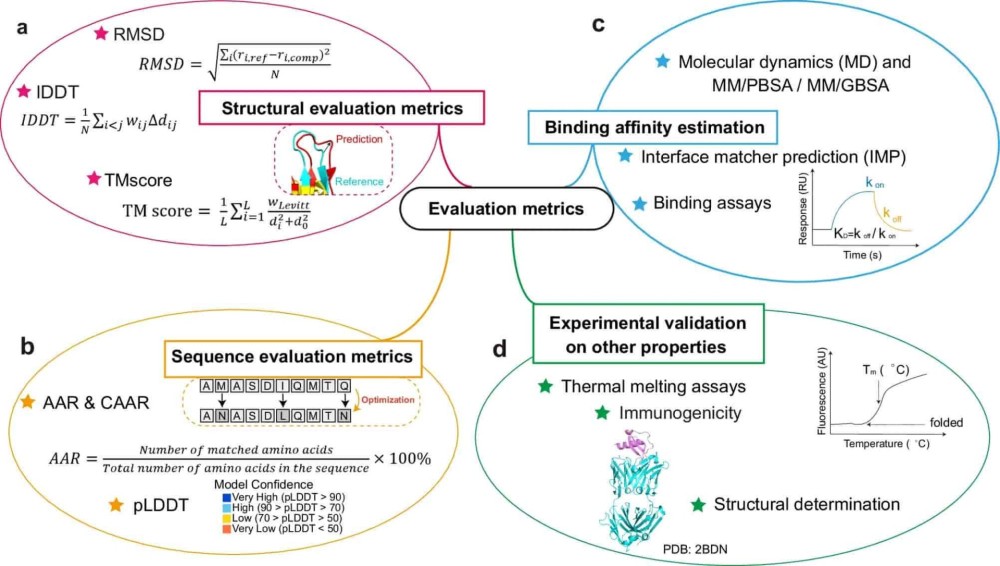


Identifying an antibody that binds strongly to its target is an important step in therapeutic discovery, but affinity alone does not determine whether a molecule will progress successfully through development. Antibodies with promising binding activity can still show undesirable properties related to stability, aggregation, self-interaction, nonspecific binding, solubility, or expression.
When these liabilities are identified only after a small number of leads have been selected, addressing them may require additional engineering or a reassessment of previously deprioritized candidates. For this reason, developability assessment is increasingly being considered earlier in antibody discovery.
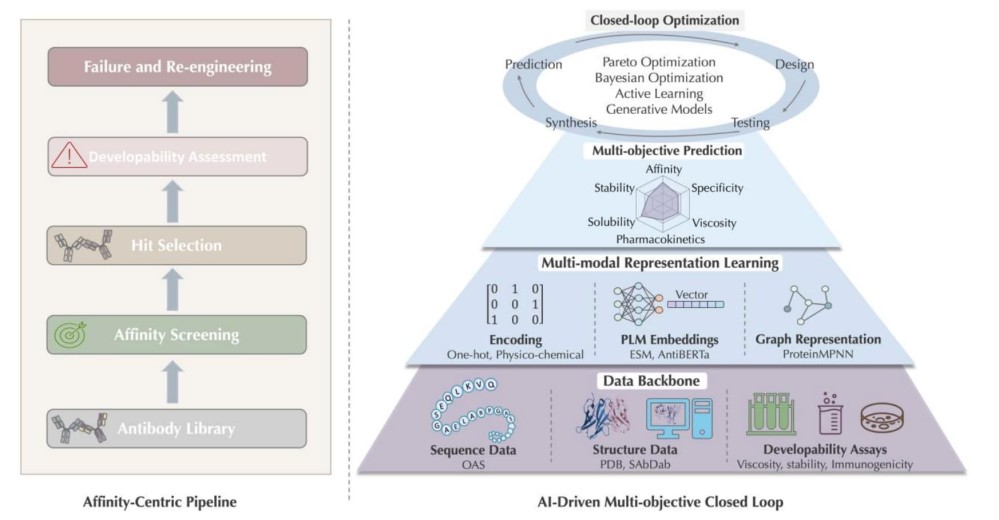
Rather than serving only as a late-stage characterization step, early developability screening can provide additional evidence for comparing candidates alongside functional measurements such as binding. A recent paper describes this broader shift from affinity-centered screening toward approaches that consider several molecular properties simultaneously.1
High target affinity is desirable, but it is not sufficient to establish that an antibody will have suitable properties for further development. Candidate selection may also need to consider specificity, stability, aggregation propensity, solubility, self-interaction, nonspecific binding, expression, and other characteristics relevant to manufacturing and formulation.
These properties can also interact. Changes introduced to improve one feature of an antibody may affect another. For example, sequence characteristics associated with hydrophobicity or charge can influence protein–protein interactions, aggregation, stability, or nonspecific binding.
As a result, the candidate with the strongest affinity is not necessarily the candidate with the most favorable overall profile.
Generating developability data earlier can make some of these differences visible while a larger candidate set is still under consideration. Instead of ranking antibodies according to binding alone, researchers can compare binding performance with experimentally measured physicochemical properties and use that information to guide subsequent selection.
Developability encompasses a range of properties that can influence how an antibody behaves during production, purification, formulation, storage, and ultimately further development.
Different analytical assays provide information about different potential liabilities. For example, size-exclusion chromatography (SEC-HPLC) can be used to assess size variants and aggregation-related behavior, while differential scanning fluorimetry (DSF) provides measures of thermal stability such as melting temperature (Tm) and onset temperature (Tonset). AC-SINS can be used to evaluate antibody self-interaction, and HIC-HPLC provides information related to hydrophobicity. Polyspecificity assays can help identify antibodies with increased nonspecific interactions, while techniques such as IEX-HPLC and imaging capillary isoelectric focusing (iCIEF) characterize charge-related properties.
No single assay determines whether an antibody is developable. The value comes from examining several measurements together and interpreting them in the context of the intended molecule and application.
Consider, for example, a panel of antibodies with broadly similar target-binding profiles. One may express poorly, another may exhibit relatively high hydrophobicity, and another may show increased self-interaction. A fourth may show acceptable performance across each of these measurements.
Binding data alone may provide limited information for distinguishing among these candidates. Adding developability measurements gives researchers a broader basis for deciding which molecules warrant further study.
This type of decision-making reflects the concept of multi-objective optimization discussed by Jiang et al. (2026). Therapeutic antibody discovery involves several desirable properties, some of which may compete with one another. Candidate selection therefore becomes less about maximizing a single measurement and more about finding an appropriate balance among multiple characteristics.
Aggregation illustrates why this matters. Reduced conformational stability can increase the likelihood that hydrophobic regions become exposed, which may promote intermolecular interactions. Solubility and self-association can also become important, particularly when antibodies must ultimately be formulated at relatively high concentrations.
Measurements made during discovery cannot fully predict how a molecule will behave during later development. They can, however, help identify candidates that show unfavorable characteristics under the conditions tested and provide evidence for prioritizing additional experiments.
This distinction is important. Early developability assessment should generally be viewed as a tool for risk identification and candidate comparison, rather than as a definitive prediction of clinical or manufacturing success.
Comprehensive developability characterization remains important later in development, but discovery-stage screening has a different objective. At this stage, researchers are often trying to compare a relatively large number of molecules, identify potential liabilities, and determine which candidates justify additional resources.
Biointron's Antibody Developability Platform brings together assays including SEC-HPLC, CE-SDS, DSF, AC-SINS, HIC-HPLC, DLS, heparin chromatography, IEX-HPLC, iCIEF, and polyspecificity testing. Used individually or in combination, these assays can provide complementary information about properties relevant to candidate selection.
Incorporating selected assays earlier can therefore help distinguish candidates that appear similar based on functional activity alone. The appropriate assay panel will depend on the antibody format, stage of development, intended route of administration, and the specific risks a discovery team is trying to evaluate.
The objective is not necessarily to perform every possible developability assay on every early-stage molecule. Instead, targeted screening can be used to generate enough information to make better-informed decisions about which candidates should advance.
The need for scalable characterization becomes particularly apparent as antibody discovery moves toward larger candidate sets.
Computational and AI-based approaches can generate, rank, or optimize antibody sequences at increasing scale. These methods can also incorporate predicted developability characteristics during sequence selection. However, computational predictions remain dependent on the quality and relevance of the underlying data and models.
An important role for computational developability assessment is as a means of prioritizing experiments. Such approaches can help narrow candidate pools or identify sequences that warrant closer examination, but experimental measurements remain important for determining how antibodies actually behave under defined assay conditions.
This creates a practical challenge: increasing the number of sequences that can be designed or prioritized also increases the need for experimental systems capable of evaluating larger panels.
Biointron's RushData platform is designed around this gene-to-data workflow. It combines high-throughput mammalian antibody expression with experimental characterization, including binding and selected developability measurements, with results returned as structured datasets. Depending on the workflow selected, developability measurements can include assays such as DSF, polyspecificity testing, and AC-SINS.
The relevance for candidate selection is straightforward. When expression, binding, and developability data can be collected across the same candidate set, molecules can be compared using several experimentally measured parameters rather than sequence or affinity information alone.
The broader trend described in the recent review is toward increasingly integrated discovery workflows in which computational design and experimental characterization inform one another.
In such systems, computational methods can propose or prioritize sequences, experiments provide measurements of their actual properties, and those results can inform subsequent rounds of selection or design. Developability can therefore become part of the iterative discovery process rather than a consideration introduced only after a lead has been chosen.
This approach does not eliminate uncertainty. Early assays are performed under defined experimental conditions and cannot reproduce every challenge that may arise during process development, formulation, toxicology, or clinical evaluation.
Their value is more immediate: they provide additional information at a stage when researchers still have many candidates to choose from.
As antibody discovery becomes increasingly high-throughput and data-driven, candidate selection is likely to depend on a broader set of measurements than affinity alone. Generating developability data earlier can help researchers identify potential liabilities, compare candidates across multiple properties, and prioritize molecules for more detailed investigation.
In that sense, early developability screening is less about predicting the eventual fate of an antibody than about making the next selection decision with more information.
Jiang, Q., Guan, J., Yu, D., Singh, P., Pelekos, G., Lo, E. C., & Wang, J. (2026). Beyond Affinity: AI-Supported Developability Assessment and Multi-Objective Optimization in Antibody Development. Antibody Therapeutics. https://doi.org/10.1093/abt/tbag039
Biointron announces limited-time RushData launch pricing for high-throughput ant……
August 2026 brought another mix of acquisitions, licensing agreements, strategic……
Antibody discovery often begins with a highly diverse population of B cells, onl……
As larger candidate panels move from computational design into the laboratory, a……