


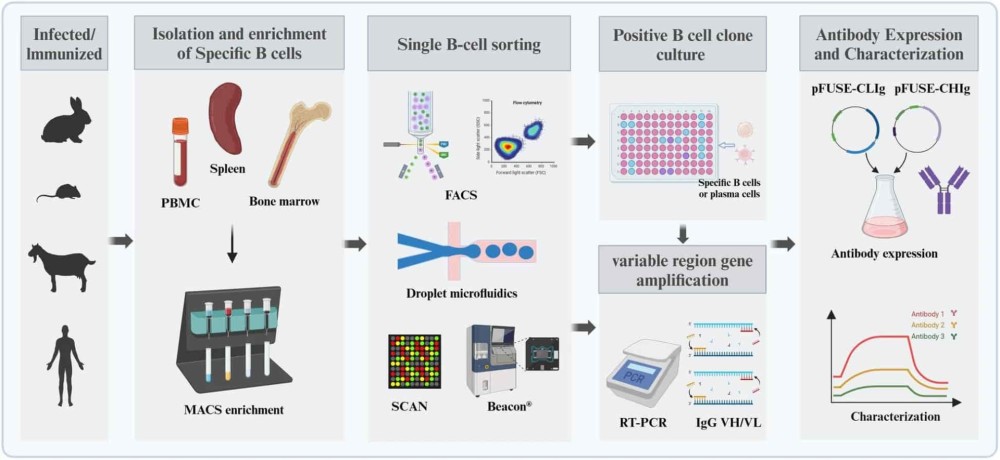
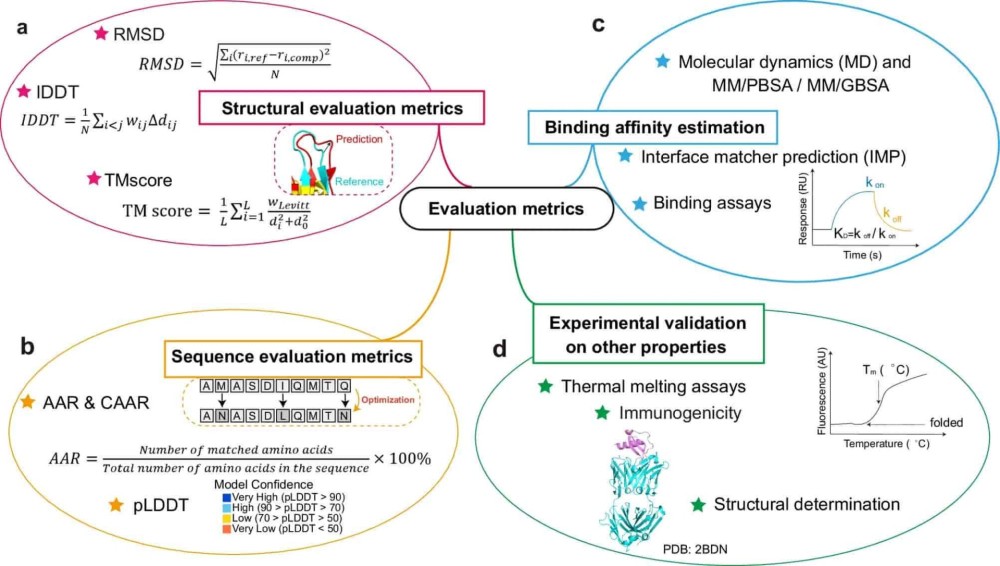


Antibody affinity is a core metric in immunology and biopharmaceutical science. It refers to the strength of the interaction between a single antigen epitope and the paratope (binding site) of an antibody. In the case of VHH antibodies, also called single-domain antibodies or nanobodies, this interaction occurs through the unique, compact paratope located on their heavy-chain-only variable domain.
For VHHs, binding affinity plays an even more critical role due to their single-domain architecture. While they lack the multivalent binding power of full IgGs, they often compensate with high on-rates (kon) and low off-rates (koff), resulting in surprisingly strong interactions given their small size. High-affinity VHHs are essential in both therapeutic and diagnostic contexts, thus offering strong target engagement, even in harsh biological conditions, and allowing for sensitive detection of disease markers at very low concentrations.
In drug development, optimizing antibody affinity is a crucial step. Therapeutic VHH antibodies benefit from tight binding to their targets, which improves efficacy and prolongs in vivo half-life. VHHs are increasingly engineered for use in tumor targeting, immune checkpoint modulation, and anti-infective therapies, where strong and specific binding is essential for clinical effectiveness.
In diagnostic applications, especially immunoassays like ELISA, Western blot, or lateral flow tests, high-affinity antibodies ensure precise and reproducible detection. The small size and high affinity of VHHs make them ideal for biosensors, including microfluidic chips or point-of-care diagnostic platforms, where performance must remain consistent despite low antigen concentrations.
VHH antibodies are widely used in structural studies, including cryo-electron microscopy and X-ray crystallography, because they can stabilize otherwise flexible regions of target proteins. Their small size and high affinity help trap proteins in conformations that facilitate high-resolution structural analysis.
Affinity is not static; it can be engineered. Techniques such as in vitro affinity maturation replicate the natural process of somatic hypermutation to identify variants with enhanced binding. This process is especially powerful for VHHs, as their long and diverse CDR3 regions are rich targets for mutation-driven improvements.
At Biointron, we leverage our FCMES-AM (Full Coverage Mammalian Expression System for Affinity Maturation) platform to precisely mutate every position within the CDRs. Each amino acid is systematically substituted, excluding cysteine and methionine, to produce comprehensive mutant libraries. We express these in mammalian systems and perform primary screening using ELISA, followed by high-resolution affinity ranking using SPR and flow cytometry.
ELISA is a staple for qualitative and semi-quantitative binding assessment. It is efficient, scalable, and widely used in early-stage screening. However, it does not provide kinetic constants like kon and koff.
SPR remains the gold standard for measuring antibody affinity. It is label-free, allows real-time detection, and provides full kinetic profiles—including kon, koff, and Kd values. SPR is also more sensitive than ELISA for identifying weak or transient interactions and works well in complex matrices such as serum or lysates.
In a 2021 study published in Scientific Reports, researchers characterized multiple anti-β-catenin VHHs using SPR and found KD values ranging from 1.54 × 10⁻⁷ M to 4.24 × 10⁻¹⁰ M, depending on the clone. These figures illustrate the wide range of binding affinities possible within even a single immunization campaign and the value of detailed kinetic screening.
When VHHs are intended for cell surface or internal target binding, flow cytometry becomes an indispensable companion to SPR. It helps correlate affinity data with functional engagement in biologically relevant models, such as tumor cells or immune cells expressing the target antigen.
The interaction between a VHH and its antigen is governed by several molecular forces:
Hydrogen bonds contribute to specificity and directional binding.
Electrostatic interactions stabilize charged residues on both surfaces.
Van der Waals forces help fine-tune the molecular fit.
Hydrophobic interactions drive exclusion of water at the interface, especially in cryptic or buried epitopes.
These forces work in tandem with stereochemical complementarity and paratope flexibility, both of which are critical in VHHs due to their unique loop conformations, especially in CDR3.
Key Metrics: Kd, kon, koff
Kd (dissociation constant): Lower Kd = stronger binding.
kon (association rate): Higher kon = faster binding.
koff (dissociation rate): Lower koff = more stable binding.
In therapeutic design, Kd values below 10⁻⁹ M are typically preferred. However, depending on the application (e.g., imaging agents that require fast clearance), moderate affinities (10⁻⁷–10⁻⁸ M) may be more desirable.
Affinity maturation methods have evolved alongside advancements in molecular biology and computational tools over the past 30+ years:
1986: The FDA approves the first monoclonal antibody. Early engineering relied on hybridoma technology and basic gene manipulation.
1990s: Introduction of phage display and combinatorial libraries enabled in vitro selection and mutagenesis-based maturation of antibody fragments.
2000s: Development of recombinant fragments (e.g., scFvs, nanobodies) allowed efficient engineering, with display systems supporting selection from both immune and synthetic libraries.
2010s: Increased emphasis on developability introduced trade-offs between affinity, stability, and manufacturability. Nanobodies became key tools due to their high baseline stability.
Recent years: Computational approaches such as homology modeling, molecular dynamics, and docking matured into effective tools for rational design and in silico affinity maturation.
These advances support the generation of high-affinity binders from diverse library sources, with growing alignment to regulatory expectations favoring non-animal systems.

At Biointron, we specialize in rapid, high-quality discovery and optimization of VHH antibodies through a fully integrated workflow:
Custom immunization campaigns using our 300+ alpaca herd
High-diversity VHH libraries (≥10⁸ transformants)
Tailored phage display screening for broad epitope coverage
Affinity maturation using FCMES-AM, producing optimized VHH variants
Affinity ranking using SPR and flow cytometry
Fast deliverables including sequences, binding kinetics, assay validation, and purified VHHs
Our platform consistently yields clones with Kd values ranging from 10⁻⁶ to 10⁻¹¹ M, tailored to your intended use. Whether you're developing diagnostic tools, therapeutic candidates, or intracellular research probes, we offer expert guidance and complete ownership of the final antibodies.
Partner with Biointron for end-to-end VHH antibody discovery, affinity maturation, and production. From immunization to high-resolution SPR characterization, our team delivers quality, speed, and results: ready for your next breakthrough.
References:
Ikeuchi, E., Kuroda, D., Nakakido, M., Murakami, A., & Tsumoto, K. (2021). Delicate balance among thermal stability, binding affinity, and conformational space explored by single-domain VHH antibodies. Scientific Reports, 11(1), 1-9. https://doi.org/10.1038/s41598-021-98977-8
Biointron announces limited-time RushData launch pricing for high-throughput ant……
August 2026 brought another mix of acquisitions, licensing agreements, strategic……
Antibody discovery often begins with a highly diverse population of B cells, onl……
As larger candidate panels move from computational design into the laboratory, a……