




The 16th Annual World Bispecific Summit was held in Boston, MA, USA, from September 9-11. The event theme was: “Enhance VEGFxPD1 Mechanistic Understanding, Target Selectivity & Binding Affinity to Supercharge the Discovery & Development of Bispecifics in Oncology & Autoimmune Diseases”.
Topics included:
Decoding the success of PD-1xVEGF and PD-L1xVEGF bispecifics to understand what drives better efficacy and tolerability, and what it means for future target combinations.
Advancing next-gen TCEs and bsADCs with enhanced tumor specificity, synapse formation, and solid tumor penetration.
Translating bispecifics into autoimmunity with lessons from cytokine, checkpoint, and co-stimulatory biology, alongside conditionally active formats and immune-tuning strategies.
Engineering tri- and tetraspecifics, masked antibodies, and protease-cleavable linkers for selective activation and reduced off-target effects.
Aligning target selection frameworks with immune mechanisms and disease biology to improve predictability and clinical translation.
Multitarget remodeling of the TME: Simultaneous VEGF and PD-1/PD-L1 targeting rewires cytokine networks and effector-suppressor cell balance, combining immunomodulation with anti-angiogenesis to boost efficacy in solid tumors
Dual-paratopic PD-1/VEGFR2 design: OTP-01 integrates a unique dual-paratopic Fab into an effector-null IgG1 backbone, co-engaging PD-1 and VEGFR2 within a single arm to enhance tumor biodistribution and block VEGF-A/C/D signaling
Affinity geometry tuning: Developers are refining valency and spatial orientation between PD-1 and VEGF arms to balance potency and safety, enabling multitarget engagement without excessive systemic activation
Affinity/epitope control for conditional activation: Fine-tuning antibody arm affinities creates cooperative binding, enabling precise activation only at target sites and lowering off-tumor risk
Tetraspecific expansion: Modular tetraspecific antibodies combine CD3, CD28, and dual tumor antigens to mimic physiological T-cell activation, tackle heterogeneity, and minimize antigen escape
High-throughput multispecific matrix screening: Invenra’s systems generate 12×12 multispecific matrices to empirically identify optimal antigen combinations for trispecific ADCs, rapidly surfacing lead constructs for breast cancer
Manufacturing adaptability: Continuous perfusion and Leap-In transposon platforms boost yield and structural integrity for complex bispecifics, supporting clinical-grade production of novel formats
TCR-PD1 agonist bispecifics: TCR-based bispecific agonists targeting beta cells are engineered for localized PD-1 signaling, enabling tissue-specific immune suppression in type I diabetes
Dual-cytokine pathway inhibition: ZW1528 targets IL-4Ra and IL-33 to simultaneously block IL-4, IL-13, and IL-33 pathways, showing broad modulation of immune responses in COPD patient cells with IgG-like PK
Conditional costimulation for SLE: A 4-1BB costimulatory CD19×CD20 TCE demonstrates CAR-T-like potency and immune reset in SLE mouse models while minimizing cytokine release via conditional activation
Biparatopic dual-engagement ADCs: JK06 balances target biology and payload design to enable dual antigen recognition and controlled internalization for improved safety
Proximity-driven bispecific ADC discovery: The MINT™ platform maps cell surface protein neighborhoods to identify co-localized targets with EGFR, leading to IDP-001: a bispecific ADC with tumor selectivity and reduced off-target effects
Vector engineering for complex formats: Molecule-specific Leap-In vector designs enable stable, high-titer pools representative of final clones, crucial for manufacturing structurally complex bispecific ADCs
Bispecific Antibody Expression →

Thank you to everyone who visited our booth at World Bispecific Summit (WBS) 2025 to learn about our services! We had a fantastic time chatting with you and how it can help you achieve antibody development. Our expert team would be happy to answer any follow-up questions. Feel free to email us at info@biointron.com or visit our website at www.biointron.com.
Biointron announces limited-time RushData launch pricing for high-throughput ant……
August 2026 brought another mix of acquisitions, licensing agreements, strategic……
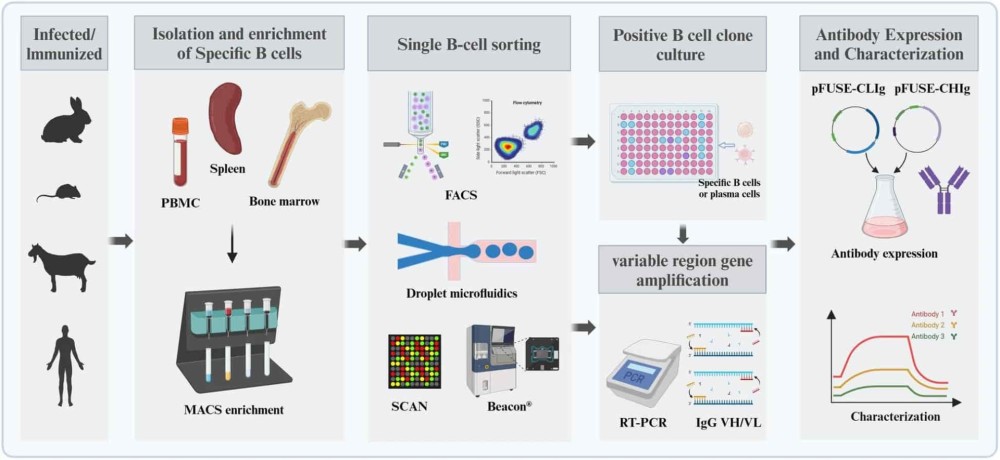
Antibody discovery often begins with a highly diverse population of B cells, onl……
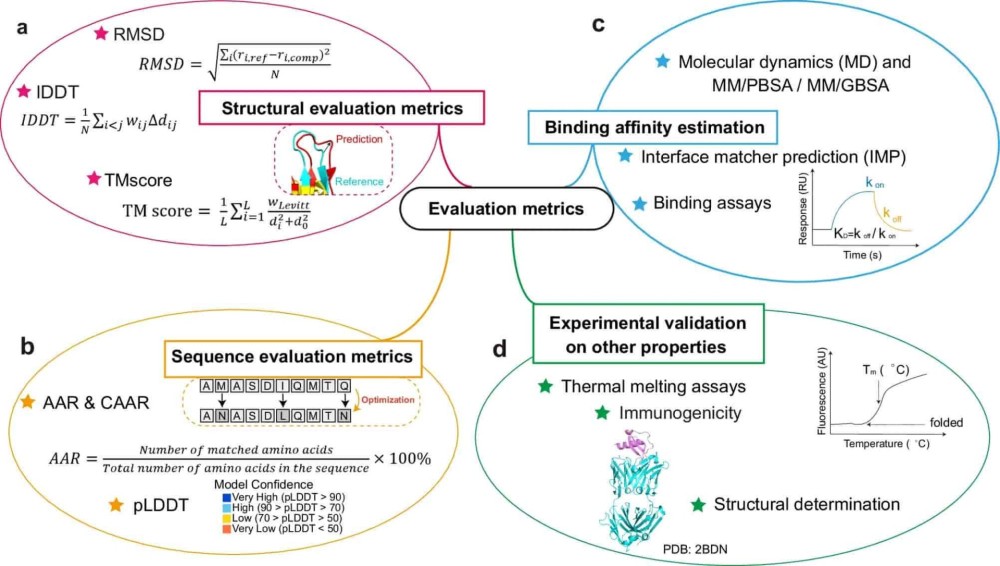
As larger candidate panels move from computational design into the laboratory, a……