


Proteolysis targeting chimeras (PROTACs) are heterobifunctional molecules designed to degrade specific proteins by recruiting an E3 ubiquitin ligase to the target protein, leading to its ubiquitylation and subsequent degradation by the proteasome. This novel mechanism enables PROTACs to eliminate oncogenic proteins, offering a unique advantage over conventional inhibitors. Meanwhile, antibody-drug conjugates (ADCs) have transformed cancer therapy by selectively targeting tumor-associated antigens. ADCs enhance the therapeutic index by coupling cytotoxic payloads to antibodies, allowing specific delivery to cancer cells. Thus, combining these two modalities could unlock new therapeutic opportunities.
Antibody-drug conjugates rely on internalization to deliver cytotoxic payloads effectively into target cells, but not all ADCs are efficiently internalized upon binding to their cell surface targets. A recent study by researchers from Mayo Clinic explores the hypothesis that PROTACs can enhance ADC activity by promoting their internalization through targeted protein degradation. The findings reveal that PROTACs significantly improve the internalization of antibodies and their derivative ADCs targeting oncogenic cell surface proteins such as EGFR, HER2, and MET, achieving a 1.4- to 1.9-fold increase in internalization across models. Moreover, PROTACs enhance the cytotoxicity of HER2-targeting ADCs, with these effects being dependent on dynamin and proteolysis.

A recent review by Wang et al. describes how antibody-PROTAC conjugates address limitations of traditional PROTACs, such as off-tumor toxicity, poor stability, and inadequate pharmacokinetics. Notable breakthroughs include NGP-41, a BRD antibody-PROTAC conjugate with extended stability and robust tumor regression in xenograft models, and NGP-42, which selectively degrades BRD4 in HER2+ tumor cells while sparing normal cells. Innovations also target specific antigens, like STEAP-1 in prostate cancer (NGP-43) and EGFR in non-small cell lung cancer (NGP-47), achieving tumor-specific protein degradation and improved antiproliferative effects. Structural modifications, such as optimized linkers and enhanced drug-to-antibody ratios, further elevate the efficacy of compounds like NGP-45 and NGP-46. Additionally, novel designs like NGP-48–51 demonstrate antigen-dependent protein degradation with cell-selective delivery, paving the way for personalized therapies targeting distinct molecular markers. These advancements underscore the promise of antibody-PROTAC conjugates as precise and potent therapeutic agents in oncology.

Meanwhile in the drug development space, scientists have developed a novel ROR1-targeting antibody-PROTAC conjugate that promotes BRD4 degradation for solid tumor treatment. The ROR1 DAC demonstrated strong antigen binding, internalization, cytotoxicity, and enhanced pharmacokinetics compared to unconjugated PROTACs. In xenograft mouse models, it showed potent antitumor activity, which was further amplified when combined with αmPD-1 mAb, resulting in increased immune cell infiltration and modulation of the tumor microenvironment. RNA sequencing revealed upregulation of Th1-biased cytokines, contributing to its efficacy. With a favorable safety profile and reduced toxicity, the ROR1 DAC holds promise for effective cancer therapy.

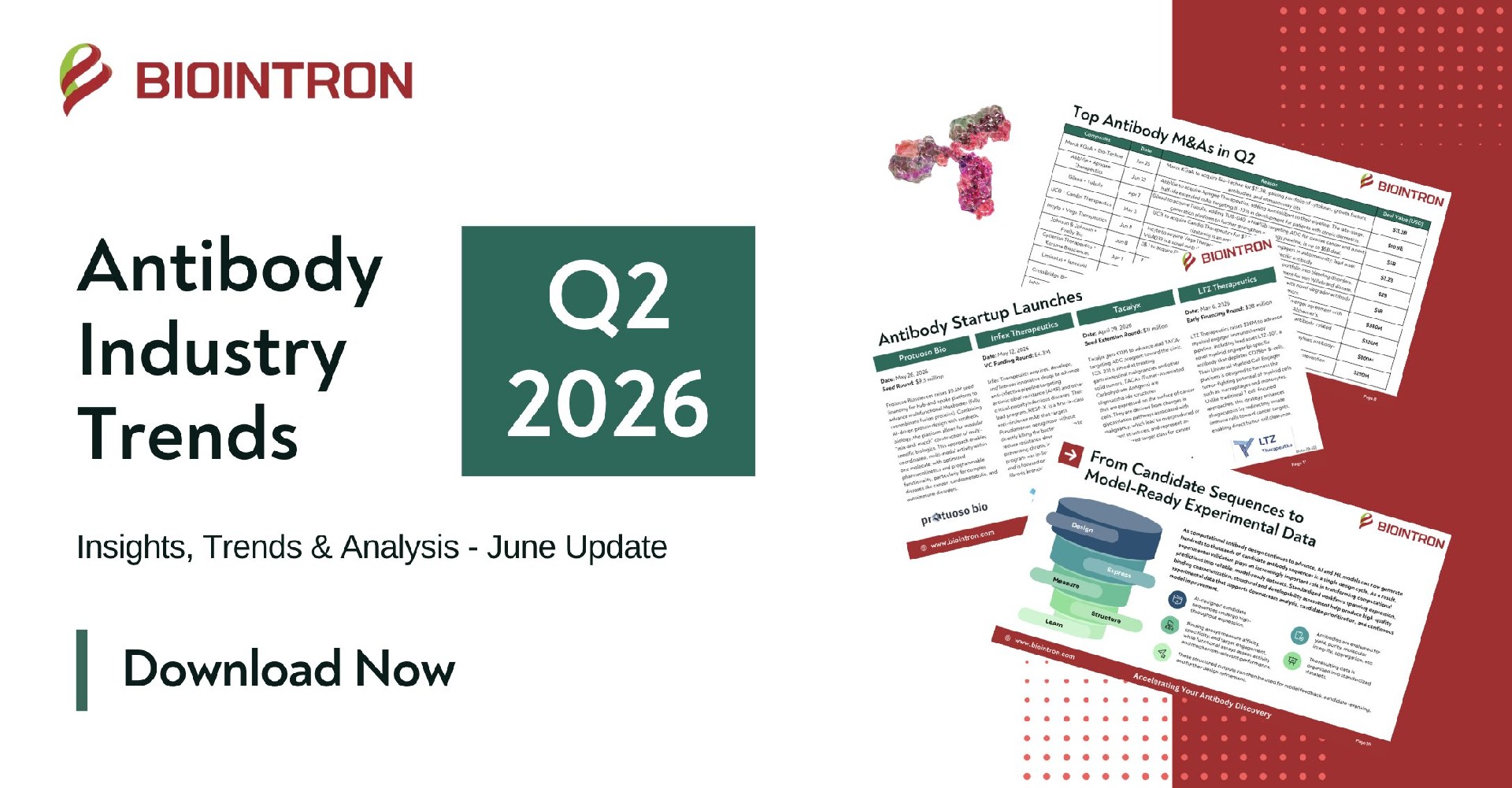
Biointron’s Q2 2026 Antibody Industry Trends report aims to explore the events a……
Artificial intelligence (AI) can be used throughout the drug development process……
Peptides and antibodies have different strengths as therapeutic molecules. Pepti……
Therapeutic antibodies are often used to block receptors or neutralize soluble m……