


Agonistic antibodies bind to specific receptors on cells and mimic the action of the natural ligand of that receptor, thereby activating signaling pathways and eliciting cellular responses. Unlike traditional antibodies, which are often used to block or neutralize the activity of their target molecules (acting as antagonists), antibody agonists actively stimulate a biological response. Recently, more studies are delving into the mechanisms and therapeutic potential of these antibody agonists.
Last week, a paper was published describing how antibody agonists trigger immune receptor signaling through local exclusion of receptor-type protein tyrosine phosphatases. By extending the kinetic-segregation (KS) model, the researchers hypothesized that the key immune receptor in T cells is regulated by a balance between kinases and phosphatases. The findings establish a framework for developing new and improved therapies for autoimmunity and cancer.
Just last month, researchers illustrated an engineering approach inspired by a naturally occurring Fab-Fab homotypic interaction which allows for i-shaped antibody (iAb) engineering. This would enable the tuning of agonist antibody function and provide a framework for the development of intrinsic antibody agonists with the potential for generalization across broad receptor classes. The results from this paper showed potent intrinsic agonism of five tumor necrosis factor receptor superfamily (TNFRSF) targets with the engineered iAbs.
Recently, several clinical trials with antibody agonists also show promising results for therapeutic use. From preclinical studies, ADG106, a ligand-blocking agonistic antibody targeting CD137, demonstrated tumor suppression in various animal models and a manageable safety profile with preliminary anti-tumor efficacy in patients with advanced cancers. Meanwhile, results from a Phase II trial of the CD40 agonistic antibody sotigalimab in combination with nivolumab in subjects with anti-PD-1-resistant metastatic melanoma revealed a favorable safety profile consistent with the toxicity profiles of each agent.
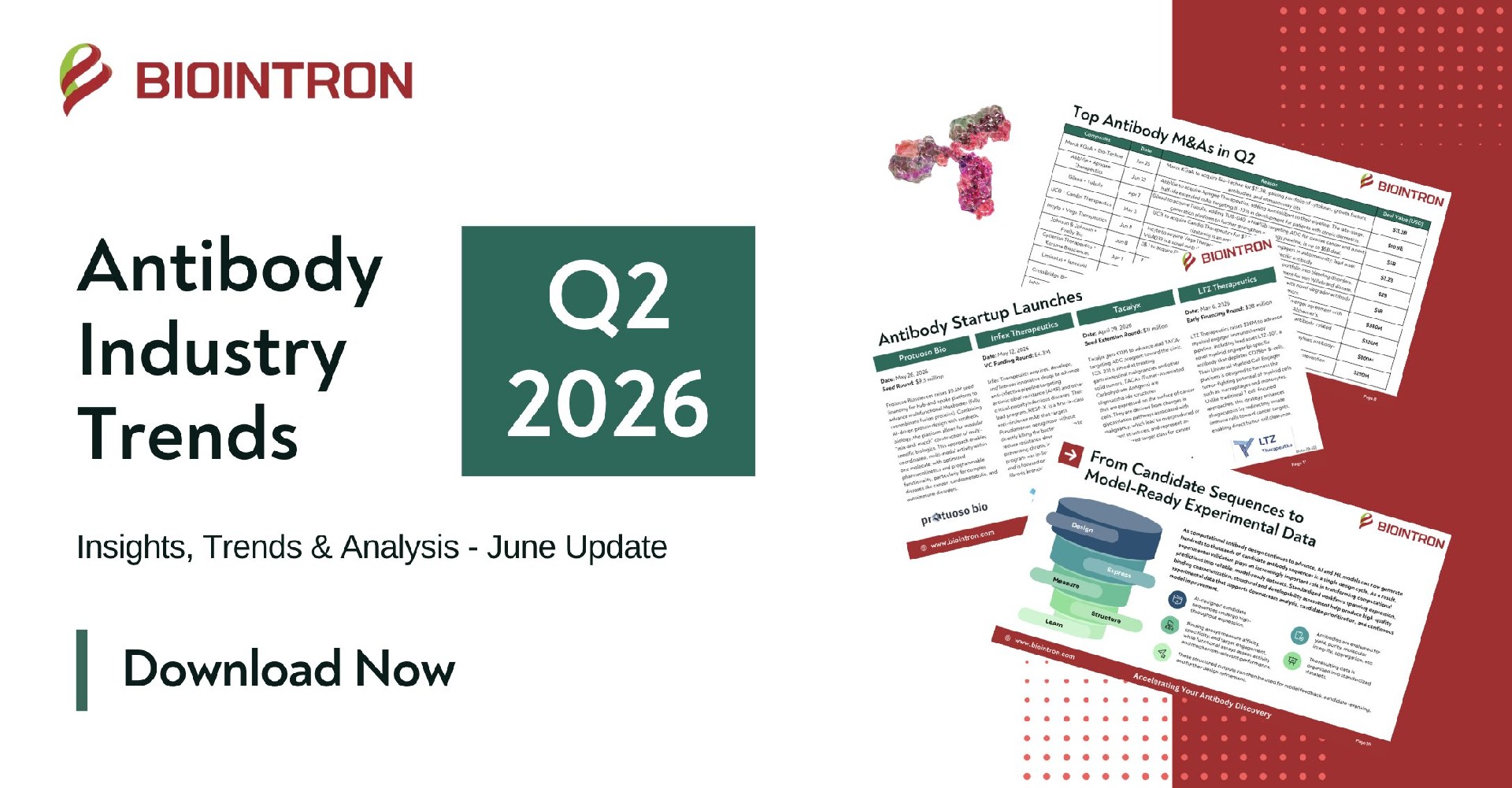
Biointron’s Q2 2026 Antibody Industry Trends report aims to explore the events a……
Artificial intelligence (AI) can be used throughout the drug development process……
Peptides and antibodies have different strengths as therapeutic molecules. Pepti……
Therapeutic antibodies are often used to block receptors or neutralize soluble m……