Coverage of processes designed to refine antibody binding, including directed evolution and library-based methods.
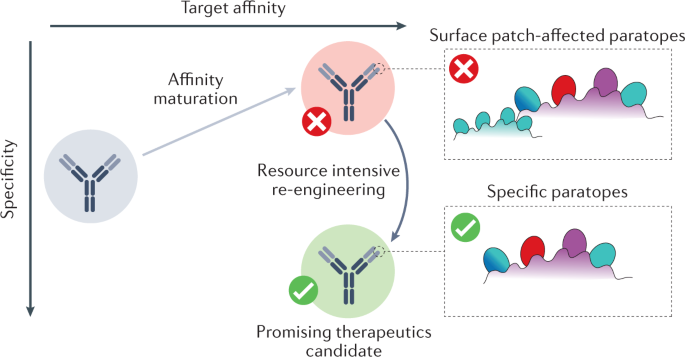
Affinity maturation can improve binding to the intended target, but it can also alter the antibody paratope (the antigen-binding surface) in ways that create patch-associated nonspecific interactions. These liabilities may then require re-engineering before a candidate can progress as a therapeutic lead.
Learn how site-directed mutagenesis improves antibody affinity, binding specificity, and performance for therapeutic and diagnostic applications.
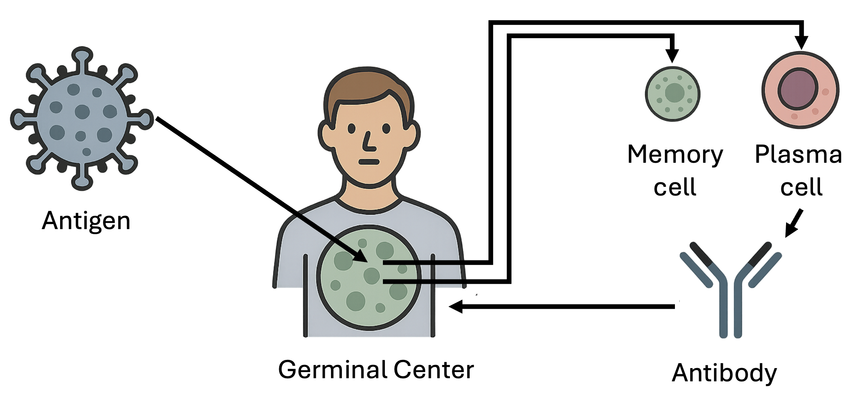
Affinity maturation is a hallmark of the adaptive immune system that enables B cells to generate antibodies with increased specificity and binding strength against antigens. Through cycles of somatic hypermutation (SHM) and clonal selection within germinal centers, antibody affinities can improve by several orders of magnitude. Understanding the molecular and biophysical mechanisms of this process has been essential for therapeutic antibody development and rational vaccine design.
Affinity maturation enhances antibody binding strength. Biointron explains in vivo and in vitro approaches that optimize therapeutic potential and performance with AI and NGS technologies.
High-affinity antibodies improve therapy. Biointron reviews engineering strategies that increase binding strength, potency, and therapeutic performance.
Understand affinity maturation from natural immune processes to Biointron’s FCMES-AM™ platform, enhancing antibody affinity, specificity, and therapeutic performance.
You can also contact us on the Scientist and Science Exchange marketplaces.
Our website uses cookies to improve your experience. Read our Privacy Policy to find out more.
Biointron uses cookies and similar technologies to ensure proper website functionality, understand how visitors use our website, and improve our content and services. Necessary cookies are enabled by default.
By clicking “Accept All”, you agree to the use of all cookies, including analytics and optional cookies that help us understand website usage and improve user experience. By clicking “Reject Non-Essential”, only necessary cookies will be used.
You may manage or change your cookie preferences at any time by clicking “Cookie Settings” at the bottom of the website.
For more information about how we use cookies and process personal data, please review our Privacy Policy.