



The BIO International Convention was held on June 22-25 in San Diego, California, bringing together 20,000 biotech industry leaders from around the world. Their programs covered Oncology, AI and Digital Health, Next Generation Biotherapeutics, and more.
Two popular topics discussed were developments in antibody-drug conjugates (ADCs) and AI in biology. The next generation of ADCs are focused on becoming kinder, gentler cancer therapeutics. ADCs have already changed cancer treatment by combining the precision of targeted antibodies with the potency of cytotoxic therapies, but now ADCs are becoming even safer and more tolerable for patients. These molecules are being developed with smarter linkers such as enzyme-cleavable, hydrophilic, PEGylated, tandem cleavable, and traceless linkers. Novel payloads (such as RNA inhibitors, Bcl-xL inhibitors, NAMPT inhibitors, and carmaphycins), improved selectivity, and more patient-friendly dosing strategies were also discussed.
Besides the design, discussions revolved around improving ADCs by reducing off-target toxicity, improving durability of response, and leveraging biomarkers and combination approaches. The overall goal? Delivering powerful cancer therapies with less burden on patients.
These broader ADC trends are also reflected in China’s biotech sector, where oncology innovation has accelerated rapidly since 2023. China’s pipeline has broadened since 2025 into areas such as immunology, neurology, ophthalmology, and obesity. Within ADC development, this momentum is visible in increasingly competitive platforms, differentiated targets, and global partnerships. China is also emerging as a frontrunner in applying artificial intelligence to drug discovery, which may further support ADC design, target selection, payload optimization, and translational development.
The second popular topic of this conference, artificial intelligence (AI), was highlighted as reshaping drug discovery by transforming how organizations run experiments, closing the loop between computation and the lab. Panelists shared the importance of learning directly from human-relevant biological data and how AI is enabling the discovery of antibody drugs, small molecules, and new therapeutic modalities that utilize the human body’s own regulatory systems. As experimentation becomes faster, more adaptive, and increasingly automated, these approaches are helping uncover targets that have historically challenged traditional R&D.
It is impressive how this field has evolved from AI pilots to scaled implementation, with AI now meaningfully accelerating drug discovery, improving R&D productivity, and enabling new scientific approaches. Integrating AI into existing workflows depends on redesigning end-to-end workflows to capture value at the process level. It is necessary to build effective AI capabilities, as the next wave of AI-powered innovation in biopharma appears to be soon.
Biointron’s own gene-to-data platform was built for the AI age. Using mammalian cell expression, we deliver expression, affinity, and developability data in an integrated, high-throughput workflow that keeps up with the pace of AI-driven discovery. More data per cycle, faster turnaround, and the quality your models actually need to improve. Take a look at RushData here.
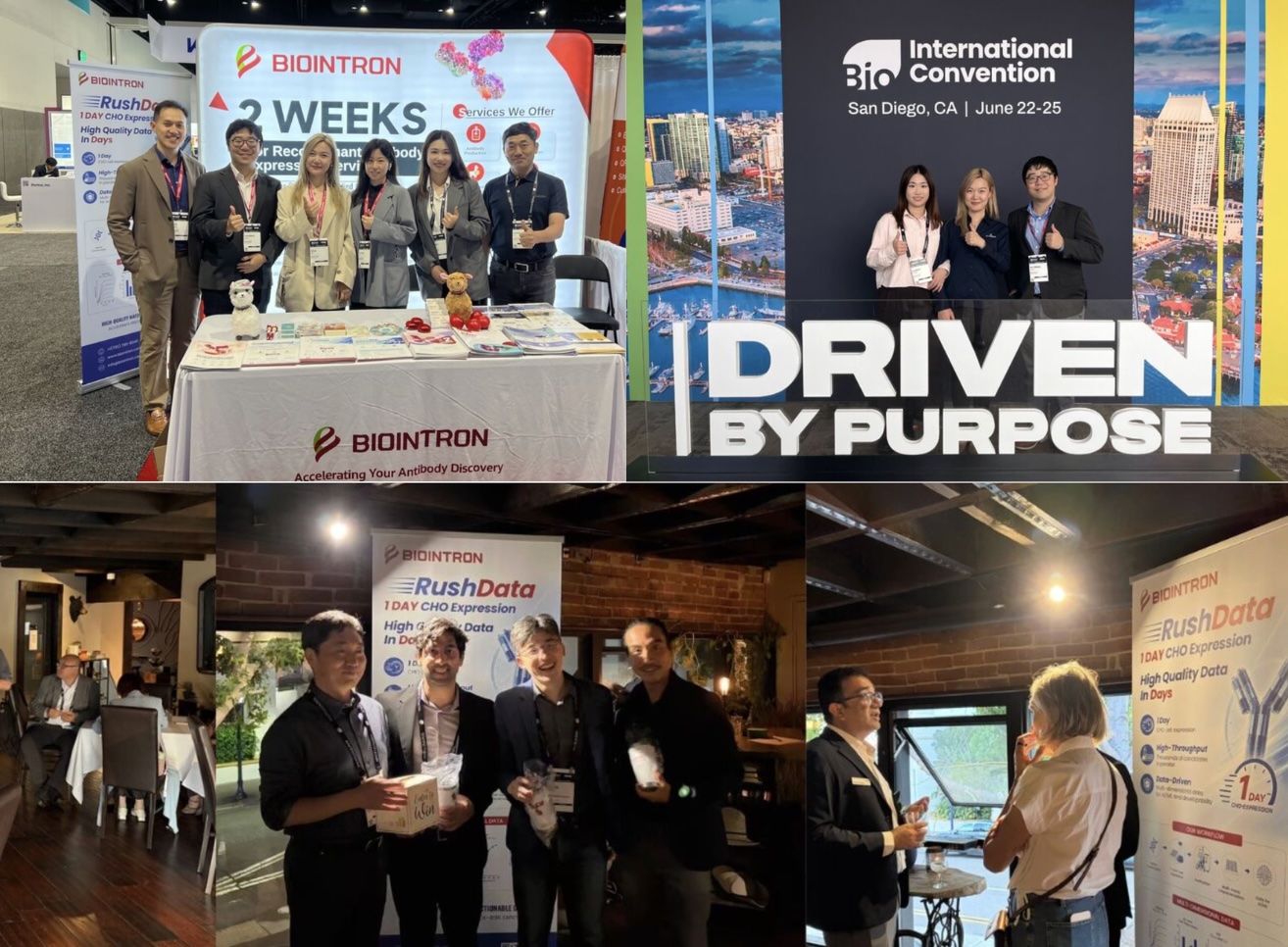
Thank you to everyone who visited our booth at BIO 2026 to learn about our services! We had a fantastic time chatting with you and how it can help you achieve antibody development. Our expert team would be happy to answer any follow-up questions. Feel free to email us at info@biointron.com or visit our website at www.biointron.com.
Biointron announces limited-time RushData launch pricing for high-throughput ant……
August 2026 brought another mix of acquisitions, licensing agreements, strategic……
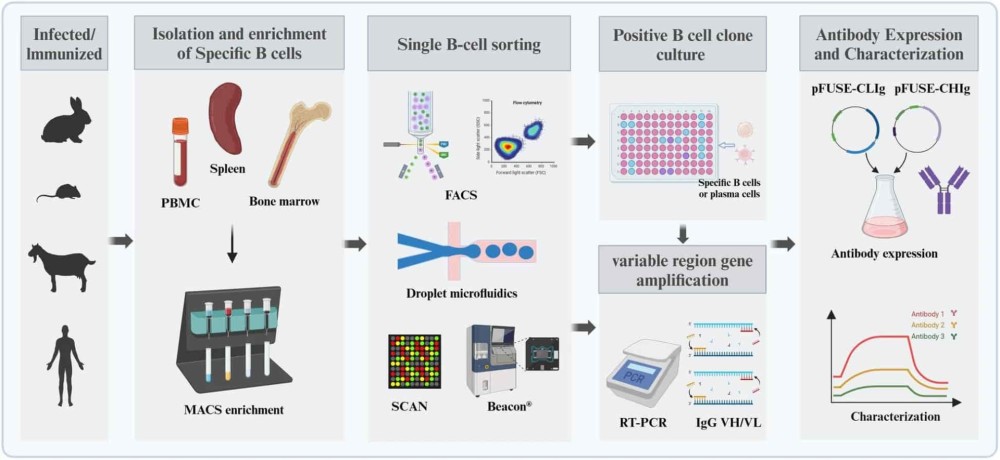
Antibody discovery often begins with a highly diverse population of B cells, onl……
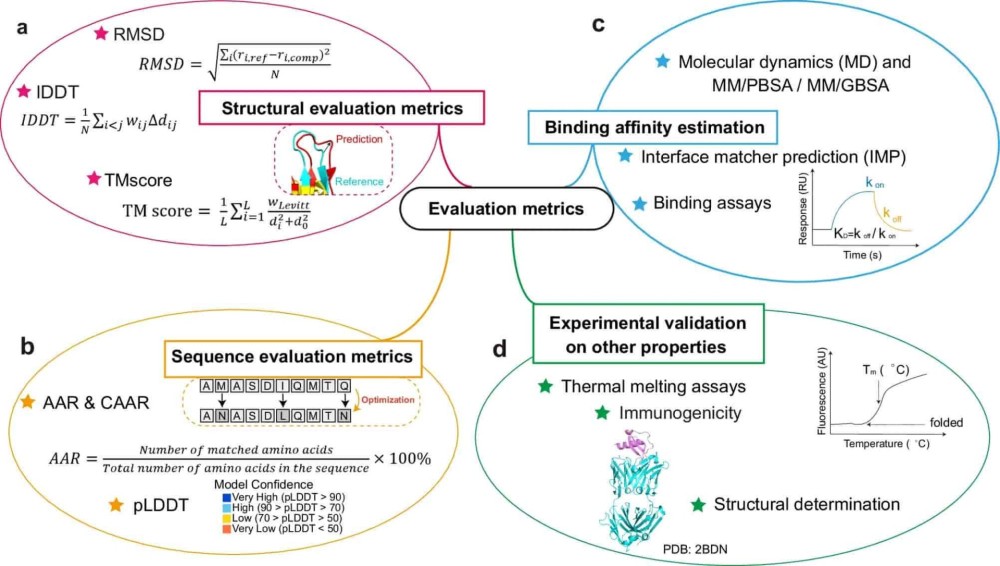
As larger candidate panels move from computational design into the laboratory, a……