


Each year, the Nobel Prizes recognize breakthroughs that reshape our understanding of the natural world. The 2025 awards in Chemistry and Physiology or Medicine highlight discoveries that bridge fundamental science and real-world impact, from molecular materials that can “breathe” gases to immune mechanisms that prevent the body from attacking itself.
Laureates: Susumu Kitagawa, Richard Robson, and Omar M. Yaghi
For: The development of metal-organic frameworks (MOFs)

This year’s Chemistry Prize celebrates the creation of metal-organic frameworks (MOFs). These are crystalline materials made from metal ions connected by organic linkers to form highly porous structures. They can be imagined as molecular-scale buildings with spacious interiors where other molecules can move, react, or be stored.
“Metal-organic frameworks have enormous potential, bringing previously unforeseen opportunities for custom-made materials with new functions,” says Heiner Linke, Chair of the Nobel Committee for Chemistry, in a press release.
These frameworks have been engineered to:
Capture carbon dioxide and other greenhouse gases
Harvest water from desert air
Store hydrogen for cleaner energy applications
Catalyze chemical reactions
Filter pollutants and PFAS from water
Richard Robson first demonstrated that ions and molecules could self-assemble into stable, spacious crystals. He was inspired by his wooden molecular models in the 1970s.
Susumu Kitagawa advanced the field by designing flexible MOFs with open channels that could absorb and release gases like methane and oxygen, even after drying. This became a pivotal step toward functional materials.
Omar Yaghi coined the term “metal-organic framework” and developed MOF-5, a stable material whose internal surface area rivals that of a football field per few grams. His team later created entire “families” of MOFs, including those capable of water harvesting in desert air and safe hydrogen storage.
“Once you control matter on the atomic molecular level, well, now you can imagine things that you want to make to address a specific problem, whether it’s a large problem facing society like water and CO2 capture or making sensors or, therapeutics, converting harmful molecules into harmless molecules, all these become possible,” says Omar Yaghi in a first reaction interview.
MOFs have opened new possibilities for biocatalysis, drug delivery, and biosensing, which are also areas increasingly intersecting with antibody and protein engineering. Their tunable pores and flexible frameworks make them promising candidates for encapsulating biomolecules, stabilizing enzymes, or designing new hybrid bio-materials.
Laureates: Mary E. Brunkow, Fred Ramsdell, and Shimon Sakaguchi
For: Their discoveries concerning peripheral immune tolerance

The human immune system is powerful but potentially dangerous if left unregulated. The 2025 Medicine Prize honors scientists who discovered how our immune system distinguishes between “self” and “non-self,” preventing autoimmune attacks.
At the center of their discoveries are regulatory T cells (Tregs), which are specialized immune cells that act as the body’s peacekeepers, preventing excessive immune reactions that can harm healthy tissues.
“Their discoveries have been decisive for our understanding of how the immune system functions and why we do not all develop serious autoimmune diseases,” says Olle Kämpe, chair of the Nobel Committee, in a press release.
Shimon Sakaguchi first identified this unique class of T cells, marked by surface proteins CD4 and CD25, and showed that they suppress immune overactivation.
Mary Brunkow and Fred Ramsdell later discovered the FOXP3 gene, mutations of which cause fatal autoimmune disorders in mice (scurfy) and humans (IPEX syndrome). This gene was later shown to be the master regulator of Treg development
Their findings underpin a new generation of therapies aimed at:
Boosting immune tolerance to prevent transplant rejection
Expanding regulatory T cells to treat autoimmune diseases
Depleting Tregs within tumors to enhance cancer immunotherapy
In a telephone interview, Sakaguchi describes what he believes this Nobel Prize means for the field of immunology: “I believe that this will encourage immunologists and then physicians to apply the Tregs to treat the area of immunological diseases, control cancer immunity, or transplantation, or better or safer organ transplantation to prevent organ rejection.”
To appreciate how today’s prizes connect to biotechnology, let’s revisit a few landmark Nobel discoveries that paved the way for modern antibody engineering:

Contribution: Development of monoclonal antibody technology
Impact: Laid the foundation for all modern therapeutic antibodies. Their pioneering hybridoma method made it possible to produce identical, highly specific antibodies at scale.

Contribution: Discovery of virus-immune interactions
Impact: Uncovered how viruses such as HPV and HIV evade and interact with the immune system. These insights paved the way for antibody-based diagnostic tools and antiviral vaccine strategies.

Contribution: Discovery of immune checkpoint regulation (CTLA-4 and PD-1)
Impact: Their work on checkpoint inhibition inspired a generation of antibody cancer drugs that reawaken the immune system to target tumors.

Contribution: Identification of sensory receptors for temperature and touch
Impact: Advanced receptor biology and structure-function understanding. Their discoveries inform antibody and biologic design aimed at modulating ion channels and sensory pathways.

Contribution: Foundational work on mRNA modification
Impact: Their discoveries advanced mRNA-based vaccines and are now influencing next-generation antibody manufacturing and in vivo protein delivery.

Contribution: Computational protein design and structure prediction
Impact: Brought artificial intelligence into molecular biology. Baker’s advances in protein design and the AlphaFold breakthrough by Hassabis and Jumper have transformed how antibodies and proteins are modeled.
References:
NobelPrize.org. (2025, October 8). The Nobel Prize in Chemistry 2025. Nobel Prize Outreach 2025. https://www.nobelprize.org/prizes/chemistry/2025/press-release/
NobelPrize.org. (2025, October 6). The Nobel Prize in Physiology or Medicine 2025. Nobel Prize Outreach 2025. https://www.nobelprize.org/prizes/medicine/2025/press-release/
Biointron announces limited-time RushData launch pricing for high-throughput ant……
August 2026 brought another mix of acquisitions, licensing agreements, strategic……
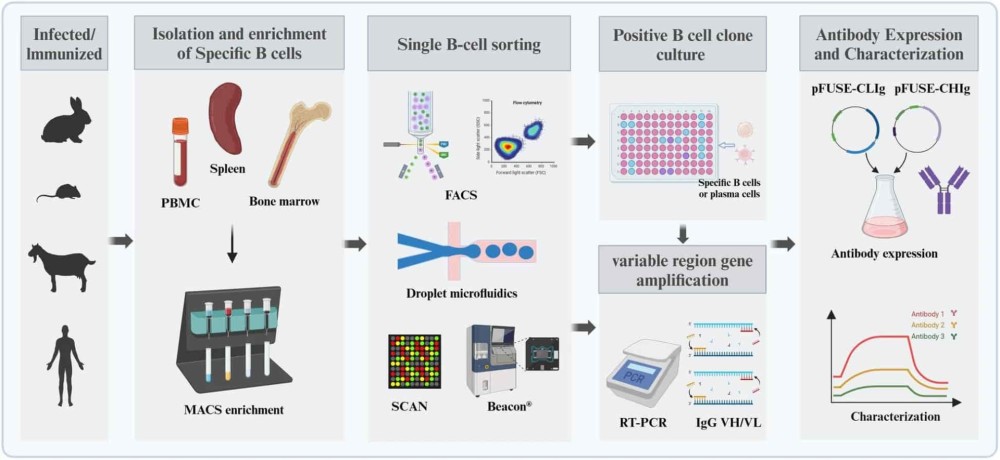
Antibody discovery often begins with a highly diverse population of B cells, onl……
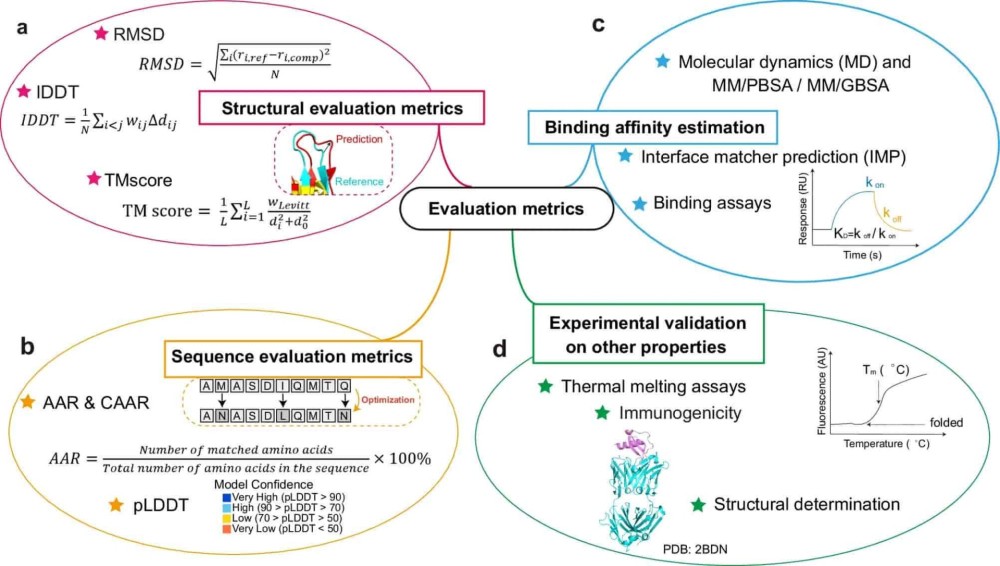
As larger candidate panels move from computational design into the laboratory, a……