


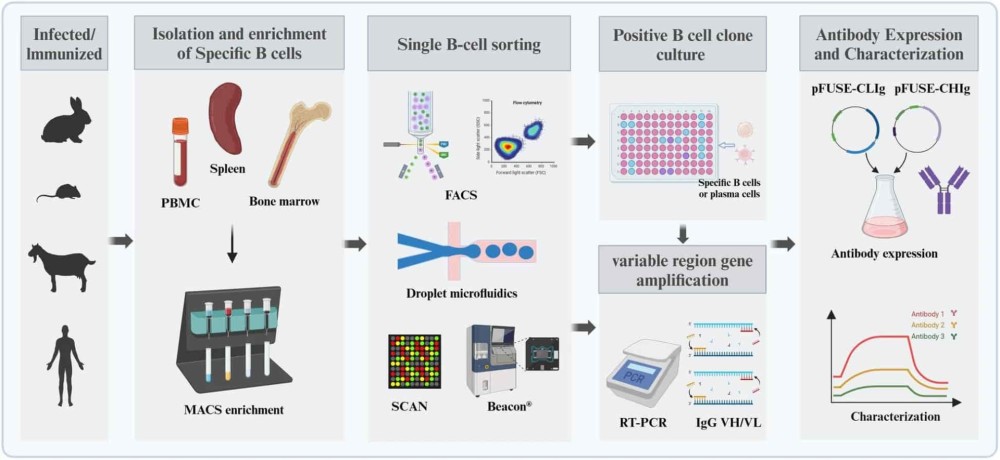


Antibody discovery has become increasingly sequence-rich. Display technologies, single B cell workflows, computational design, and AI-enabled antibody engineering can generate large pools of candidate sequences for evaluation. However, a larger sequence pool does not automatically translate into better lead candidates.
For many discovery teams, the next bottleneck is experimental: how quickly and consistently can those sequences be converted into reliable data?
This challenge is especially relevant for teams working with AI-designed antibodies, large engineered panels, or iterative optimization campaigns. In these programs, the critical question is no longer only “Can we design more candidates?” It is also “Can we test enough candidates, under consistent conditions, to make better decisions?”
This is why antibody discovery increasingly requires both faster expression and higher throughput.
Modern antibody discovery campaigns can generate large numbers of candidate sequences, including initial binders, affinity-matured variants, computationally designed sequences, multispecific formats, or developability-optimized candidates.
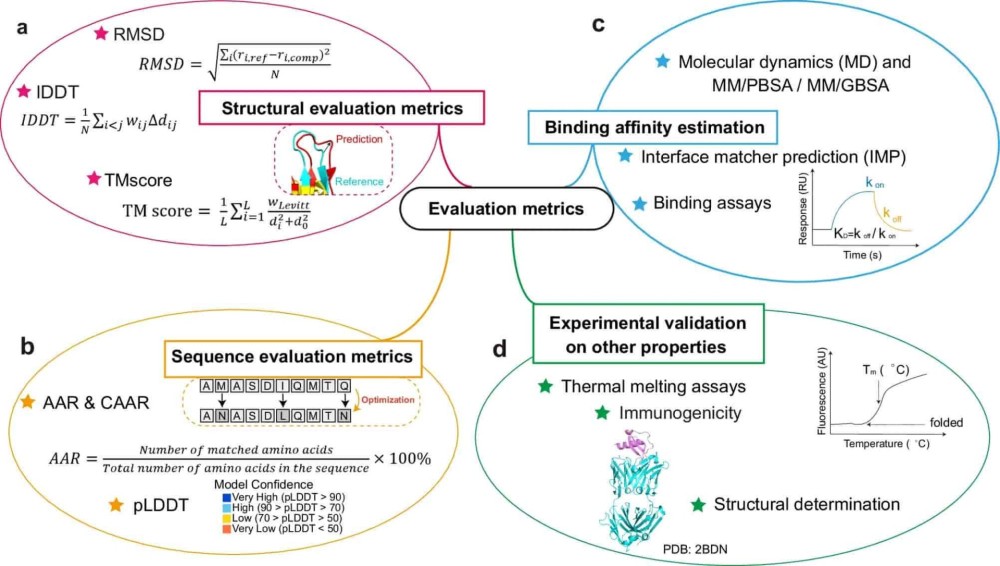
At the sequence level, many candidates may appear promising. However, sequence analysis and computational prediction cannot fully replace experimental validation.
Key questions still require wet-lab data:
Does the antibody express?
Does it bind the intended antigen?
What is the binding strength or kinetic profile?
Is the candidate suitable for further characterization?
Are there early developability concerns?
Which variants should be prioritized for the next design cycle?
For AI-driven antibody discovery companies, expression, binding, affinity, purity, stability, and developability readouts can help validate predictions, rank candidates, and inform the next model iteration.
Faster expression reduces the waiting time between sequence submission and experimental feedback. This matters because antibody discovery is iterative. Researchers design candidates, test them, analyze the results, and then decide whether to optimize, let go, or advance specific candidates.
For this reason, rapid CHO expression is particularly valuable in early discovery. CHO-derived material can provide a more therapeutically relevant context than simplified expression systems, while still supporting downstream screening and characterization.
Fast expression is useful, but it is not enough if only a small number of candidates can be processed at one time. If expression, purification, and testing are handled in small batches, the project remains bottlenecked. The result is a slow, fragmented validation process.
This becomes even more important for:
AI-designed antibody panels
Affinity maturation libraries
Large variant screening campaigns
Multispecific antibody engineering
Developability-guided lead selection
Multi-target discovery programs
When large numbers of candidates are expressed and tested in parallel, discovery teams can evaluate broader sequence diversity and rank candidates with more confidence.
A high-throughput workflow can help answer questions such as:
Which sequence features correlate with stronger expression?
Which candidates bind but show weaker apparent affinity?
Which candidates express well but show early developability concerns?
Which variants should be prioritized for deeper characterization?
Which negative results should be fed back into the model?
At scale, consistency becomes as important as capacity. If candidates are expressed or tested under inconsistent conditions, the resulting data may be difficult to interpret, compare, or reuse.
Reliable high-throughput antibody validation requires:
Standardized workflows
Consistent expression conditions
Traceable sample handling
Defined assay parameters
Internal controls
Reproducible readouts
Clear metadata
Structured output formats
For AI-driven discovery teams, experimental results can be used for training, validation, or optimization data for future design cycles.
In typical workflows, antibody production, purification, binding assays, and developability testing may be treated as separate service steps. But for modern discovery, these steps increasingly need to function as an integrated sequence-to-data workflow.
An effective workflow should connect:
Antibody sequences
High-throughput CHO expression
Rapid screening or purified-antibody characterization
Binding and affinity measurements
Developability-related assays
Structured, reusable data output
This type of infrastructure allows discovery teams to move from sequence lists to actionable data faster and with less operational fragmentation.
At the earliest stage, teams may need rapid expression and binding confirmation to remove non-expressing or non-binding candidates. For more advanced candidate panels, purified antibody characterization and affinity ranking may be needed. For lead selection, developability profiling becomes more important:
Rapid screening: expression, titer, and initial binding readouts
Binding characterization: purified antibody, concentration, purity, and affinity data
Developability profiling: thermal stability, self-interaction, polyspecificity, and other early risk indicators
RushData was developed around this need for faster, higher-throughput antibody data generation.
Rather than focusing only on antibody production, RushData is designed to help discovery teams move from sequences to experimental results. The workflow combines 1-day CHO expression, binding analytics, and developability profiling options to generate actionable datasets for antibody discovery and optimization.
Biointron announces limited-time RushData launch pricing for high-throughput ant……
August 2026 brought another mix of acquisitions, licensing agreements, strategic……
Antibody discovery often begins with a highly diverse population of B cells, onl……
As larger candidate panels move from computational design into the laboratory, a……