




Biointron’s Lunch & Learn with KACTUS was held at CIC Cambridge, MA on September 12. The session featured three key speakers: Sagar Kathuria, PhD (Senior Principal Scientist at Sanofi), Alexander Hostetler, PhD (Application Scientist at KACTUS Biosystems), and Gang Liu, PhD (Director of Discovery Services at Biointron). We thoroughly enjoyed hosting the event and the audience’s strong engagement!

Biointron's Senior Business Development Manager, Haoming Zhai, and Kactus’ BD Manager, Jordan Cannon, welcomed the session with an introduction of both companies. Biointron is your “one-stop-shop" antibody CRO. Highlights:
Our recombinant high-throughput (HTP) production platform: from sequence to purified antibody in only 2 weeks
Alpaca VHH antibody discovery with self-owned farm (300+ naïve alpacas) with one alpaca for one project, traceable health and immunization records, and delivery of certain number of unique binders
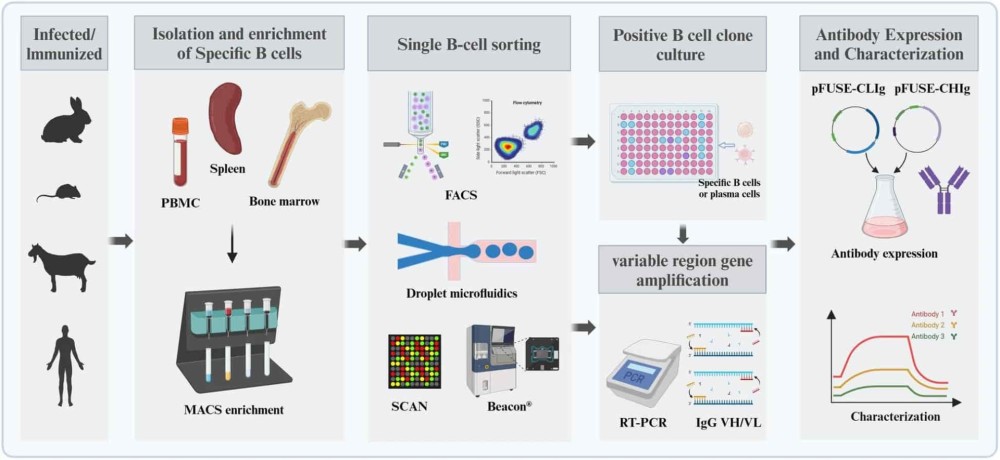
Our AbDrop Antibody Discovery Platform from Single B Cells based on microfluidics technology, 1-2×10⁶ plasma cells in single experiments

Trained as a protein biophysicist, Dr. Sagar Kathuria started working at Sanofi in 2017 and helped to shape Sanofi’s antibody developability paradigm. Eight years into collecting very detailed data on many different formats has shaped his perspective on the most effective way to serve Sanofi’s pipeline. Dr. Kathuria hopes to share some insights into how to gather data that is necessary without leaving a huge imprint.
Developability determines whether an antibody can be feasibly manufactured, remain stable, and be effectively delivered in vivo.
Early assessment across the research-to-development value chain ensures efficient candidate progression, reducing risk later in the pipeline.
By focusing on manufacturability, stability, and delivery, Sanofi’s paradigm aims to improve candidate quality while accelerating timelines.
The developability workflow spans lead identification, lead optimization, and CMC development, each producing structured packages that build on one another.
Monospecific antibodies are assessed at the variable domain level for liabilities and optimized before progressing into multispecific formats.
Multispecific formats require molecule-level assessments, which are process-centered and help rank, re-engineer, and ultimately support pre-candidate selection.
Specialized analytics such as molecular profiling, stability studies, and predictive models are used to understand properties like mass, hydrophobicity, charge, and conformational stability.
Developability principles must be applied at the right stage to ensure molecular properties translate from monospecific to multispecific antibodies.
While many chemical stability properties transfer well between formats, physical and colloidal stability are harder to predict and must be evaluated case by case.
Translatability challenges include chain mispairing, viscosity issues, and the unpredictability of colloidal interactions, making early-stage analytics critical.
Early chemical liability assessments reveal risks such as oxidation, fragmentation, aggregation, and loss of binding affinity, which directly impact safety and immunogenicity.
Proteomics-based peptide mapping offers a scalable way to detect liabilities across multiple antibodies simultaneously, focusing on CDR peptides with oxidation-prone residues.
Early colloidal stability assays assess viscosity drivers in variable domains, providing predictive insights into solution behavior before resource-intensive engineering begins.
These approaches enable better candidate selection, reduce the engineering load, and shorten development timelines.
High-throughput (HTP) methods allow large numbers of molecules to be assessed rapidly, increasing diversity while maintaining sample purity.
Early assessments of chemical, colloidal, and conformational stability in HTP formats create significant value by enabling faster engineering and lower analytical burdens.
Despite the efficiency gains, designing minimal yet relevant assay panels is challenging, requiring a balance between simplicity and comprehensive risk coverage.
Minimalist HTP screening ensures faster transitions into development while maintaining candidate quality and manufacturability.

Alex earned his B.S.E. in Biomedical Engineering from the University of Michigan and his Ph.D. in Biological Engineering from MIT. His primary research interests involve engineering the immune system through the integration of novel gene design and nanomaterials.
The immune system distinguishes self from non-self, but tumors often evade by mimicking wound healing signals (TAMs, Tregs, PD-L1, IL-10).
CAR-T cells combine T cell killing with B cell antigen recognition and work well in blood cancers, but efficacy in solid tumors remains limited due to poor persistence and toxicity.
Replicon RNA enables high but transient expression, avoiding toxicity of permanent cytokine expression.
Delivering anchored IL-12 (αCD45-IL12 replicon) to CAR-T cells enhances their activity, prolongs cytokine signaling locally, and reduces systemic side effects.
In glioma and melanoma models, this approach cured mice where CAR-T alone failed, and boosted cytokine responses (IL-2, IFNγ, TNFα, GzmB).
Replicon-engineered CAR-T cells prime endogenous T cells, spreading antigen recognition beyond the initial target.
This led to immune memory capable of rejecting tumor rechallenge, proving endogenous immunity is essential for durable cancer cures.
The platform demonstrates a safe and potent strategy to enhance CAR-T therapy in solid tumors.

Dr. Gang Liu has devoted himself to biological sciences and antibody therapeutics research for more than 20 years. Before joining Biointron, Dr. Liu worked in renowned biotech such as Genscript, and prestigious academia institutions, including Childrens Hospital LA, UC Irvine, and City of Hope Medical Center. Dr. Liu earned his Ph.D. degree from Academy of Military Medical Sciences in China, 2007, specializing in cancer research.
Biointron, founded in 2012 in Shanghai, is a trusted CRO offering antibody discovery and production services, with over 600 employees, large ISO-certified facilities, and more than 2,500 clients worldwide, and it positions itself as a partner that can accelerate antibody discovery by combining speed, expertise, and customized solutions.
Traditional antibody drugs are often designed simply to bind to their target without regard to how or where that binding occurs, which can result in broad antigen recognition, limited efficacy, and toxic effects in healthy tissues.
Precision antibody drugs, by contrast, deliberately exploit binding bias to determine exactly where, how strongly, under what context, and for how long an antibody engages its target, thereby steering mechanism of action (MOA) toward disease-relevant forms or states.
The functional impact of binding bias is that it reduces toxicity arising from on-target but off-disease interactions, improves pharmacokinetic properties, and delivers effects that are more predictable, manageable, and tailored for therapeutic precision.
Binding bias can be based on epitope- and domain-specific recognition, such as antibodies that bind only to specific structural conformations, membrane-proximal regions that influence immune synapse formation, or functional domains that regulate receptor activation or internalization.
It can also be context-dependent, meaning antibodies are designed to bind selectively under tumor microenvironment (TME) conditions, such as acidic pH, the presence of disease-associated proteases, oxidative stress or hypoxia, or high ATP levels, ensuring activity is restricted to diseased tissues.
Kinetic binding bias involves tuning on-rates and off-rates: for example, fast-on/slow-off interactions create durable tumor targeting, slow-on/slow-off binding supports steady penetration, and fast-on/fast-off minimizes excessive immune activation.
Target abundance and valency further shape bias, with strategies such as requiring high antigen density before binding occurs, or employing multivalent/biparatopic engagement so that strong binding only happens in disease contexts where the antigen is clustered.
Case studies demonstrate these principles: Cetuximab binds a specific EGFR domain to block signaling and promote receptor internalization; AFM24 binds EGFR in a way that reduces signaling inhibition and toxicity while engaging CD16a for immune activation; CEA-TCB uses low-affinity but high-avidity binding to selectively target tumors with high CEA density; SNS-101 is a pH-selective anti-VISTA antibody that minimizes systemic exposure and toxicity by binding only under acidic conditions of the TME.
To embed bias from the start, discovery efforts include designing tailored antigens for immunization, engineering cell lines that enrich for desired binding behaviors, and using counter-selection or panning to remove undesired binders, ensuring that the earliest antibody hits already contain features of precision binding.
Biointron applies diverse strategies such as alpaca immunization with phage display libraries to generate VHHs against specific domains, microfluidics-based AbDrop™ single B-cell screening to discover biased GPCR antibodies, and customized peptide or protein immunizations to select antibodies with unusual specificity profiles.
Engineering extends these efforts by tuning affinity to achieve selectivity at specific antigen densities, modifying CDR loops to target distinct conformations, and deliberately altering kinetic profiles to favor longer or shorter binding interactions depending on therapeutic needs.
pH-sensitive antibodies can be generated systematically by histidine substitution in CDR loops followed by screening at different pH values, while affinity maturation platforms like Biointron’s FcMES-AM™ enable site-saturation mutagenesis across CDRs in mammalian systems, providing fine control over affinity, kinetics, and context-driven binding.
Case examples show outcomes such as VHH antibodies with domain selectivity, biased blockers of TNFRSF proteins generated through mRNA-LNP immunization, antibodies engineered for slowed off-rates or increased on-rates to improve stability and potency, and antibodies with engineered pH bias that selectively bind under disease-relevant conditions.
Beyond discovery and engineering, Biointron emphasizes antibody format design and assembly as a crucial layer for embedding bias and precision. Prodrug-like antibodies remain inactive until triggered by the disease environment, avidity-driven bispecifics use valency and format selection to ensure activation only in target tissues, and split-function designs assemble into active antibodies only when both components accumulate in the same disease site.
Their high-throughput bispecific antibody production platform allows for the rapid generation of complex formats—up to 40,000 annually—covering hundreds of different architectures, with timelines as short as two to three weeks from sequence to purified antibody.
An example is the scFab-PACE approach, which combines binding bias, split designs, and controlled activation to create antibodies that remain inactive until reassembled in tumor tissues, thus offering precision cytotoxicity with reduced systemic risk.
The overall message is that binding bias transforms antibody therapeutics from broad, sometimes blunt instruments into precision tools, and that by strategically intervening at the earliest stages of discovery, engineering, and format design, Biointron enables the creation of cleaner, safer, and more effective drugs even against challenging or “dirty” targets.

Afterwards we held our raffle where our lucky winners received an Apple iPad, Yeti tumblers, and antibody models!
Thank you to everyone who joined us at CIC Cambridge! We had a fantastic time connecting with you and sharing how we can help you achieve antibody development. Our expert team would be happy to answer any follow-up questions.


Biointron announces limited-time RushData launch pricing for high-throughput ant……
August 2026 brought another mix of acquisitions, licensing agreements, strategic……
Antibody discovery often begins with a highly diverse population of B cells, onl……
As larger candidate panels move from computational design into the laboratory, a……