


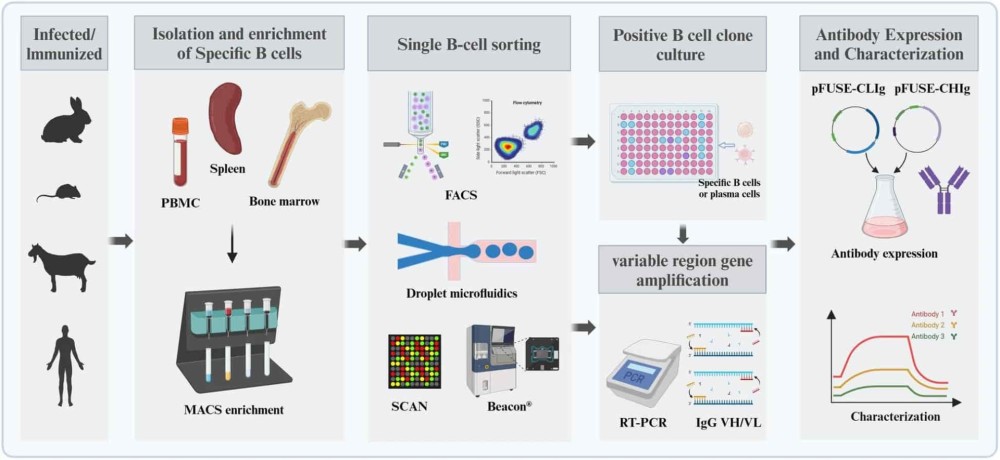
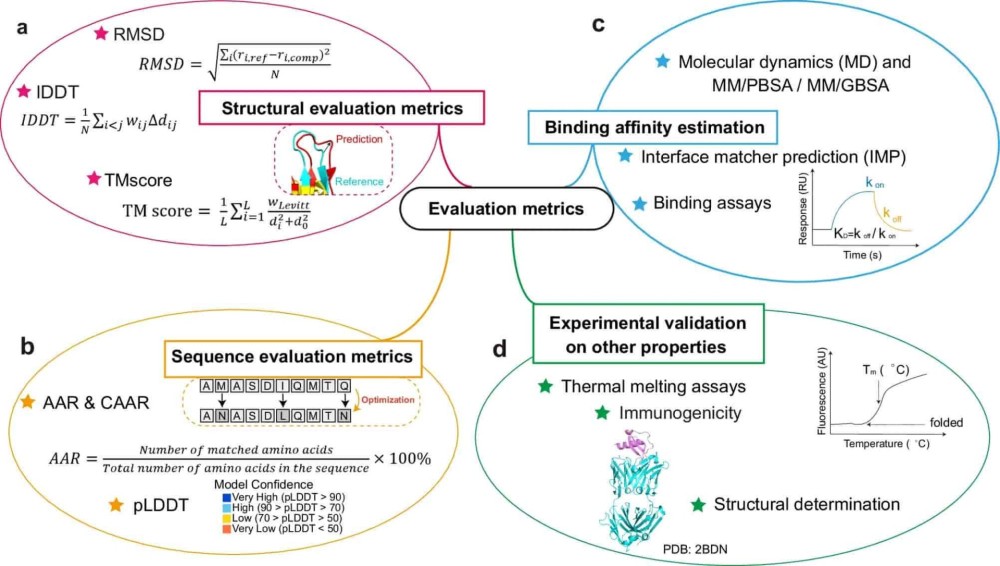


Antibody libraries are indispensable for therapeutic discovery and molecular engineering. Traditional immune libraries, derived from immunized animals, have advanced antibody development but remain limited by restricted diversity, species variability, and dependence on immunization. Moreover, antigens that are toxic, poorly immunogenic, or highly conserved are often inaccessible through in vivo immune responses.
The emergence of heavy-chain-only antibodies (HCAbs) in camelids in 1993 revolutionized antibody engineering. Their variable domains, called VHHs or nanobodies, retain full antigen-binding capability despite lacking a light chain. Because of their small (~15 kDa) single-domain structure, VHHs exhibit exceptional solubility, thermal stability, and ease of expression in microbial systems. Their convex paratopes can access recessed epitopes such as enzyme active sites, which are often inaccessible to conventional antibodies. This makes VHHs highly attractive scaffolds for synthetic antibody library development and downstream biotherapeutic applications.
Synthetic VHH libraries address these limitations by allowing controlled design, enhanced reproducibility, and expansion of sequence diversity. When combined with phage display technology, they form powerful tools for identifying high-affinity binders with applications in therapeutics, diagnostics, and intracellular biology.
Beyond in vitro assays, VHHs are valuable for live-cell and functional studies. When expressed intracellularly or fused to fluorescent proteins, nanobodies can visualize and manipulate target proteins in real time, enabling direct observation of protein dynamics and signaling processes in their native cellular context.
The increasing clinical success of VHH antibody-based therapeutics underscores their importance. As of recent analyses, more than 1,000 antibody drugs are in clinical evaluation, and approved VHH-based drugs such as caplacizumab (Cablivi, for thrombotic thrombocytopenic purpura) and ozoralizumab (for rheumatoid arthritis) highlight how synthetic or humanized VHH frameworks can achieve high efficacy with favorable pharmacokinetics. Their small size enables deep tissue penetration, while multimerization strategies can extend serum half-life, which are features that have motivated the rapid growth of synthetic humanized VHH library design.
Phage display is a molecular technique that exploits bacteriophages, most commonly M13 filamentous phage, as vehicles to display peptides or antibody fragments on their coat proteins. In nanobody phage display systems:
VHH domains are fused to coat proteins (pIII or pVIII).
Each phage particle carries the gene encoding the displayed binder.
The genotype-phenotype linkage enables iterative panning against antigens.
This method allows researchers to screen libraries of 109-1011 variants and enrich high-affinity binders through successive selection rounds.
While M13 phage display remains the dominant platform, alternative systems such as yeast display and ribosome display are increasingly used for higher eukaryotic expression fidelity and flow cytometry–based affinity sorting. Hybrid screening pipelines often combine phage and yeast display to maximize binder diversity and functional expression.
Design determines the quality and performance of a synthetic VHH library.
Camelid VHH scaffolds are widely used for their natural stability and solubility.
Humanized frameworks are selected for therapeutic applications to reduce immunogenicity.
Designing a synthetic VHH library begins with choosing stable scaffolds. Framework regions can be derived from well-behaved camelid VHHs identified through biophysical analysis of structures deposited in the Protein Data Bank. These scaffolds are evaluated for expression yield, aggregation resistance, and tolerance to CDR diversification. Some modern humanized frameworks incorporate hallmark VHH residues (such as Phe42, Glu49, Arg50, and Gly52 in framework 2) while replacing non-human sequence motifs to reduce immunogenicity risk.
The CDR3 loop is the primary site of diversity and antigen recognition. Diversification strategies include:
Random mutagenesis
Trinucleotide-directed synthesis to control amino acid usage
Motif shuffling across CDRs
Structural integrity of β-sheets and conserved framework residues must be preserved to maintain foldability.
Statistical analysis of thousands of natural VHH sequences has revealed that the CDR3 loop exhibits the highest sequence and length variability, typically ranging from 9-18 residues. Synthetic design often constrains diversity within these natural boundaries to balance structural foldability and antigen recognition potential. Biophysical modeling and next-generation sequencing data are increasingly used to guide diversity encoding, ensuring that each synthetic library retains a realistic and functional sequence space.
Synthetic phage-displayed VHH libraries are typically built through the following steps:
Gene Synthesis or Assembly
VHH variants are generated via overlap extension PCR or synthetic gene blocks.
Cloning into Phagemid Vectors
Constructs are inserted into vectors such as pComb3X, pHEN, or pSEX, enabling fusion with phage coat proteins.
Transformation into E. coli
Strains such as TG1 or SS320 are transformed to ensure library size and maintenance.
Rescue with Helper Phage
Infection with helper phages (e.g., M13KO7) produces phage particles that display the synthetic repertoire.
Recent workflows incorporate automation and parallelization, allowing generation of hundreds of millions of transformants per electroporation and precise monitoring of library quality by next-generation sequencing. Coupled with robotics-based panning, these high-throughput systems have dramatically shortened the discovery timeline from months to weeks. This modular workflow generates combinatorial antibody libraries with diversities comparable to or exceeding immune repertoires.
Synthetic libraries expand the scope of antibody research and biotechnology:
Therapeutic discovery: High-affinity nanobody binders against cancer, autoimmune, and infectious disease targets.
Intracellular binders: VHHs are soluble and functional inside cells.
Cross-species recognition: Designed to target conserved epitopes.
Advanced constructs: Serve as building blocks for bispecific antibodies, multivalent constructs, ADCs, and targeted delivery systems.
Synthetic VHHs have been applied in diverse biomedical contexts, from imaging HER2-positive tumors to neutralizing SARS-CoV-2 and influenza viruses. Their ability to function inside cells has enabled the creation of “intrabodies” that inhibit intracellular proteins, such as oncogenic kinases or aggregation-prone neurodegenerative disease proteins. Furthermore, VHHs’ modularity makes them ideal building blocks for bispecific constructs or CAR-T cell targeting domains, where precise antigen engagement and minimal off-target activity are critical.
Despite their strengths, synthetic libraries must address key challenges:
Diversity vs. foldability: Excessive variability can yield unstable or misfolded proteins.
Error minimization: Frameshifts or stop codons reduce functional clone output.
Framework tolerance: Not all VHH scaffolds accommodate high mutational loads.
Design and iterative testing are critical to overcoming these issues. Future improvements are likely to focus on integrating computational design with experimental evolution. Deep-learning-based structural prediction and machine-learning models trained on biophysical data can help pre-screen synthetic sequences for foldability, expression, and stability. Combining in silico prediction with next-generation selection platforms will further accelerate the creation of optimized, human-compatible VHH repertoires.
While synthetic phage-displayed VHH libraries have transformed antibody discovery, immune-derived VHHs remain the gold standard for functional diversity and natural affinity maturation. At Biointron, we harness the unique strengths of in vivo alpaca immunization to generate high-quality VHH antibodies with exceptional specificity, affinity, and stability. Our dedicated alpaca facility and high-throughput cloning and expression systems enable rapid screening and production of diverse VHH repertoires tailored to challenging targets.
By combining Biointron’s established expertise in recombinant antibody expression with our specialized VHH discovery workflow, we provide partners with reliable access to custom nanobody candidates: ready for downstream development, engineering, and therapeutic innovation.
References:
Hoogenboom, H. R. (2005). Selecting and screening recombinant antibody libraries. Nature Biotechnology, 23, 1105–1116. https://doi.org/10.1038/nbt1126
Muyldermans, S. (2013). Nanobodies: natural single-domain antibodies. Annual Review of Biochemistry, 82, 775–797. https://doi.org/10.1146/annurev-biochem-063011-092449
Arbabi Ghahroudi, M., et al. (1997). Selection and identification of single-domain antibody fragments from camel heavy-chain antibodies. FEBS Letters, 414(3), 521–526. https://doi.org/10.1016/S0014-5793(97)01062-4
Nakakido, M., Kinoshita, S., & Tsumoto, K. (2024). Development of novel humanized VHH synthetic libraries based on physicochemical analyses. Scientific Reports, 14(1), 1-13. https://doi.org/10.1038/s41598-024-70513-4
Biointron announces limited-time RushData launch pricing for high-throughput ant……
August 2026 brought another mix of acquisitions, licensing agreements, strategic……
Antibody discovery often begins with a highly diverse population of B cells, onl……
As larger candidate panels move from computational design into the laboratory, a……