




| Property | Relevant Attributes | Examples of Key Developability Criteria |
|---|---|---|
| Conformational and physical stability (Unfolding/refolding) | Initial aggregation (during expression), aggregation propensity, particle formation (insoluble aggregates), Tm/Tm onset/Tagg | Low initial (or release) aggregation and good accelerated storage stability; Tm onset > 50°C; low particle levels (protein aggregation, product aggregation, protein aggregate, HMW formation) |
| Chemical characteristics (liabilities, properties) | All chemical liabilities (N-deamidation, D-isomerization, M/W-oxidation, N-glycosylation, etc.), clipping or fragmentation, pI, hydrophobicity, surface characteristics (post-translational modifications, surface property patches) | Low or acceptable initial levels; acceptable increases under forced degradation/accelerated stability; suitable behavior at physiological pH and temperature |
| Colloidal stability (Self-association) | Viscosity and self-interaction parameters (kDiff, DLS, AC-SINS, second virial, zeta potential), processability (filtration, pumping), injectability, solubility (viscosity behavior, hydrodynamic radii) | Ideally 5–10 cP at 100 mg/mL; no more than 15 cP for final formulation; kDiff (DLS) ≥ −15 mL/g preferred |
| Other interactions | Process, formulation, and container closure interactions; immunogenicity, polyspecificity, biomatrix stability, chaperone assembly and ER secretion, incomplete leader cleavage | No significant expression or process-related impurities; well-behaved drug product; acceptable hydrophobicity; favorable polyspecificity, PK, and bioavailability |
Monoclonal antibodies have become one of the most successful therapeutic modalities in modern drug discovery and antibody drug development. Advances in antibody discovery technologies, engineering strategies, and manufacturing platforms have enabled the rapid expansion of therapeutic antibodies, including bispecific antibodies and antibody drug conjugates, across oncology, immunology, infectious diseases, and rare disorders. As discovery pipelines grow larger and more complex, however, it has become increasingly clear that strong binding affinity and biological activity alone are not sufficient predictors of downstream success. High-throughput antibody discovery platforms such as AbDrop™ are accelerating candidate generation, making early antibody developability assessment increasingly important for prioritizing therapeutic antibodies with favorable manufacturability and stability profiles.
The concept of antibody developability has emerged to address this challenge. Developability refers to the set of molecular attributes that influence whether an antibody candidate can be efficiently manufactured, formulated, and advanced through clinical development. These attributes include conformational stability, aggregation propensity, chemical stability, self-association behavior, hydrophobicity, charge heterogeneity, and nonspecific interactions with biological molecules, all of which are key biophysical properties and physicochemical properties.
While many antibodies demonstrate promising biological activity during the early discovery stage and early R&D, intrinsic physicochemical properties can introduce risks during later stages of development. These risks may manifest as poor expression level, aggregation during purification, instability under formulation conditions, high viscosity at therapeutic concentrations, or inconsistent product quality during scale-up. Developability assessment aims to identify such risks earlier in the discovery process, enabling teams to prioritize candidates with more favorable molecular characteristics or apply protein engineering and sequence engineering strategies when necessary. Integrating antibody developability assessment into antibody discovery campaigns can significantly reduce downstream attrition and improve lead optimization efficiency.
Recent scientific literature suggests that the field of antibody developability is evolving rapidly. Several trends are shaping how pharmaceutical and biotechnology organizations approach candidate selection and optimization, including earlier integration of developability evaluation, multi-parameter biophysical screening, scalable high-throughput workflows, and the increasing use of computational prediction models such as Antibody Developability Prediction and in silico workflows. Machine learning and AI/ML approaches are increasingly being applied to predict aggregation propensity, hydrophobicity, thermal stability, and chemical liabilities directly from antibody sequence data.
Antibody Developability Assessment →
Developability encompasses a broad set of molecular characteristics that determine whether an antibody can progress efficiently through manufacturing, formulation, and clinical development. These properties can generally be grouped into several categories: conformational stability, chemical stability, colloidal behavior, and intermolecular interactions.
Conformational stability refers to the structural robustness of an antibody molecule under different environmental conditions. Antibodies with low thermal stability or unstable domain structures may unfold more readily, leading to aggregation or loss of activity during processing or storage. Chemical stability describes susceptibility to modifications such as oxidation, deamidation, or peptide bond cleavage, which can affect product quality and potency and are often linked to post-translational modifications.
Colloidal properties are also central to developability. Antibodies can interact with themselves or other proteins in solution, leading to reversible self-association, aggregation, or increased viscosity. These effects become particularly relevant when therapeutic antibodies are formulated at high concentrations for subcutaneous administration.
Another important aspect is nonspecific binding behavior, which can influence pharmacokinetics and lead to off-target interactions. Surface-exposed hydrophobic regions, hydrophobic patches, charge distribution, and structural features of complementarity-determining regions (CDRs) and the antigen-binding site can contribute to such interactions. Charge heterogeneity and unfavorable surface property patches may also complicate purification, formulation development, and recombinant antibody production workflows.
Developability assessment therefore provides a framework for evaluating whether candidate antibodies possess molecular characteristics compatible with large-scale manufacturing, stable formulation, and reliable clinical performance.
Historically, antibody lead selection focused primarily on biological attributes such as antigen binding affinity, potency in functional assays, and in vivo efficacy. These criteria remain essential. However, experience across the industry has shown that many downstream development challenges originate from intrinsic molecular features that are not captured by biological assays alone.
Properties such as aggregation propensity, surface hydrophobicity, charge heterogeneity, and self-interaction behavior can significantly influence expression yield, purification efficiency, stability, and formulation feasibility. For example, antibodies with large exposed hydrophobic patches may exhibit strong retention in hydrophobic interaction chromatography (HIC retention time) and increased aggregation risk during purification. Similarly, molecules with strong self-association tendencies can exhibit elevated viscosity at therapeutic concentrations, complicating formulation development.
As a result, many discovery teams are incorporating biophysical developability screening and developability assays earlier in the candidate selection process. This trend aligns with high-throughput antibody discovery workflows, including AbDrop™, where rapid screening of large antibody libraries requires scalable developability analysis methods.
Early characterization allows potential liabilities to be identified before extensive process development resources are invested. In some cases, this information supports targeted engineering strategies, such as sequence modifications to reduce hydrophobicity or alter charge distribution.

One of the major trends in antibody developability research is the shift from single-property evaluation to multi-parameter profiling. No single assay can capture the full spectrum of developability risks associated with an antibody molecule.
Recent studies have demonstrated the value of evaluating multiple attributes simultaneously, including expression levels, purification behavior, thermal stability, aggregation propensity, hydrophobicity, self-association, nonspecific binding, and polyreactivity. By combining several complementary measurements, researchers can build a more comprehensive picture of molecular behavior, often supported by differential scanning fluorimetry and nano DSF techniques.
For example, thermal stability measurements can reveal structural robustness, while hydrophobic interaction chromatography provides insight into surface hydrophobicity. Self-interaction assays help identify antibodies that may exhibit concentration-dependent aggregation or high viscosity. Nonspecific binding assays can highlight molecules with increased risk of off-target interactions in vivo.
The integration of these measurements into multi-assay developability panels reflects a growing recognition that antibody behavior arises from a combination of structural and physicochemical factors rather than a single dominant property.
Another major development in the field is the emergence of high-throughput screening approaches designed to evaluate large numbers of antibody candidates rapidly.
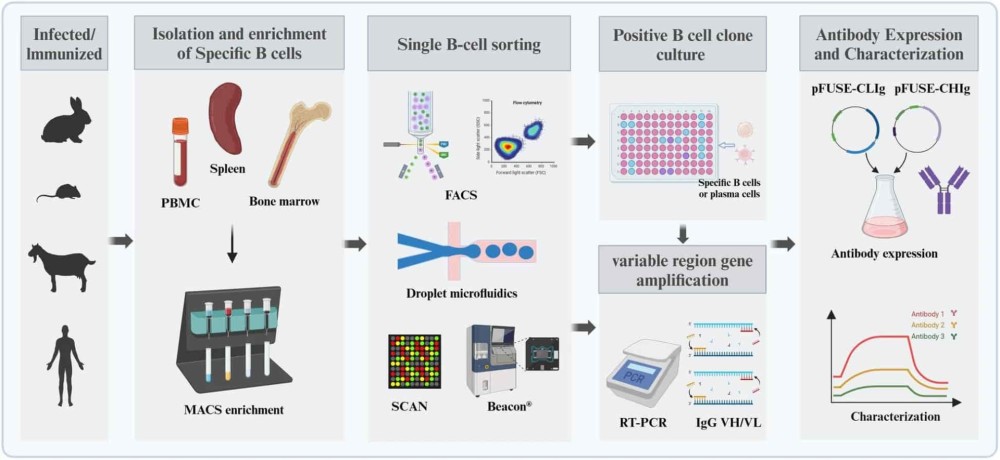
Advances in antibody discovery technologies have significantly increased the size of candidate pools generated during early discovery, including diverse antibody sequences derived from affinity maturation workflows and sequence analysis. Single B cell screening technologies and AbDrop™-enabled workflows can generate large antibody repertoires that benefit from scalable antibody developability assessment platforms. Immunization campaigns, display technologies, and increasingly AI-assisted design methods can produce hundreds or thousands of potential antibodies targeting a given antigen.
Evaluating such large libraries using traditional analytical workflows can be impractical due to time, cost, and material requirements. To address this challenge, researchers have developed miniaturized assays and plate-based formats that allow key developability attributes to be assessed using small sample volumes and parallelized workflows.
For instance, modified hydrophobicity assays have been designed to approximate hydrophobic interaction chromatography behavior in microplate formats, enabling rapid screening of large antibody sets. Similar innovations have been applied to aggregation detection, stability measurements, and self-association assays.
These high-throughput approaches make it feasible to incorporate developability evaluation much earlier in the discovery pipeline, allowing large candidate sets to be triaged before extensive characterization or scale-up.
In parallel with advances in experimental screening, computational approaches are playing an increasingly important role in developability assessment.
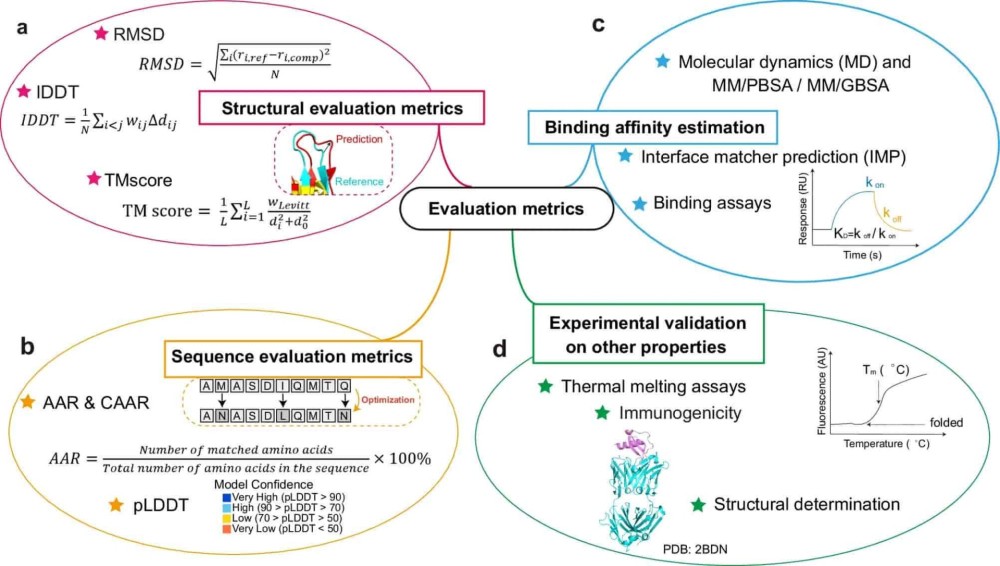
Machine learning models are now being developed to predict key antibody properties directly from sequence and structural features. These models aim to estimate attributes such as hydrophobicity, aggregation propensity, high-concentration viscosity, and chromatographic behavior before experimental testing. Approaches include random forests, support vector machines, gradient boosting machines, and k-nearest neighbors, improving predictive accuracy.
Modern predictive frameworks often integrate multiple types of descriptors, derived from protein structures, homology models, and Fv model-based structure analysis. This includes amino acid composition, sequence-derived physicochemical features, and structural characteristics derived from antibody models. When trained on sufficiently large experimental datasets, these models can identify patterns linking sequence features to observed developability outcomes.
However, computational predictions remain closely tied to the availability of high-quality experimental data. Large, standardized datasets generated through multi-assay screening campaigns are increasingly used to train and validate predictive models. As a result, the relationship between experimental screening and computational prediction is becoming complementary rather than competitive.
Computational tools may help prioritize candidates or highlight potential liabilities at the sequence stage, while experimental assays remain essential for validating predictions and capturing complex molecular behaviors that are difficult to infer computationally.

In addition to identifying developability risks, recent research highlights opportunities to actively engineer antibodies with improved physicochemical profiles.
While CDR sequences largely determine antigen recognition, the surrounding framework regions can influence overall surface properties such as hydrophobicity and electrostatic distribution. Studies examining germline framework signatures suggest that framework selection may help balance certain CDR-driven liabilities by altering the overall physicochemical landscape of the antibody. Sequence engineering strategies can reduce aggregation propensity, improve thermal stability, and optimize charge distribution without significantly altering antigen binding affinity.
These strategies highlight the importance of recombinant proteins, recombinant production, and optimization in systems such as CHO cells.
For example, electrostatic interactions within framework regions can influence protein-protein interactions and colloidal stability. In some cases, selecting alternative germline frameworks or introducing targeted mutations may help mitigate unfavorable surface properties while preserving antigen binding.
These approaches illustrate an emerging perspective in antibody development: developability is not only a screening parameter but also a design variable that can be considered during engineering and optimization.

As antibody discovery pipelines continue to expand, integrating developability evaluation into early-stage workflows requires platforms capable of handling large candidate sets efficiently. Rapid expression systems, miniaturized assays, and automated screening pipelines are becoming increasingly important for aligning developability evaluation with modern discovery scale.
High-throughput expression combined with multi-parameter biophysical assays allows discovery teams to obtain early insight into molecular behavior without committing significant material or development resources, supporting antibody discovery campaigns and biologics CMC development as part of a broader risk mitigation strategy. Such approaches can support candidate prioritization, guide engineering efforts, and reduce the risk of encountering major developability challenges later in development.
To support these needs, Biointron provides an integrated antibody developability assessment platform designed for scalable candidate evaluation. The platform combines rapid transient antibody expression with customizable multi-parameter screening assays capable of assessing aggregation tendency, stability, self-interaction behavior, and other developability-related attributes. With batch-level capacity for large candidate pools and reported turnaround times of approximately three to five days for customized assay panels, the platform is designed to align experimental throughput with the scale of modern antibody discovery programs.
The growing emphasis on developability reflects a broader shift in how antibody candidates are evaluated during early discovery. Rather than acting as a strict gatekeeper, developability assessment increasingly functions as a decision-support framework that complements biological characterization.
When multiple antibody candidates demonstrate comparable potency and specificity, developability data can provide additional context for prioritization by highlighting differences in stability, manufacturability, or formulation risk. This probabilistic approach recognizes that many developability challenges can be addressed through engineering, formulation optimization, or process control strategies.
By identifying potential liabilities earlier and integrating multiple sources of data, including experimental screening, computational prediction, and molecular engineering, antibody discovery teams can make more informed decisions about candidate progression. As discovery pipelines grow and technologies continue to evolve, the role of developability assessment is likely to remain central to the efficient development of next-generation antibody therapeutics.
References:
Spanke, V. A., Egger-Hoerschinger, V. J., Seidler, C. A., Kroell, K. B., Wieser, V., Imhof-Jung, S., Weiche, B., Bujotzek, A., Georges, G., & Liedl, K. R. (2026). Balancing the extremes for antibody developability: hydrophobic and electrostatic germline framework signatures for CDR-loop compensation. mAbs, 18(1), 2627669. https://doi.org/10.1080/19420862.2026.2627669
Crames, M., Davis, M., & Marlow, M. S. (2025). A novel throughput assay to assess molecular hydrophobicity during early biotherapeutic developability assessments. MAbs, 17(1). https://doi.org/10.1080/19420862.2025.2562999
Mieczkowski, C., Zhang, X., Lee, D., Nguyen, K., Lv, W., Wang, Y., … Gries, J. M. (2023). Blueprint for antibody biologics developability. mAbs, 15(1). https://doi.org/10.1080/19420862.2023.2185924
Li, B., Luo, S., Wang, W., Xu, J., Liu, D., Shameem, M., Mattila, J., Franklin, M. C., Hawkins, P. G., & Atwal, G. S. (2025). PROPERMAB: an integrative framework for in silico prediction of antibody developability using machine learning. mAbs, 17(1), 2474521. https://doi.org/10.1080/19420862.2025.2474521
Arsiwala, A., Bhatt, R., van Niekerk, L., Quintero-Cadena, P., Ao, X., Rosenbaum, A., Bhatt, A., Smith, A., Yang, Y., Anderson, K. C., Grippo, L., Cao, X., Cohen, R., Patel, J., Moller, J., Allen, O., Faraj, A., Nandy, A., Hocking, J., Ergun, A., … Borhani, D. W. (2025). A high-throughput platform for biophysical antibody developability assessment to enable AI/ML model training. mAbs, 17(1), 2593055. https://doi.org/10.1080/19420862.2025.2593055
Biointron announces limited-time RushData launch pricing for high-throughput ant……
August 2026 brought another mix of acquisitions, licensing agreements, strategic……
Antibody discovery often begins with a highly diverse population of B cells, onl……
As larger candidate panels move from computational design into the laboratory, a……