


The Festival of Biologics 2025 was held in Basel, Switzerland, from September 30 to October 2, 2025. The event highlighted advances across discovery, development, clinical trials, manufacturing, market access, and fill & finish. As Europe’s largest biologics event, 3000+ attendees and 350 world class speakers came together to explore the latest in antibody therapies, cell and gene therapies, immunotherapies and biosimilars.
Antibody-focused topics included:
Bispecific & multispecific antibody formats
Antibody-drug conjugates (ADCs) & armed antibodies
Developability, CMC & manufacturability of biologics
AI/ML and computational tools in antibody discovery
Antibodies in immunotherapy (T-cell engagers, macrophage modulation, novel Fc classes)
Manufacturing, cell line development, supply-chain flexibility
A bispecific engaging CD28 and a tumour antigen demonstrated conditional T-cell co-stimulation, aiming to increase solid tumour penetration while limiting systemic toxicity.
A study on avidity-driven multispecifics showed how selective tumour-binding affinities combined with immune engager arms may enhance tumour-selectivity in complex microenvironments.
Human single-domain antibody (sdAb) fusions to IgG scaffolds achieved robust bispecific architecture with high expression yields and stability, indicating practical manufacturability of complex formats.
Research on eIg-based bispecific T-cell engagers emphasized that format geometry matters: subtle scaffold changes altered potency and off-target activation profiles significantly.
A pre-clinical exatecan-payload ADC targeting Nectin-4 showed promising tumour regression in solid tumour models, signalling extension of ADCs beyond hematologic indications.
A dual-mechanistic ADC directed at uPAR (tumour + stromal compartments) illustrated a strategy to circumvent stromal resistance and expand ADC efficacy in dense solid tumours.
Advanced analytical workflows (high-throughput SEC-MS and high-resolution RPLC-MS/MS) enabled detailed DAR profiling, conjugation-site mapping, and forced-degradation tracking, which is useful for robust ADC quality control.
A novel peptide-linker technology enabled direct antibody modification without many of the classical conjugation drawbacks, offering a more modular route to armed antibody generation.
Antibody drugs modulating tumour-associated macrophages (TAMs) via enhanced ADCP (antibody-dependent cellular phagocytosis) showed synergy with checkpoint inhibitors, indicating a next-gen immunotherapy axis.
Exploration of IgE-class and IgE-derived antibodies introduced new Fc-class strategies to engage tumour-resident immune cells beyond conventional IgG mechanisms.
Fc-engineering of antibodies tailored to the tumour microenvironment (TME) revealed that tuning effector-function (via Fc modifications) may improve precision control of immune activation in aggressive cancers.
Research in expanding monoclonal antibodies into cellular immunotherapy described how antibodies can act as enablers or guides for engineered immune cell therapies, broadening their functional scope.
Studies on next-generation biologics (bispecifics, multispecifics) emphasised that as complexity increases, aggregation propensity, polyreactivity and manufacturability risk become central metrics for candidate selection.
Integrated workflows aligning cell-line development (e.g., via targeted transposase systems) with upstream process optimisation shortened timelines and increased yield for complex antibody formats.
Process innovations like targeted genomic integration (hyperactive transposases paired with epigenetic readers) produced high-yield clones suitable for heterodimeric and polyclonal antibody production at scale.
Emphasis on global manufacturing flexibility: standardised infrastructure combined with innovation workflows ensures faster tech transfer and responsiveness to supply-chain shifts in biologics production.
Synthetic antibody-library evolution coupled with high-throughput screening demonstrated enhanced discovery of therapeutic candidates with favourable developability profiles, not just binding potency.
Use of VHH/nanobody scaffolds expanded modality reach: e.g., nanobody-based degraders repurposing antibody frameworks for targeted protein degradation.
Application of nanoparticle platforms (e.g., for membrane-protein antigen display) enabled discovery of antibodies against challenging GPCRs and ion channels, a key emerging frontier.
Engineering of cytokine-antibody fusion proteins showcased proof-of-concept for immunomodulation with built-in targeting and bias towards desired immune subsets (e.g., regulatory T cells, FOXP3+ populations).
Machine-learning models scaled to thousands of antibody candidates now predict developability metrics (aggregation, solubility, stability) enabling triage before lab work.
In silico immunogenicity platforms achieved significantly improved correlation with observed ADA (anti-drug antibody) rates via AI-enhanced epitope prediction workflows.
Automated design–build–test–learn loops combined with high-throughput functional assays accelerated T-cell engager optimisation—highlighting that data quality + automation are as crucial as the algorithms.
Generative-AI engineered trispecific T-cell engagers achieved sub-nanomolar affinities while maintaining selective gating of immune activation, signalling that computational design may soon reach clinic-ready modalities.

Thank you to everyone who visited our booth at Festival of Biologics Basel 2025 to learn about our services! We had a fantastic time chatting with you and how it can help you achieve antibody development. Our expert team would be happy to answer any follow-up questions. Feel free to email us at info@biointron.com or visit our website at www.biointron.com.
Biointron announces limited-time RushData launch pricing for high-throughput ant……
August 2026 brought another mix of acquisitions, licensing agreements, strategic……
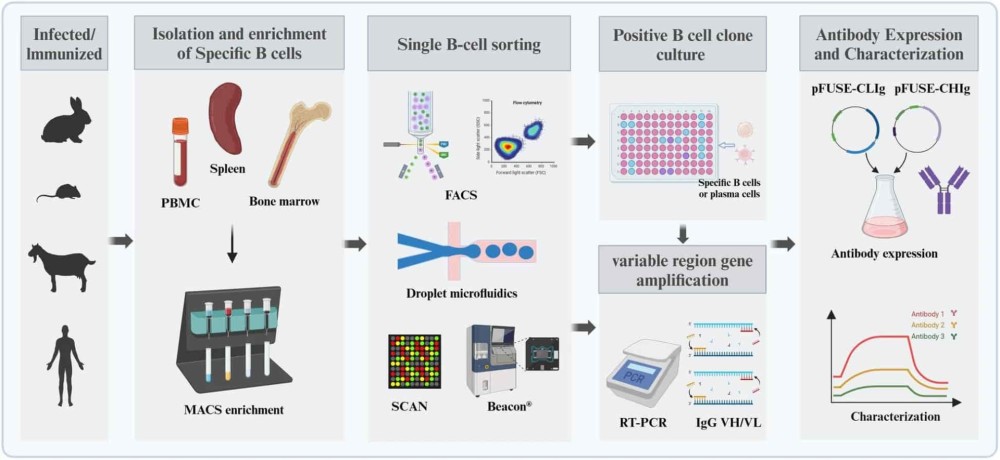
Antibody discovery often begins with a highly diverse population of B cells, onl……
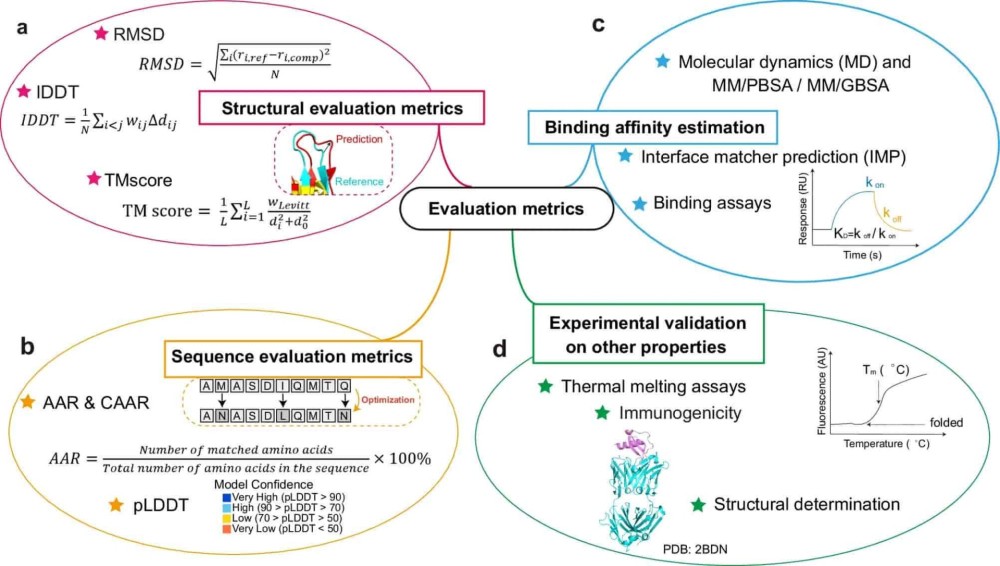
As larger candidate panels move from computational design into the laboratory, a……