


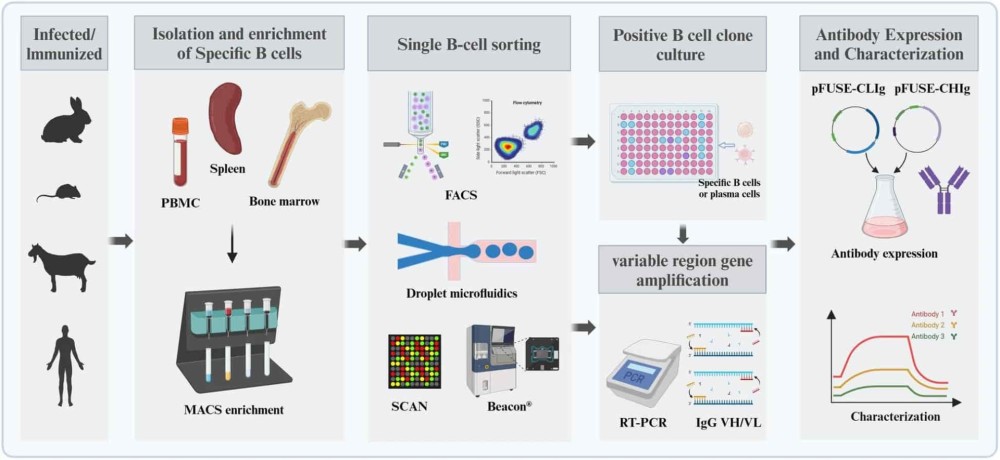
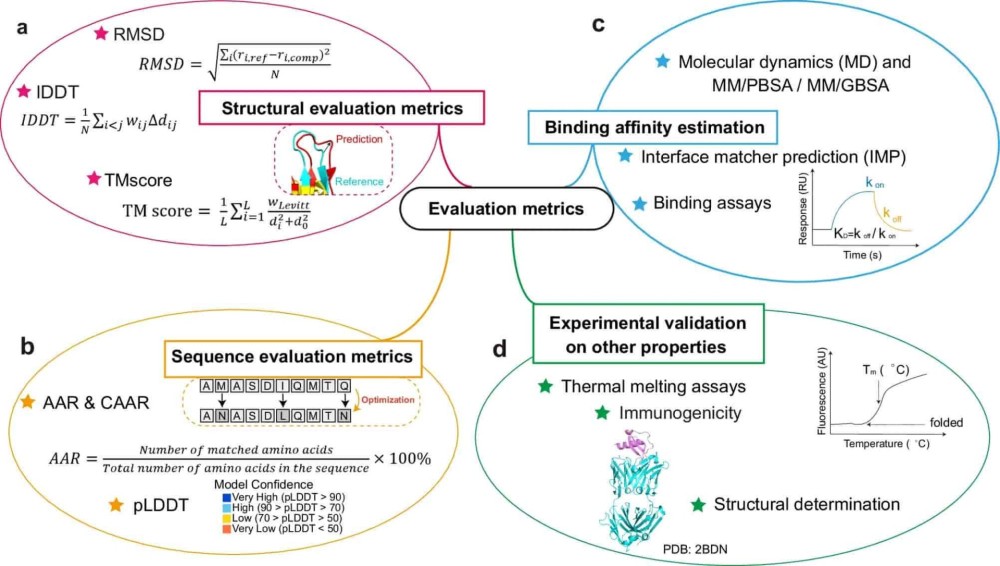


Zhang et al. (2023) define developability as the likelihood that an antibody candidate will proceed through the chemistry, manufacturing, and control (CMC) process efficiently, at acceptable cost, and on schedule. Importantly, they emphasize a critical distinction between early-stage (discovery stage) and late-stage (CMC) developability assessments.1
At the discovery stage, the focus is on rapid, high-throughput screening of multiple antibody candidates using minimal material. These assessments are designed to identify physicochemical properties and potential chemical liabilities, such as aggregation propensity, solubility limitations, and post-translational modification (PTM) risks, that could impede downstream development. In contrast, CMC-stage assessments involve in-depth analysis of a single lead candidate to confirm product quality, biophysical properties, stability, manufacturability, and formulation robustness. These later-stage studies are material-intensive and time-consuming, often requiring hundreds of milligrams to grams of purified recombinant antibody.
Overlooking developability risks during early antibody discovery increases the likelihood of late-stage failure. By the time a molecule reaches the CMC stage, addressing structural liabilities often requires re-engineering through protein engineering, which invalidates prior preclinical data and introduces significant delays and costs in drug discovery and clinical development pipelines.
Related: What is Antibody Developability?
An example of a risk in therapeutic antibody development is the deamidation of Asn residues within complementarity-determining regions (CDRs). This chemical modification converts Asn to Asp or isoAsp, introducing a negative charge and potentially altering antigen-binding conformation. In one case, an Asn residue in CDR1 of a light chain reached over 90% deamidation under stress conditions, correlating with complete loss of binding potency and impaired pharmacokinetics in preclinical studies.
Common deamidation-prone motifs include NG, NS, NN, NT, and NH sequences, particularly when the Asn is exposed or part of a flexible loop. Even low frequency deamidation in CDRs can compromise efficacy or immunogenicity. Early identification of these hotspots through sequence analysis and forced degradation studies enables developers to mitigate risk via conservative sequence engineering before costly in vivo testing begins.
This principle extends to other PTMs such as Asp isomerization, oxidation, or glycosylation, each of which can impact stability, potency, or safety when located in functional regions of an antibody drug.
The therapeutic antibody development pipeline follows a progressively selective funnel. Initial screening identifies large pools of antibodies, such as monoclonal antibodies and bispecific antibodies, based on affinity and specificity, while downstream filtering focuses on stability, solubility, manufacturability, and pharmacokinetics.
Key attributes assessed during early-stage developability include:
Homogeneity - low levels of charge heterogeneity and size variants
Stability - resistance to chemical degradation and physical stress, including thermal stability
Solubility - tolerance to high concentrations required for SC or intravitreal administration
Aggregation - low protein aggregation and reduced aggregation propensity under stress or during purification
Expression yield - ability to produce sufficient titers from mammalian systems
Specificity - low nonspecific binding or polyreactivity
Failure to identify issues in these categories early often results in costly CMC-stage remediations, including formulation redesign or sequence re-engineering. Early integration of biophysical screening can reduce project attrition and prevent investment in structurally unstable leads during drug discovery.
Antibody Developability Assessment →
Biointron's early-stage developability assay service is designed to support antibody discovery programs by identifying physicochemical risks at the time of lead selection. The platform leverages high-throughput, low-volume methodologies to characterize critical attributes across panels of candidates.
To identify the strongest candidates, Biointron offers custom assay packages. These assays assess critical attributes such as self-interaction (AC-SINS), hydrophobicity (HIC-HPLC), thermal stability (via differential scanning fluorimetry (DSF)), aggregation (SEC-HPLC, DLS), colloidal stability, charge-related behavior including charge distribution, charge heterogeneity (iCIEF, IEX-HPLC), and non-specific binding (PSR ELISA, BVP/DNA/Insulin ELISA). These measurements provide insight into viscosity behavior and the presence of hydrophobic patch regions that may impact developability.
With minimal material requirements (<1 mg per assay) and the flexibility to run tests in parallel or tandem, Biointron provides cost-effective, early-stage insights that guide candidate prioritization and streamline CMC development.
For antibody discovery programs including monoclonal antibodies, bispecific antibodies, and antibody-drug conjugates (ADCs), developability screening is best applied immediately following functional selection. This integration enables direct comparison of structurally distinct variants with similar in vitro potency and supports efficient affinity maturation strategies.
Developability issues that escape early detection can manifest during CMC-stage formulation or scale-up. Addressing them at this stage is significantly more costly, requiring reformulation, re-characterization, and potentially re-engineering of the candidate sequence.
For example:
Solubility issues may necessitate screening of alternative buffers, pH ranges, and excipients using time- and resource-intensive stress studies.
Aggregation-prone sequences often require reversion to variant selection or de novo re-engineering.
Stability liabilities can interfere with shelf life, dosing flexibility, and delivery route, impacting clinical and commercial strategy.
Analytical characterization during CMC includes methods such as SEC, IEX, HIC, icIEF, and forced degradation studies across thermal, pH, oxidative, and photostress conditions. At this point, any design change will require bridging studies or additional toxicology testing, delaying clinical development of the antibody drug.
Many developability issues are directly encoded in the amino acid sequence. With available computational tools, developers can identify and address common risk factors early in the design cycle.
High-risk features include:
Asn-Gly (NG) and Asp-Gly (DG) motifs - associated with deamidation and Asp isomerization
Unpaired cysteine residues - prone to oxidation and aggregation
Surface hydrophobic patches regions - increase protein aggregation and impact viscosity behavior
Asymmetric charge distributions - leading to reduced colloidal stability
N-glycosylation sites in variable domains - that contribute to charge heterogeneity
Computational tools such as CamSol, AggScore, and SAP assess hydrophobicity, solubility, and aggregation risk from sequence or structure inputs. Machine learning models trained on antibody datasets now predict PTM susceptibility and folding stability with increasing accuracy. These predictions can guide engineering strategies to mitigate liabilities while preserving binding function.
Developability criteria are not fixed; they are determined by the intended clinical use of the therapeutic antibody. Factors such as dosage, administration route, and formulation volume inform the thresholds for physicochemical properties, including solubility, viscosity, and stability of biophysical properties.
For example:
Subcutaneous formulations often require antibody concentrations >100 mg/mL, demanding high solubility and low viscosity.
Intravitreal delivery for ophthalmologic indications requires antibodies to maintain stability at very high concentrations in low-volume injections (~0.05 mL).
ADC and bispecific T-cell engagers, though dosed at lower concentrations, must meet strict purity and stability requirements due to payload toxicity or immune activation potential.
Understanding these context-specific demands allows developers to define relevant thresholds for early-stage screening and prevent downstream incompatibilities.
By integrating biophysical and computational developability assessments into early discovery workflows, developers can identify, prioritize, and optimize antibodies with favorable attributes before significant resources are committed. This approach improves selection of each antibody candidate and accelerates progression toward successful clinical development of next-generation therapeutic antibody formats.
Data-driven insights into antibody developability to guide your next optimization step in 3–5 days: https://www.biointron.com/antibody-developability/antibody-developability-assessment.html
Zhang, W., Wang, H., Feng, N., Li, Y., Gu, J., & Wang, Z. (2023). Developability assessment at early-stage discovery to enable development of antibody-derived therapeutics. Antibody Therapeutics, 6(1), 13-29. https://doi.org/10.1093/abt/tbac029
Biointron announces limited-time RushData launch pricing for high-throughput ant……
August 2026 brought another mix of acquisitions, licensing agreements, strategic……
Antibody discovery often begins with a highly diverse population of B cells, onl……
As larger candidate panels move from computational design into the laboratory, a……